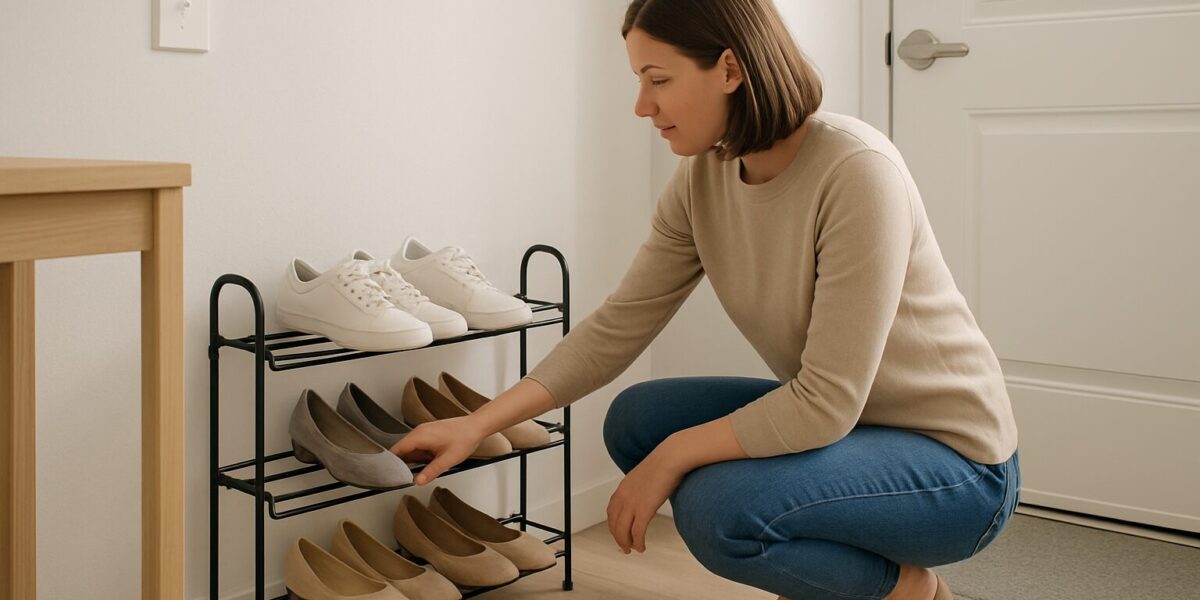
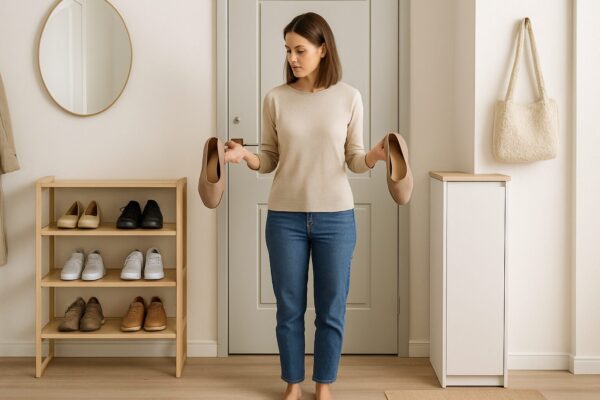
If your shoes keep taking over the entryway, the closet floor, or the strip of wall next to the door, a compact shoe rack is usually the fastest fix. The best shoe rack for small spaces is not the one that holds the most pairs on paper. It is the one that fits the way your home actually works, whether that means a narrow hallway, a tiny closet, or an apartment entry that cannot handle bulky furniture.
This guide focuses on practical shoe racks that make sense for small homes in 2026. The goal is simple: help you choose a storage solution that keeps shoes visible, easier to grab, and less chaotic without wasting floor space or overbuying. If you are still deciding between open and hidden storage, also read our shoe rack vs shoe cabinet comparison.
Quick Verdict
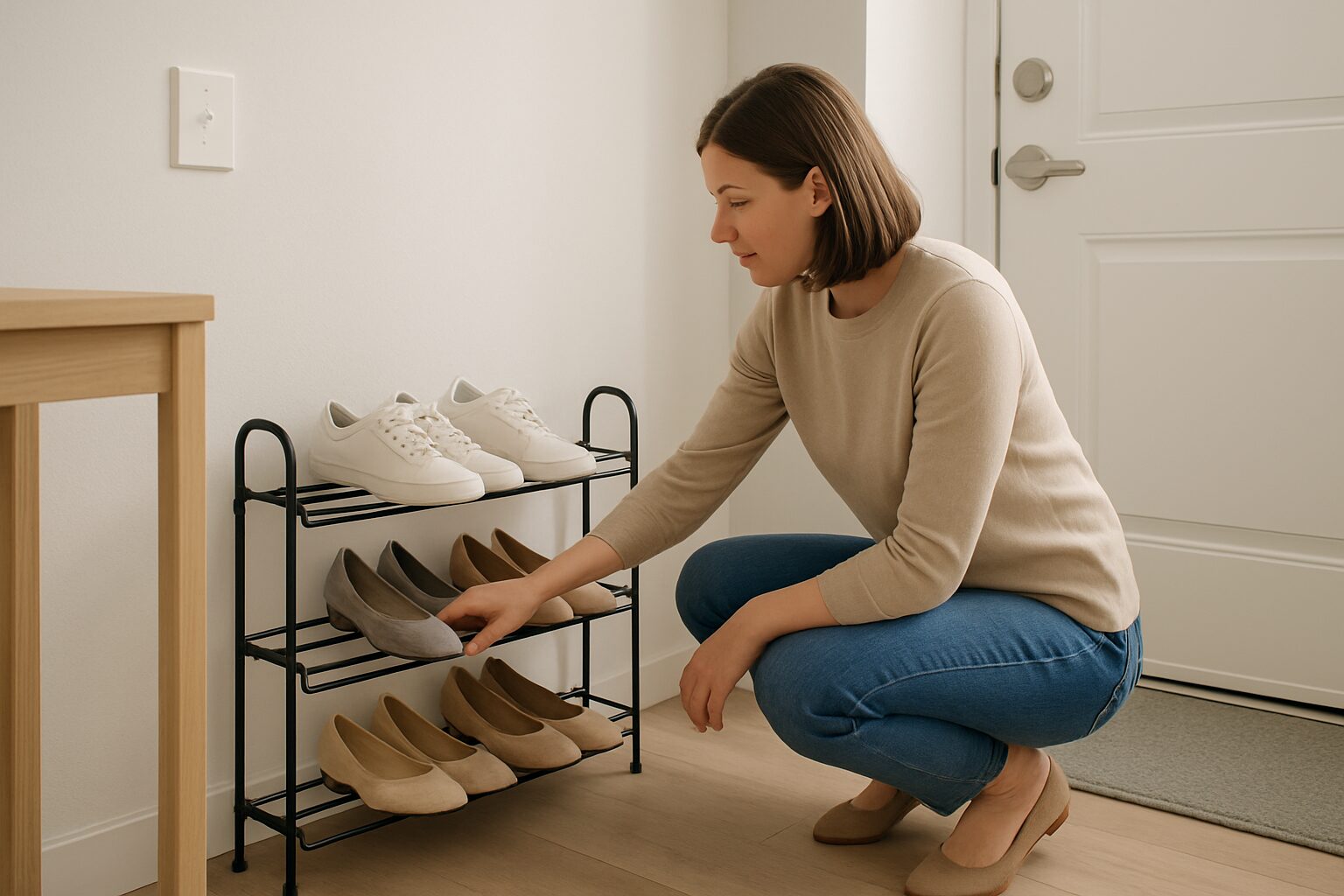
For most small homes, a low-profile open shoe rack is still the safest buy because it is easier to fit, easier to clean around, and usually cheaper than hidden storage furniture. A narrow expandable rack works best when you want a simple entryway fix, while a taller vertical rack makes more sense if floor width is the main limit.
Best For
Best Overall
An expandable 3-tier rack is still the most practical all-around pick for small spaces. It keeps everyday shoes visible, adapts to different widths, and fits well in entryways, closets, and apartment corners without feeling heavy.
Best for Tight Entryways
If your main issue is a narrow hallway, prioritize a rack with a shallow depth rather than one with the highest advertised capacity. A smaller footprint usually matters more than squeezing in two extra pairs.
Best Budget Upgrade
A basic multi-tier metal rack is often enough if your goal is simply to get shoes off the floor. It is a cleaner budget upgrade than buying several storage bins that make shoes harder to see and rotate.
What to know before buying a shoe rack
Start with depth, not just width. Many people measure the wall and forget to check how far a rack projects into the room. That matters in small entries where a few extra inches can make the area feel crowded fast.
Next, think about visibility. An open rack helps if you rotate the same everyday pairs often. By contrast, if you want to hide visual clutter, a shoe cabinet may be a better fit. Apartment Therapy highlighted how narrow shoe storage can work well in tight spaces when the profile stays slim and intentional.
If your space already struggles with closet overflow, it is also worth reading our guide to the best closet organizers for small spaces before buying another standalone unit.
Comparison Table
| Shoe rack type | Best for | Why it works in small spaces |
|---|---|---|
| Expandable 3-tier rack | Most shoppers who want an easy all-around fix | Adapts to different widths and stays low profile |
| Stackable metal rack | Budget shoppers with several pairs to store | Adds vertical storage without bulky side panels |
| Slim vertical rack | Very narrow entryways and closet corners | Uses height instead of depth to save floor space |
Best shoe rack styles worth considering
Expandable 3-tier racks
This is the safest place to start for most people. It works especially well if your shoe collection changes by season or if you need a rack that can fit beside a door, inside a closet, or under a hanging coat setup. Good Housekeeping recently highlighted the Whitmor-style expandable format as one of the strongest tested options because it balances capacity with a small footprint.
Stackable metal racks
Stackable racks make more sense when the shoe pile is bigger than the space is wide. They are not always the prettiest solution, but they can be practical in utility closets, mudroom corners, and family entryways where function matters more than concealment.
Slim vertical racks
Vertical racks are useful when the floor footprint must stay narrow. They often hold fewer pairs per level, but they help in apartment entries or closet corners where a wider rack would block movement.
Technical Table
| Shopper need | Best rack direction |
|---|---|
| You want the safest all-around shoe storage | Choose an expandable 3-tier shoe rack with a shallow depth and simple open design. |
| You need to store more pairs on a budget | A stackable multi-tier rack usually gives the best capacity for the cost. |
| Your entryway is too narrow for a wide unit | A slim vertical shoe rack usually makes better use of height than width. |
Pros and Cons
Pros
- Open racks keep everyday shoes easy to see and grab.
- They are usually cheaper than cabinets or benches.
- Most small-space models are lighter and easier to move.
- They work well in closets, entries, and utility corners.
Cons
- Open storage does not hide visual clutter.
- Dust can settle faster than in closed storage.
- Boots and bulky shoes may not fit every tier comfortably.
- Very cheap racks can feel unstable when overloaded.
Who Should Buy It
A small shoe rack makes the most sense if you want fast access to a few everyday pairs and do not need to hide them behind doors. It is especially practical for apartments, family entryways, and closets where shoes keep spilling into walkways.
If you care more about a cleaner visual look than fast access, go deeper with our shoe rack vs shoe cabinet guide. If over-the-door storage sounds more efficient for your layout, compare it with our review of the best over-the-door shoe organizer options.
How to use a shoe rack well in a small space
Keep the rack for the shoes you actually wear most often. If every off-season pair also lands there, even a good rack will feel messy. Rotate out occasional shoes into bins, upper shelves, or another closet zone so the rack stays functional instead of becoming a holding pen for everything.
It also helps to treat the rack as part of a wider entry system. A small tray for keys, a hook for bags, or a nearby bin for accessories often makes the whole area work better than the shoe rack alone.
FAQ
What is the best shoe rack for a small apartment?
For most apartments, an expandable 3-tier shoe rack is still the best all-around option because it is shallow, flexible, and easy to move if the layout changes.
Are shoe racks better than shoe cabinets for small spaces?
They are better when you want easy access and lower cost. Shoe cabinets are better when visual clutter is the bigger problem. The right pick depends on whether access or concealment matters more.
How many pairs should a small shoe rack hold?
For most entries, storing six to twelve pairs is enough. Once a rack tries to do too much, it often stops feeling like a small-space solution.
Is an over-the-door organizer better than a shoe rack?
It can be if floor space is extremely limited. That setup works especially well in closets and bedrooms where you have usable door space. For a full breakdown, see our guide to the best over-the-door shoe organizer in 2026.
Final Verdict
The best shoe rack for small spaces is usually the one that keeps the footprint modest and the daily routine simple. For most shoppers, that means an open 3-tier rack that handles regular shoes without making the room feel heavier. If you want the easiest next step, browse matching options on Amazon, then compare them against the rest of our Home Products articles before buying.
Browse matching shoe racks on Amazon

2 Comments on “Best Shoe Rack for Small Spaces in 2026”