Small closets usually fail for simple reasons: too many mixed hangers, shelves without boundaries, dead vertical space, and no clear system for your most-used items. The best closet organization ideas for small spaces fix those bottlenecks one by one instead of trying to solve everything with one oversized organizer.
This guide is built for apartments, rentals, small bedrooms, and narrow reach-in closets. The goal is to give you practical ideas you can actually use, then point you toward the right products only if you still need them. If you are looking for best closet organization ideas for small spaces in 2026, this is the idea-first page to start with. If you want a product-first roundup, start with our guide to the best closet organizers for small spaces in 2026.
Quick Verdict
The best closet organization ideas for small spaces are the ones that reduce friction fast: matching slim hangers, shelf dividers, stackable bins, and one overflow solution if hanging space is tight. Most small closets improve more from a few smart fixes than from a full system overhaul.
Closet organization ideas for small spaces: what actually works in 2026
The ideas that still work best in 2026 are simple, modular, and easy to maintain. That usually means solving one problem at a time, then adding only the next storage layer you still need. If entryway shoes are part of the clutter chain too, compare these ideas with our guide to the best shoe storage benches for small entryways.
Comparison Table
[pw_comparison_table headers=”Closet idea|Best for|Why it works”]
[pw_comparison_row cells=”Slim matching hangers|Crowded rods and uneven spacing|They reduce wasted width and make the closet easier to scan at a glance”]
[pw_comparison_row cells=”Shelf dividers|Sweaters, jeans, and unstable folded stacks|They stop piles from collapsing into each other”]
[pw_comparison_row cells=”Stackable bins|Accessories, seasonal items, and odd-shaped storage|They create zones and use shelf height better”]
[pw_comparison_row cells=”Secondary clothing rack|Closets with not enough rod space|It moves overflow out of the main closet without a full remodel”]
[pw_comparison_row cells=”Over-the-door storage|Shoes, bags, and small accessories|It uses overlooked vertical space without taking floor area”]
[/pw_comparison_table]
7 closet organization ideas that work in small spaces
1. Start with one hanger type
If your closet uses plastic, wire, wood, and padded hangers all at once, you are wasting rod space before you even sort the clothes. One slim hanger style creates cleaner spacing and makes the closet look calmer immediately. That is why our roundup of the best velvet hangers for closet organization is often the cheapest first upgrade.
2. Give folded clothes real boundaries
Stacked jeans and sweaters look fine for a day or two, then everything leans into a soft pile. Shelf dividers or clear bins keep each stack from collapsing into the next one. In a small closet, that alone can save daily time because you stop re-folding the same items repeatedly.
3. Use vertical shelf space, not just shelf width
Many small closets have shelves that are deep enough for bins but underused in height. Stackable bins, shallow baskets, and labeled storage boxes help you turn one messy shelf into two or three useful zones. This matters most for accessories, seasonal pieces, or laundry overflow.
4. Keep daily-use items at arm height
The smartest organization idea is often placement, not a new product. Shoes, bags, and the clothes you wear most often should sit in the easiest reach zone. Less-used items can move higher up. That simple change makes even a small closet feel more functional.
5. Move overflow out before buying more organizers
If the closet is overloaded, no organizer will make it feel spacious. First remove off-season pieces, rarely used items, or category overflow. Then decide what still needs better control. If hanging space remains the main issue, our guide to the best clothing rack for small spaces is the next practical step.
6. Use a modular setup instead of one oversized system
Small closets change. Rentals change. Your wardrobe changes. That is why modular pieces usually outperform one large solution that assumes the layout will stay the same forever. A few bins, dividers, and one rack can adapt better than a fixed kit you outgrow quickly.
7. Use a planner before buying random storage
The fastest way to waste money is buying organizers that solve the wrong problem. If you want a quick recommendation before you order anything, use the Closet Organizer Planner. It helps narrow the setup based on your real space issue.
Technical Table
[pw_technique_table headers=”Closet problem|Best next step”]
[pw_technique_row label=”Crowded rod” value=”Switch to one slim hanger type and remove obvious overflow before buying anything larger.”]
[pw_technique_row label=”Messy shelves” value=”Use dividers or bins so stacks stop collapsing into each other.”]
[pw_technique_row label=”Not enough hanging space” value=”Add a compact secondary rack or move low-priority items out of the main closet.”]
[pw_technique_row label=”Shoes and accessories taking over” value=”Use vertical or door-back storage instead of eating floor space.”]
[/pw_technique_table]
Pros and Cons
Pros
- Most of these ideas are low cost compared with a full closet system.
- They work well for renters and small bedrooms.
- You can build the setup gradually instead of buying everything at once.
Cons
- They will not fully solve a closet that is simply overloaded with too many items.
- Some shoppers still need a separate rack or dresser if the original closet is too limited.
- Mixing too many organizer styles can recreate clutter in a different form.
Who should use these ideas
This guide is best for apartment renters, small-home owners, and anyone trying to improve a reach-in closet without a major install. If you need ready-to-buy product picks instead of ideas, move next to the closet organizers comparison. If you still are not sure what setup fits your room, stay with the planner first.
FAQ
What is the best first closet organization idea for a small space?
For most people, changing to one slim hanger type is the fastest first upgrade because it improves spacing immediately.
Do closet organization ideas work better than buying a full system?
Often yes. In small spaces, a few focused fixes usually beat one bulky system that does not match the real bottleneck.
What are the best closet organization ideas for small spaces in 2026?
For most people, the best closet organization ideas for small spaces in 2026 are still slim matching hangers, shelf dividers, stackable bins, and one overflow solution when rod space is too tight.
What if I need more hanging space, not more bins?
Then a compact rack or a better hanger strategy is usually more useful than shelf organizers alone.
Can I organize a small closet without drilling into the wall?
Yes. Many effective upgrades are renter-friendly, including slim hangers, bins, dividers, and free-standing racks.
Final Verdict
The best closet organization ideas for small spaces are not dramatic. They are targeted. Start with the one change that removes the biggest daily irritation, then layer on only what the space still needs. If you want the product shortlist after the ideas, compare the top picks in our closet organizers reviews and browse the wider Home Products cluster.
Browse matching closet organizers on Amazon
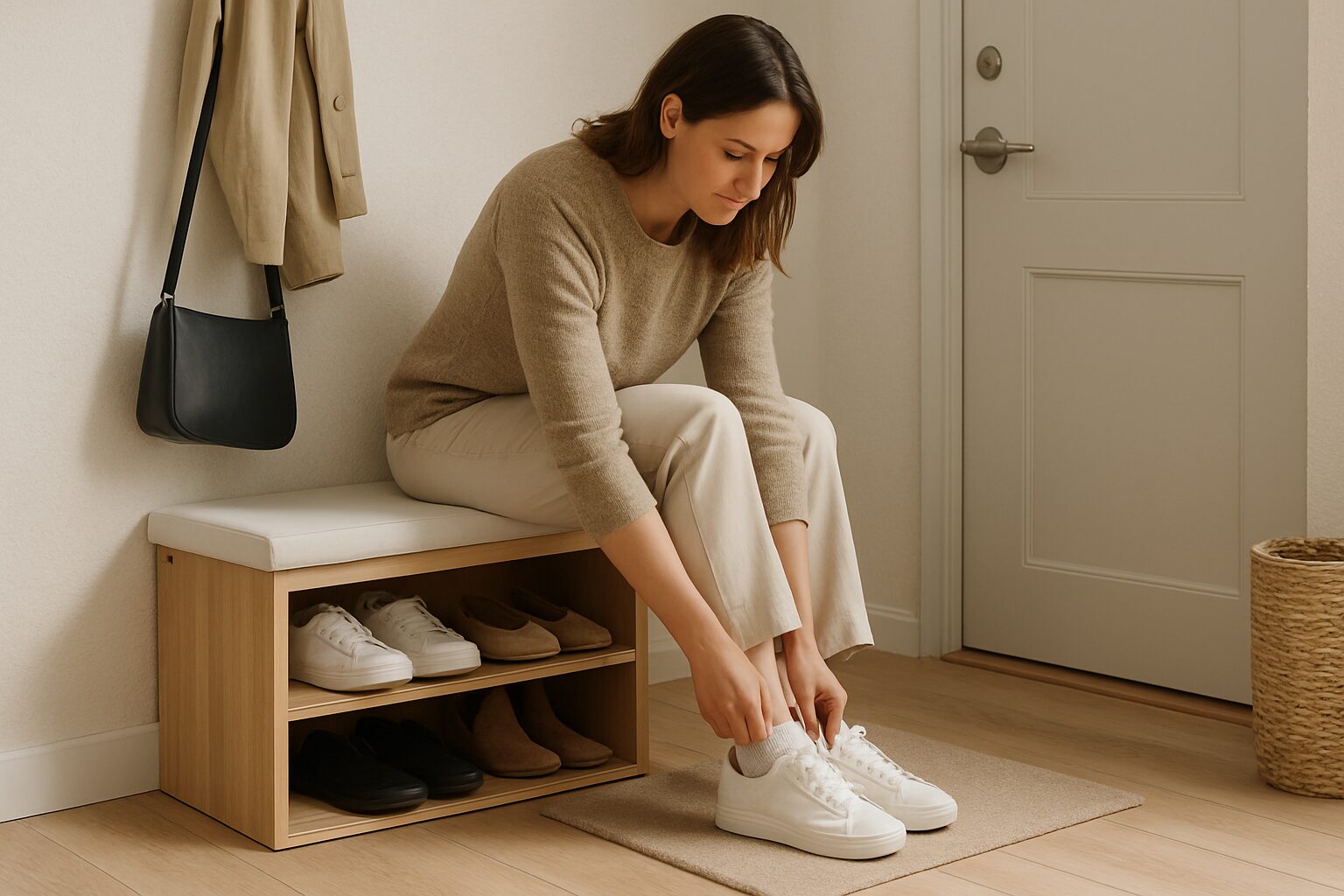
If your entryway needs a place to sit and a way to hide shoe clutter, a shoe storage bench can make more sense than a plain rack. The best shoe storage bench for a small entryway is not the biggest unit you can fit against the wall. It is the one that gives you useful hidden storage, a comfortable landing spot, and a footprint that still lets the room breathe.
This guide focuses on practical benches that work well in apartments, narrow hallways, and compact homes. The goal is to help you decide whether a bench is worth the extra space and cost compared with simpler storage. If you are still deciding between open and closed storage, start by comparing our guides to the best shoe rack for small spaces and shoe rack vs shoe cabinet.
Quick Verdict
A shoe storage bench is worth buying when your entryway needs both seating and cleaner-looking shoe storage. For most small homes, the best format is a narrow bench with a lift-top or cubby storage section that can hold a few daily pairs without feeling bulky. If you only need faster access and lower cost, a shoe rack is still the simpler pick.
Best For
Best Overall
A narrow bench with closed storage is still the safest all-around option because it keeps the entry looking tidier while giving you a place to sit when putting shoes on or off.
Best for Hidden Shoe Storage
If visual clutter is the biggest issue, choose a bench with doors or a lift-top design rather than open cubbies. Hidden storage usually helps a small entry feel calmer.
Best for Everyday Family Use
If the bench will handle several pairs each day, prioritize sturdy seating and easy access over decorative styling. A slightly simpler unit usually performs better in real life.
What to know before buying a shoe storage bench
Start with the depth. Many benches look compact in product photos but project farther into the room than shoppers expect. That matters in small entries where the bench should help movement, not tighten it.
Then decide how much hidden storage you really need. If the bench only has room for your current daily pairs, that is often enough. Trying to make one small bench hold every shoe in the home usually leads to disappointment.
Better Homes & Gardens has covered how entry storage works best when the piece serves more than one purpose. That is why a compact shoe bench can be more useful than a plain rack when you truly need seating as well as storage.
Comparison Table
[pw_comparison_table headers=”Bench style|Best for|Main tradeoff”]
[pw_comparison_row cells=”Closed lift-top bench|Most shoppers who want a cleaner entryway|Usually holds fewer pairs than an open rack”]
[pw_comparison_row cells=”Open cubby bench|Homes that want fast grab-and-go access|Shoes stay visible, so clutter is still partly exposed”]
[pw_comparison_row cells=”Bench with doors|People who care most about hiding visual clutter|Can cost more and feel heavier in tight spaces”]
[/pw_comparison_table]
Technical Table
[pw_technique_table headers=”Entryway need|Best bench direction”]
[pw_technique_row label=”You want seating plus cleaner hidden storage” value=”Choose a narrow closed shoe bench with enough depth for your daily pairs.”]
[pw_technique_row label=”You want fast access to shoes near the door” value=”An open cubby bench usually feels easier in everyday use.”]
[pw_technique_row label=”You mostly need low-cost shoe storage” value=”A simple shoe rack is usually a better value than a bench.”]
[/pw_technique_table]
Pros and Cons
Pros
- Adds both seating and storage in one piece.
- Can hide shoe clutter better than an open rack.
- Works well in entries where sitting down is genuinely useful.
- Can make the space feel more finished and intentional.
Cons
- Usually costs more than a basic shoe rack.
- Takes more visual weight in a narrow hallway.
- Some benches hold fewer shoes than expected.
- Bulky models can make a small entry feel crowded.
Who Should Buy It
A shoe storage bench is the right buy if your entryway doubles as a daily transition zone and you actually want a place to sit. It is especially useful for families, apartment entries, and homes where visible shoe clutter makes the front area feel messy fast.
If seating is not important, a standard rack or over-the-door organizer may be more efficient. In that case, compare this page with our guide to the best over-the-door shoe organizer.
How to use a shoe bench well in a small entry
Keep the bench focused on daily pairs rather than trying to make it hold everything. A small entry works best when the bench stores what you wear often, while overflow moves to a closet, upper shelf, or secondary storage zone.
It also helps to pair the bench with a coat hook, small tray, or basket so the whole entry functions as one compact station. That usually gives a better result than adding more furniture later.
FAQ
Is a shoe storage bench worth it in a small entryway?
Yes, if you need both seating and cleaner storage. If you only need somewhere to place shoes, a rack is usually the simpler and cheaper answer.
How many shoes should a small shoe bench hold?
For most small entries, holding the current daily rotation is enough. A bench does not need to store every pair you own to be useful.
Is a shoe bench better than a shoe rack?
It is better when seating and visual concealment matter. A rack is better when access, flexibility, and lower cost matter more.
What is the best shoe storage bench style for apartments?
A narrow closed bench is usually the safest apartment option because it keeps the entry calmer without requiring too much floor space.
Final Verdict
The best shoe storage bench for a small entryway is one that solves two problems at once without creating a third. If you want a tidier look and a practical place to sit, a narrow bench can be worth the extra cost. If you mainly need simple shoe control, stay with a rack. Browse matching benches on Amazon, then compare them against the rest of our Home Products cluster before buying.
Browse matching shoe benches on Amazon
Related Home Products Articles
- Best Shoe Rack for Small Spaces in 2026
- Best Over-the-Door Shoe Organizer in 2026
- Shoe Rack vs Shoe Cabinet for Small Spaces in 2026
- Best Closet Organizers for Small Spaces in 2026
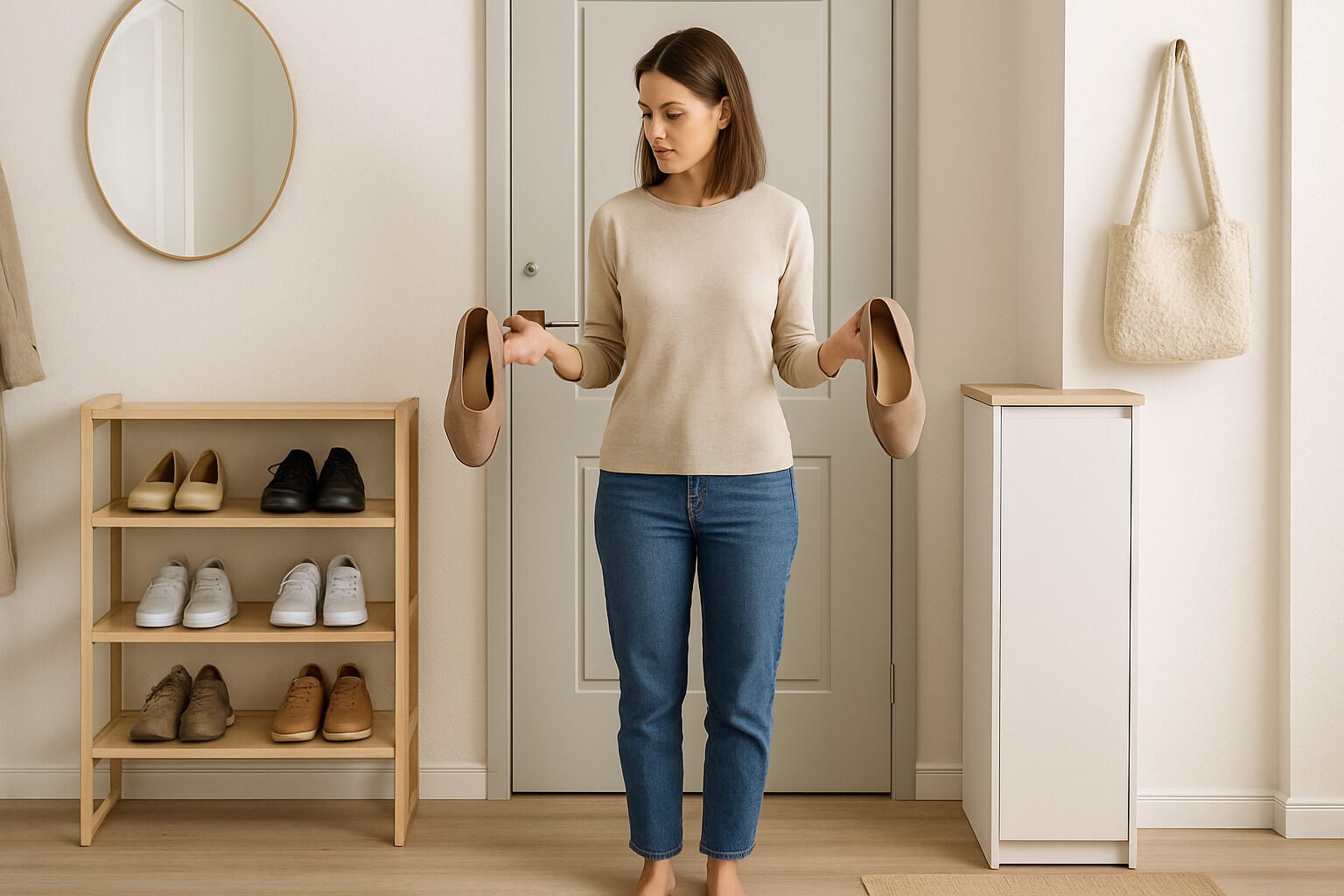
If you are trying to clean up a small entryway or closet, the real buying question is often not whether you need shoe storage. It is which kind. A shoe rack gives faster access and usually costs less. A shoe cabinet hides clutter and often looks cleaner in the room. The right choice depends on how visible the storage is, how many pairs you need to hold, and how much floor depth you can spare.
This comparison breaks down the practical differences between a shoe rack and a shoe cabinet for small spaces. The goal is not to make the decision feel bigger than it is. It is to help you choose the format that fits your layout and daily routine with the least friction.
Quick Verdict
For most small homes, a shoe rack is the better default when budget, easy access, and flexibility matter most. A shoe cabinet is the better choice when the entryway is visible and you care more about hiding clutter than seeing every pair at a glance. If your floor space is extremely limited, an over-the-door organizer may beat both.
Comparison Table
[pw_comparison_table headers=”Storage type|Best for|Main caution”]
[pw_comparison_row cells=”Shoe rack|Shoppers who want lower cost and faster access|Shoes stay visible, so clutter shows more”]
[pw_comparison_row cells=”Shoe cabinet|Homes that need a cleaner, more furniture-like look|Often costs more and may hold bulky shoes less well”]
[pw_comparison_row cells=”Over-the-door organizer|Closets and rooms with almost no spare floor space|Depends heavily on door clearance and shoe type”]
[/pw_comparison_table]
Technical Table
[pw_technique_table headers=”Priority|Best pick”]
[pw_technique_row label=”You want the simplest budget-friendly solution” value=”Choose a shoe rack.”]
[pw_technique_row label=”You want to hide visual clutter in the entryway” value=”Choose a shoe cabinet.”]
[pw_technique_row label=”You have almost no floor space left” value=”Consider an over-the-door organizer first.”]
[/pw_technique_table]
When a shoe rack is the better choice
A shoe rack is usually the smarter option when you want visibility, lower cost, and easier cleaning. It works especially well if you rotate the same shoes often and do not mind seeing them. In apartments, utility closets, and family entryways, that practical advantage often matters more than appearance.
It is also the better choice when flexibility matters. Most racks are easier to move, easier to fit into awkward corners, and less risky to buy if you are still figuring out your layout. If that sounds like your situation, start with our guide to the best shoe rack for small spaces.
When a shoe cabinet is the better choice
A shoe cabinet makes more sense when the storage will sit in a visible part of the home and you want a calmer look. It is especially useful in narrow entries where visual clutter makes the area feel smaller than it is.
That said, not every cabinet works well for bulky sneakers, boots, or family overflow. The cleaner look comes with tradeoffs, so it is worth being realistic about the kinds of shoes you need to store every day.
What to know before deciding
First, measure depth carefully. Cabinets often stay visually cleaner, but some require more functional depth than shoppers expect once the shoes are actually inside. Racks can sometimes feel larger visually, yet still be easier to fit into a real apartment routine.
Second, decide whether access speed matters. If you take shoes on and off near the door every day, an open rack often feels easier. If the shoes will be stored more decoratively in a visible hallway, a cabinet may be worth the extra cost.
Apartment Therapy has covered how slim shoe storage works especially well in tight entries, while organizers interviewed about shoe storage without a mudroom often recommend hidden or vertical solutions when appearance matters most.
Pros and Cons
Shoe Rack Pros
- Usually cheaper than a cabinet.
- Faster access to everyday shoes.
- Easier to move and rearrange.
- Works well in closets and utility corners.
Shoe Rack Cons
- Does not hide clutter.
- Can look messy if overloaded.
- May not feel polished in visible entryways.
Shoe Cabinet Pros
- Looks cleaner in exposed rooms.
- Helps reduce visual noise in the entry.
- Can feel more furniture-like and intentional.
Shoe Cabinet Cons
- Usually costs more.
- Some models fit fewer bulky shoes than expected.
- Cleaning and access can feel less immediate than with a rack.
Who Should Buy Which
Buy a shoe rack if you want the easiest low-friction solution and care more about function than concealment. Buy a shoe cabinet if the entryway is part of your main living space and you want to hide the shoe pile more effectively.
If neither sounds quite right because floor space is almost gone, compare both with our guide to the best over-the-door shoe organizer.
FAQ
Is a shoe rack or shoe cabinet better for a small entryway?
A shoe rack is better for quick access and lower cost. A shoe cabinet is better if you want the entryway to look calmer and less cluttered.
Do shoe cabinets save more space than shoe racks?
Not always. They can look slimmer, but the usable depth and shoe capacity vary a lot by model. In some homes, a simple rack is easier to live with.
What is the best choice for renters?
Renters usually benefit more from shoe racks because they are easier to move and reuse if the next layout changes.
What should you buy if floor space is almost gone?
An over-the-door organizer is often the better answer if the real problem is lack of floor space rather than visible clutter.
Final Verdict
If you want the most practical all-around solution, start with a shoe rack. If you want the cleanest look in a visible entryway, consider a shoe cabinet. The right answer depends less on storage theory and more on whether your home needs access, concealment, or a better use of vertical space. For related upgrades, keep browsing our Home Products category and our closet organization guides.
Browse matching shoe cabinets on Amazon
Related Home Products Articles
- Best Shoe Rack for Small Spaces in 2026
- Best Over-the-Door Shoe Organizer in 2026
- Best Clothing Rack for Small Spaces in 2026
- Best Closet Organizers for Small Spaces in 2026
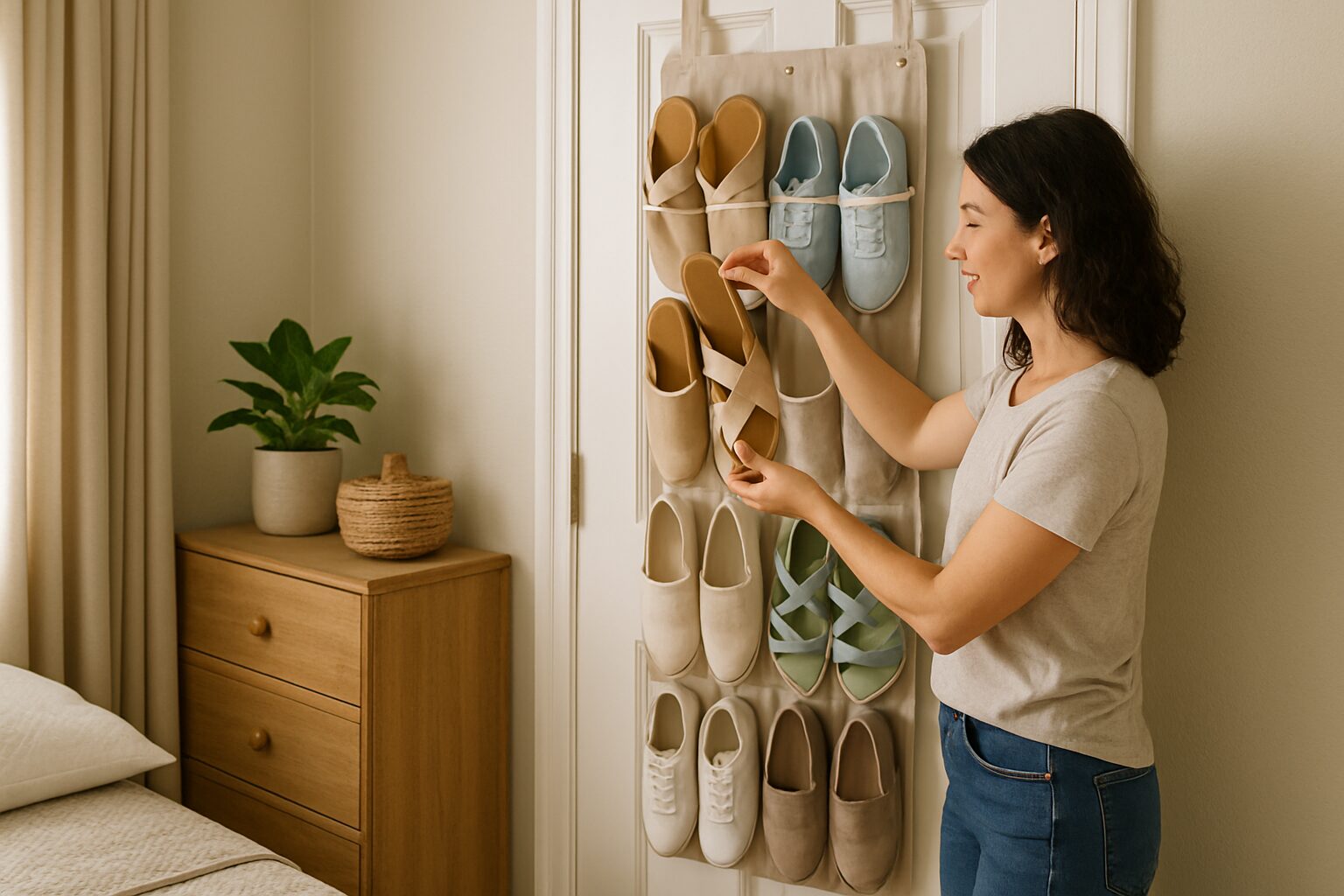
If your floor space is already crowded, an over-the-door organizer can solve shoe clutter faster than another rack. The best over-the-door shoe organizer in 2026 is the one that uses vertical space well without sagging, blocking the door, or turning into a messy catch-all for things that do not belong there.
This guide focuses on practical options for closets, bedrooms, and small entries where every inch matters. It is especially relevant if you want shoe storage but cannot spare more floor room. If you are still choosing between floor storage and door storage, compare this article with our guide to the best shoe rack for small spaces.
Quick Verdict
For most homes, a clear-pocket over-the-door organizer is still the easiest overall recommendation. It makes shoes easy to see, uses the full height of the door, and works well for flats, sandals, kids’ shoes, and other lighter pairs. Fabric shelf styles make more sense only when you want bulkier shoes or a less visible look.
Best For
Best Overall
A clear-pocket design is still the safest choice for most shoppers because it balances visibility, capacity, and price better than the alternatives.
Best for Closet Doors
If the organizer will live inside a closet, a soft fabric design can feel cleaner because it reduces visual noise while still using vertical storage efficiently.
Best for Family Overflow
For homes with several everyday pairs to sort, a larger pocket-count organizer usually works better than a small decorative unit. Capacity matters more than styling in that scenario.
What to know before buying
First, check the door clearance. This is the mistake that causes the most frustration. Even a good organizer becomes annoying if the hooks interfere with the frame or make the door hard to close.
Next, match the organizer style to the shoes you actually wear. Thin pockets work well for flats, sandals, and sneakers. However, chunkier shoes and boots often need deeper shelf-style organizers or another storage format entirely.
Apartment Therapy has also pointed out that over-the-door storage is useful beyond closets because it takes advantage of vertical surfaces that small homes often waste. That is why this format remains one of the easiest upgrades for tight layouts.
Comparison Table
[pw_comparison_table headers=”Organizer style|Best for|Main tradeoff”]
[pw_comparison_row cells=”Clear pocket organizer|Most shoppers who want simple visible storage|Can look busy if the door is exposed”]
[pw_comparison_row cells=”Fabric shelf organizer|Closets where you want a softer, cleaner look|Usually holds fewer pairs neatly”]
[pw_comparison_row cells=”Heavy-duty large-capacity organizer|Families and higher shoe counts|Can feel bulky on lighter interior doors”]
[/pw_comparison_table]
Which over-the-door style works best?
Clear pocket organizers
These are still the easiest to recommend because they keep shoes visible and use door height efficiently. They also work well for more than shoes, which matters in homes where storage needs change often.
Fabric shelf organizers
These can feel tidier in a closet because they hide some visual clutter. They are often better for larger casual shoes than very thin clear-pocket units, but capacity can drop depending on the design.
Heavy-duty multi-pocket organizers
If you have a family entry problem rather than a single-person closet problem, a larger organizer can make sense. Just be realistic about the door and the weight you plan to hang from it.
Technical Table
[pw_technique_table headers=”Storage need|Best organizer direction”]
[pw_technique_row label=”You want the safest all-around option” value=”Choose a clear-pocket organizer with enough depth for sneakers and flats.”]
[pw_technique_row label=”You want the organizer hidden inside a closet” value=”A fabric over-the-door organizer usually looks calmer and less busy.”]
[pw_technique_row label=”You need to handle many pairs at once” value=”Use a larger-capacity organizer, but check door clearance and weight first.”]
[/pw_technique_table]
Pros and Cons
Pros
- Uses vertical storage instead of floor space.
- Works well in rentals because it usually needs no permanent install.
- Helps keep shoes visible and easier to rotate.
- Can also store small accessories if your needs change later.
Cons
- Some doors do not have enough clearance for thicker hooks.
- Heavy shoes can make cheaper organizers sag.
- Visible pocket designs can look cluttered in exposed rooms.
- Not every style works well for boots or large athletic shoes.
Who Should Buy It
An over-the-door shoe organizer makes the most sense if your floors are already crowded and you have a usable closet or bedroom door. It is also a good choice for renters who want shoe storage without committing to heavier furniture.
If your main issue is an exposed entryway rather than a closet interior, a shoe rack or shoe cabinet may look cleaner in daily use. In that case, compare this page with our shoe rack vs shoe cabinet guide.
How to use an over-the-door shoe organizer well
Do not overload it with every pair you own. Use it for the shoes that benefit most from easy vertical access: flats, sandals, slippers, kids’ shoes, and frequently worn sneakers. Keep bulky boots elsewhere so the organizer stays neat and functional.
It also helps to group by use. Everyday shoes in the middle rows, occasional pairs higher up, and non-shoe extras only if you still have spare capacity. That keeps the organizer from turning into another clutter zone.
FAQ
What is the best over-the-door shoe organizer for small spaces?
For most small spaces, a clear-pocket model is still the best overall choice because it offers strong visibility and capacity while using no floor room.
Can over-the-door shoe organizers damage doors?
They usually do not if the hooks fit correctly and the organizer is not overloaded. The biggest issue is often poor clearance rather than actual damage.
Are over-the-door organizers better than shoe racks?
They are better when floor space is the main problem. Shoe racks are better when you want faster entry access and do not mind visible storage.
Can you use an over-the-door shoe organizer for more than shoes?
Yes. Many people use them for accessories, kids’ items, or light household overflow, which is part of why they work well in small homes.
Final Verdict
The best over-the-door shoe organizer is usually the one that keeps storage vertical, visible, and easy to manage without making the door harder to use. For most shoppers, that means a clear-pocket design with realistic capacity rather than the largest option possible. If you want to browse live options, start with Amazon, then compare them against the rest of our Home Products cluster before buying.
Browse matching over-the-door organizers on Amazon
Related Home Products Articles
- Best Shoe Rack for Small Spaces in 2026
- Shoe Rack vs Shoe Cabinet for Small Spaces in 2026
- How to Organize a Small Closet Without a Closet System
- Closet Organizer Planner
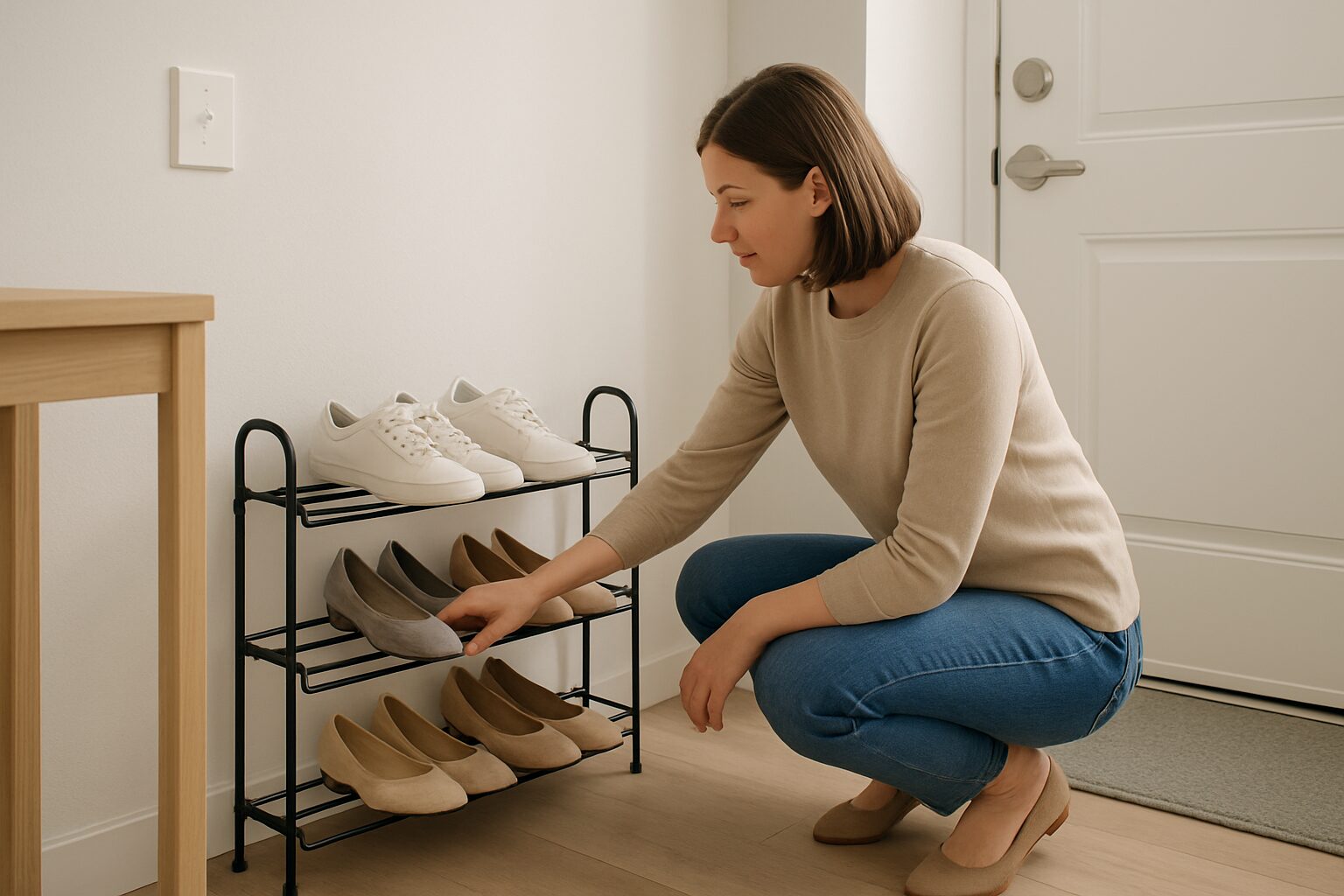
If your shoes keep taking over the entryway, the closet floor, or the strip of wall next to the door, a compact shoe rack is usually the fastest fix. The best shoe rack for small spaces is not the one that holds the most pairs on paper. It is the one that fits the way your home actually works, whether that means a narrow hallway, a tiny closet, or an apartment entry that cannot handle bulky furniture.
This guide focuses on practical shoe racks that make sense for small homes in 2026. The goal is simple: help you choose a storage solution that keeps shoes visible, easier to grab, and less chaotic without wasting floor space or overbuying. If you are still deciding between open and hidden storage, also read our shoe rack vs shoe cabinet comparison.
Quick Verdict
For most small homes, a low-profile open shoe rack is still the safest buy because it is easier to fit, easier to clean around, and usually cheaper than hidden storage furniture. A narrow expandable rack works best when you want a simple entryway fix, while a taller vertical rack makes more sense if floor width is the main limit.
Best For
Best Overall
An expandable 3-tier rack is still the most practical all-around pick for small spaces. It keeps everyday shoes visible, adapts to different widths, and fits well in entryways, closets, and apartment corners without feeling heavy.
Best for Tight Entryways
If your main issue is a narrow hallway, prioritize a rack with a shallow depth rather than one with the highest advertised capacity. A smaller footprint usually matters more than squeezing in two extra pairs.
Best Budget Upgrade
A basic multi-tier metal rack is often enough if your goal is simply to get shoes off the floor. It is a cleaner budget upgrade than buying several storage bins that make shoes harder to see and rotate.
What to know before buying a shoe rack
Start with depth, not just width. Many people measure the wall and forget to check how far a rack projects into the room. That matters in small entries where a few extra inches can make the area feel crowded fast.
Next, think about visibility. An open rack helps if you rotate the same everyday pairs often. By contrast, if you want to hide visual clutter, a shoe cabinet may be a better fit. Apartment Therapy highlighted how narrow shoe storage can work well in tight spaces when the profile stays slim and intentional.
If your space already struggles with closet overflow, it is also worth reading our guide to the best closet organizers for small spaces before buying another standalone unit.
Comparison Table
[pw_comparison_table headers=”Shoe rack type|Best for|Why it works in small spaces”]
[pw_comparison_row cells=”Expandable 3-tier rack|Most shoppers who want an easy all-around fix|Adapts to different widths and stays low profile”]
[pw_comparison_row cells=”Stackable metal rack|Budget shoppers with several pairs to store|Adds vertical storage without bulky side panels”]
[pw_comparison_row cells=”Slim vertical rack|Very narrow entryways and closet corners|Uses height instead of depth to save floor space”]
[/pw_comparison_table]
Best shoe rack styles worth considering
Expandable 3-tier racks
This is the safest place to start for most people. It works especially well if your shoe collection changes by season or if you need a rack that can fit beside a door, inside a closet, or under a hanging coat setup. Good Housekeeping recently highlighted the Whitmor-style expandable format as one of the strongest tested options because it balances capacity with a small footprint.
Stackable metal racks
Stackable racks make more sense when the shoe pile is bigger than the space is wide. They are not always the prettiest solution, but they can be practical in utility closets, mudroom corners, and family entryways where function matters more than concealment.
Slim vertical racks
Vertical racks are useful when the floor footprint must stay narrow. They often hold fewer pairs per level, but they help in apartment entries or closet corners where a wider rack would block movement.
Technical Table
[pw_technique_table headers=”Shopper need|Best rack direction”]
[pw_technique_row label=”You want the safest all-around shoe storage” value=”Choose an expandable 3-tier shoe rack with a shallow depth and simple open design.”]
[pw_technique_row label=”You need to store more pairs on a budget” value=”A stackable multi-tier rack usually gives the best capacity for the cost.”]
[pw_technique_row label=”Your entryway is too narrow for a wide unit” value=”A slim vertical shoe rack usually makes better use of height than width.”]
[/pw_technique_table]
Pros and Cons
Pros
- Open racks keep everyday shoes easy to see and grab.
- They are usually cheaper than cabinets or benches.
- Most small-space models are lighter and easier to move.
- They work well in closets, entries, and utility corners.
Cons
- Open storage does not hide visual clutter.
- Dust can settle faster than in closed storage.
- Boots and bulky shoes may not fit every tier comfortably.
- Very cheap racks can feel unstable when overloaded.
Who Should Buy It
A small shoe rack makes the most sense if you want fast access to a few everyday pairs and do not need to hide them behind doors. It is especially practical for apartments, family entryways, and closets where shoes keep spilling into walkways.
If you care more about a cleaner visual look than fast access, go deeper with our shoe rack vs shoe cabinet guide. If over-the-door storage sounds more efficient for your layout, compare it with our review of the best over-the-door shoe organizer options.
How to use a shoe rack well in a small space
Keep the rack for the shoes you actually wear most often. If every off-season pair also lands there, even a good rack will feel messy. Rotate out occasional shoes into bins, upper shelves, or another closet zone so the rack stays functional instead of becoming a holding pen for everything.
It also helps to treat the rack as part of a wider entry system. A small tray for keys, a hook for bags, or a nearby bin for accessories often makes the whole area work better than the shoe rack alone.
FAQ
What is the best shoe rack for a small apartment?
For most apartments, an expandable 3-tier shoe rack is still the best all-around option because it is shallow, flexible, and easy to move if the layout changes.
Are shoe racks better than shoe cabinets for small spaces?
They are better when you want easy access and lower cost. Shoe cabinets are better when visual clutter is the bigger problem. The right pick depends on whether access or concealment matters more.
How many pairs should a small shoe rack hold?
For most entries, storing six to twelve pairs is enough. Once a rack tries to do too much, it often stops feeling like a small-space solution.
Is an over-the-door organizer better than a shoe rack?
It can be if floor space is extremely limited. That setup works especially well in closets and bedrooms where you have usable door space. For a full breakdown, see our guide to the best over-the-door shoe organizer in 2026.
Final Verdict
The best shoe rack for small spaces is usually the one that keeps the footprint modest and the daily routine simple. For most shoppers, that means an open 3-tier rack that handles regular shoes without making the room feel heavier. If you want the easiest next step, browse matching options on Amazon, then compare them against the rest of our Home Products articles before buying.
Browse matching shoe racks on Amazon
Related Home Products Articles
- Best Over-the-Door Shoe Organizer in 2026
- Shoe Rack vs Shoe Cabinet for Small Spaces in 2026
- Best Closet Organizers for Small Spaces in 2026
- Closet Organizer Planner
A closet system and a clothing rack can both improve small-space storage, but they solve different problems. One is usually better for structure and permanence. The other is usually better for flexibility and low-friction setup. The smarter choice depends less on style preference and more on how the room actually needs to function.
For apartments, shared bedrooms, rentals, and rooms without much built-in storage, this decision matters because the wrong solution can take up space without making the room easier to live in. The best setup is the one that fits both the clothing load and the reality of the room.
Quick Answer
Choose a closet system if you want a more permanent and structured layout with shelf organization built in. Choose a clothing rack if flexibility, lower cost, and easier movement matter more. In many small apartments, a rack is the better short-term answer.
When a Closet System Is Better
A closet system is usually stronger when you want more visual order, more shelf control, and a setup that stays in place long term. It can work especially well when one closet needs to support multiple categories like hanging clothes, folded items, shoes, and accessories all in one organized footprint.
When a Clothing Rack Is Better
A clothing rack is often better when you need something affordable, movable, and simple to install. It works well in rentals, temporary spaces, overflow storage situations, or rooms where a built-in-style solution would feel too heavy or too permanent.
Main Tradeoffs
Cost
Racks are usually cheaper to start. Closet systems often cost more because they try to solve more categories at once.
Flexibility
Racks win here. They are easier to move, replace, and reposition as the room changes.
Structure
Closet systems win when you need more defined zones, shelf support, and a cleaner finished look.
Visual impact
Racks leave clothes more exposed, which can be fine in some rooms and visually noisy in others. Closet systems usually feel tidier when done well.
Best Choice by Situation
For renters: clothing racks are often the safer first move.
For long-term bedroom organization: a closet system often pays off more.
For very tight budgets: racks are usually more realistic.
For people who need shelving and hanging in one place: closet systems usually do more.
What People Often Get Wrong
- Buying a rack when the real need is shelf structure
- Buying a closet system when the space or lease situation is too temporary
- Choosing based only on looks without thinking about actual clothing categories
- Ignoring how exposed clothing will affect the visual calm of the room
Final Verdict
A closet system is better when you need permanent structure, shelf organization, and a cleaner finished result. A clothing rack is better when you need flexibility, lower cost, and easier setup. For small spaces, the better option is the one that matches how long you will stay, how much clothing you need to manage, and whether the room needs mobility or structure more urgently.
Cost vs flexibility comparison
A closet system usually wins for long-term structure and storage density, but a clothing rack wins for budget, setup speed, and renter-friendly flexibility. Your best option depends on time horizon and room constraints.
- Choose closet system: if you want permanent organization and mixed storage (hanging + folded + bins).
- Choose clothing rack: if you need a fast, low-cost setup you can reconfigure anytime.
Space planning checklist
- Measure wall width, depth, and vertical clearance.
- Separate long-hang vs short-hang garments.
- Reserve walking and door-opening clearance.
- Plan seasonal overflow before buying units.
Hybrid setup (best of both)
In many small spaces, a compact rack for daily items plus one modular shelving zone outperforms either approach alone. This hybrid model improves access without overloading a single storage type.
You do not need a full closet system to make a small closet work better. In many cases, a standard closet becomes much more usable simply by removing wasted space, using consistent hangers, and adding a few small tools that solve real storage problems.
This matters especially for renters, shared bedrooms, apartments, and anyone who does not want to spend heavily on built-in solutions. A small closet can feel dramatically better without custom installs if the basics are handled well.
Quick Answer
Start by editing what stays in the closet, then standardize the hanger setup, improve shelf control, and add only a few targeted storage tools such as bins, shelf dividers, or hanging organizers. The biggest gains usually come from simplification, not from complexity.
Step 1: Empty the Closet and Group Similar Items
Taking everything out is the fastest way to see where the real problem is. Most small closets feel crowded because too many categories are mixed together, shelves collapse into piles, or hanging space is used inefficiently. Grouping items by type shows where the bottlenecks actually are.
Step 2: Remove Wasted Space First
- Replace bulky mismatched hangers with slim hangers.
- Fold or bin items that do not need hanging space.
- Move out off-season or rarely used pieces.
- Stop storing random non-clothing items in the closet if they do not belong there.
Step 3: Fix the Hanging Area
Hanging space is often the most valuable part of a small closet. Standardizing hangers immediately improves spacing and visual order. It also makes it easier to see what is actually in the closet instead of fighting with uneven gaps and crowded hooks.
Step 4: Control the Shelves
Closet shelves become messy quickly when stacks collapse or blend together. Shelf dividers, small bins, or clearly separated folded categories help much more than simply trying to stack clothes more carefully. The goal is to keep categories from drifting into each other over time.
Step 5: Use Vertical Space Intentionally
Small closets often waste space above the rod or at the floor. Hanging organizers, shelf bins, or a small floor-level solution for shoes or bags can make the closet feel more complete without needing permanent hardware.
Step 6: Give Every Category a Home
Closets stay organized longer when each type of item has a defined zone. Tops, pants, dresses, bags, shoes, and accessories do not all need equal space, but they do need predictable placement. The system does not need to be complex. It just needs to be repeatable.
What Usually Works Best
For clothes-heavy closets: slim hangers, shelf bins, and seasonal editing.
For accessory-heavy closets: small bins, hooks, and shelf separation.
For shared closets: clear zoning matters more than buying more organizers.
What to Avoid
- Buying too many organizers before identifying the actual problem
- Keeping bulky hangers that waste rod space
- Stacking folded items too high without support
- Trying to store everything in one closet all year
Final Verdict
The best way to organize a small closet without a closet system is to improve the basics first: less crowding, better hangers, cleaner shelf structure, and smarter vertical use. Most people do not need an expensive built-in solution. They need a simpler setup that is easier to maintain, easier to reset, and better matched to the space they actually have.
30-minute reset method
- Remove everything and sort by frequency of use.
- Return daily items first at easiest reach height.
- Assign one bin/zone per category (accessories, gym, seasonal).
- Store low-frequency pieces out of prime space.
Vertical space strategy
Use upper shelves for seasonal bins, mid-level for daily garments, and floor-level for stable shoe/storage units. This keeps high-frequency items fast to access while preserving total capacity.
Maintenance rule to prevent clutter return
- Weekly 10-minute reset.
- One-in, one-out rule for similar categories.
- Monthly donation review for non-used items.
A clothing rack can be one of the easiest ways to solve storage overflow in a small room, but the wrong rack can make the space feel more crowded instead of more organized. In tight bedrooms, apartments, and shared spaces, the best clothing rack is not just the one with the most hanging space. It is the one that adds capacity without becoming visually heavy or awkward to live around.
That means dimensions, stability, and how the rack fits into the room matter just as much as raw storage volume. A good rack should feel intentional, not like a temporary mess that never got finished.
Quick Verdict
The best clothing rack for small spaces is one that feels stable, uses a modest footprint, and still leaves room for bins, shoes, or surrounding furniture. For most rooms, a simple open rack with a clean shape and manageable width is more practical than a large overbuilt design.
What to Look For
- Width and depth: the rack should fit the room without blocking movement.
- Stability: wobbling under normal clothing weight is a bad sign.
- Open lower space: useful for shoes, baskets, or folded bins.
- Visual lightness: especially important if the rack stays visible in a bedroom or studio.
Best Fit by Use Case
For daily clothing overflow: choose a stable everyday rack with room for common garments but not so large that it overwhelms the room.
For renters: choose something easy to move and easy to re-place.
For display-style minimal closets: a cleaner, visually lighter rack usually works better than a bulky utility frame.
What Makes a Rack Better in Small Rooms
A small-space rack works best when it leaves breathing room around itself. That is why a medium-size rack with thoughtful placement often outperforms a very large one. In smaller homes, flexibility matters. The rack should feel like a storage solution, not a permanent obstruction.
Common Mistakes
- Buying the widest rack possible without measuring the room carefully
- Ignoring lower storage opportunities
- Choosing a flimsy frame for everyday use
- Using a rack for too many categories instead of curating what belongs there
Final Verdict
The best clothing rack for small spaces is the one that adds useful hanging space while still respecting the room. Stability, footprint, and visual calm matter more than maximum capacity for most buyers. If the rack fits the wall well, holds everyday clothing without wobbling, and does not make the room feel chaotic, it is probably the right choice.
Measurement checklist before buying a clothing rack
Most returns happen because dimensions are estimated, not measured. Measure your available width, depth, and full vertical clearance (including shelf overhangs or sloped ceilings) before comparing models.
- Minimum walking clearance: keep enough room to open drawers/doors and move comfortably.
- Hanging garment length: check your longest items (coats, dresses) and compare with usable hanging height.
- Load strategy: split heavy items across the bar to avoid sagging and wobble over time.
Which rack type fits your space?
- Single bar: best for very narrow rooms and daily-use capsules.
- Double bar: better for maximizing short garments like shirts and folded pants.
- Rack with shelves: useful if your room lacks drawer storage and you need shoe/bin space.
- Rolling rack: practical for renters or flexible room layouts, but prioritize wheel quality.
Stability and durability checks
- Prefer reinforced joints, thicker tubing, and anti-slip feet.
- If you use wheels, lock them when stationary to prevent drift.
- Avoid point-loading one side with heavy coats.
- Retighten screws after the first week of use.
When a clothing rack is not enough
If your closet load is mostly long garments or seasonal bulk, combine a rack with under-bed bins and vertical shelf organizers. In very tight rooms, one stable rack plus vacuum storage often performs better than multiple low-quality racks.
Velvet hangers are one of the easiest closet upgrades because they improve both spacing and clothing control at the same time. In small closets especially, they help reduce rod bulk, create a more uniform layout, and keep slippery garments from sliding onto the floor.
That does not mean every velvet hanger is equally useful. Some feel too thin, some flex too much under heavier items, and some save space but become frustrating when used for the wrong garment types. The better purchase is not just “a lot of velvet hangers.” It is the right velvet hanger set for the kinds of clothes you actually store.
Quick Verdict
For most closets, the best velvet hangers are slim, grippy, and consistent in build quality. They work best for shirts, blouses, dresses, lighter jackets, and everyday closet organization. They are less ideal for very heavy coats or garments that need more shoulder structure.
What Makes a Good Velvet Hanger
- Slim profile: saves real rod space compared with thicker mixed hangers.
- Reliable grip: helps keep smooth fabrics from slipping off.
- Strong enough frame: should not feel flimsy under normal daily use.
- Consistent shape: creates a cleaner, calmer closet layout.
- Useful hook design: rotating hooks are often easier to work with in tight spaces.
Who Benefits Most from Velvet Hangers
Small-closet households: because slim hangers can noticeably improve rod capacity.
People with mixed lightweight clothing: especially tops, dresses, blouses, and trousers hung neatly.
Anyone trying to standardize a messy closet: matching hangers make the space feel more organized immediately.
When Velvet Hangers Are Not the Best Choice
Very heavy coats, structured suits, or garments that need broad shoulder support often do better on wood or stronger molded hangers. Velvet hangers are best thought of as an everyday organization solution, not a universal hanger for every category.
What to Compare Before Buying
Hook rotation
A rotating hook is helpful if you frequently rearrange clothing or work with awkward closet angles.
Strength and flexibility
Some ultra-cheap velvet hangers save space but bend too easily. If a hanger feels weak when empty, it will probably become annoying over time.
Accessories or shape
Some sets include notches, bars, or shoulder shaping that may matter depending on whether you hang dresses, pants, or tops most often.
Best Use Cases
For maximizing closet space: choose a uniform slim set and replace mixed bulky hangers.
For slippery fabrics: velvet is often much better than plain plastic.
For visual organization: matching velvet hangers create a cleaner look very quickly.
Common Mistakes
- Using velvet hangers for heavy outerwear that needs stronger support
- Buying only based on count instead of durability
- Mixing new velvet hangers with too many bulky older hangers, which reduces the benefit
- Assuming every garment category should use the same hanger style
Final Verdict
The best velvet hangers are the ones that save space without becoming flimsy or annoying in daily use. For most closets, they are one of the simplest upgrades you can make because they reduce slipping, create visual consistency, and improve rod efficiency. If your main goal is better everyday organization rather than heavy-duty garment support, a good velvet hanger set is usually worth the money.
How many hangers do you actually need?
Count current hanging garments by category (shirts, jackets, dresses) and add a 10–15% buffer for seasonal rotation. Buying the exact current count usually creates clutter again within weeks.
Velvet hanger buying checklist
- Shoulder shape: choose curved shoulders for knits and delicate tops.
- Hook rotation: rotating hooks improve closet access in narrow spaces.
- Notch usefulness: helpful for straps, less important for basic tees.
- Weight tolerance: check whether heavier coats require reinforced hanger types.
When velvet hangers are not ideal
- Very heavy winter coats (prefer sturdier wood or reinforced options).
- Wet or damp garments that can transfer moisture.
- Very high-friction fabrics where removal becomes annoying.
Organization system for small closets
- Group by category first, then by frequency of use.
- Keep daily pieces at chest level for easier access.
- Move occasional items to side sections or top storage.
- Do a monthly 10-minute reset to maintain spacing and visibility.
Maintenance tips for long-term use
Wipe hanger surfaces occasionally to reduce lint buildup and avoid overloading one rail section. A balanced distribution across the rod extends both hanger and closet hardware lifespan.
If you are searching for the best closet organizers for small spaces in 2026, the right pick depends on the pressure point inside the closet: shelves that collapse into piles, rods with no hanging room, or a rental setup that needs flexible storage. The best closet organizer is the one that removes the exact friction you deal with every day.
This page compares the best closet organizers for small spaces by storage type and use case. Use it if you need the best option for shelves, a better solution for extra hanging space, or renter-friendly closet organizers that do not force a full remodel. If you want idea-first inspiration before buying products, also read our guide to the best closet organization ideas for small spaces in 2026.
- Best for shelves: dividers and bins that keep folded storage under control
- Best for hanging space: slim hangers or a compact rack when rods are overcrowded
- Best for renters: modular organizers that move easily and avoid permanent installation
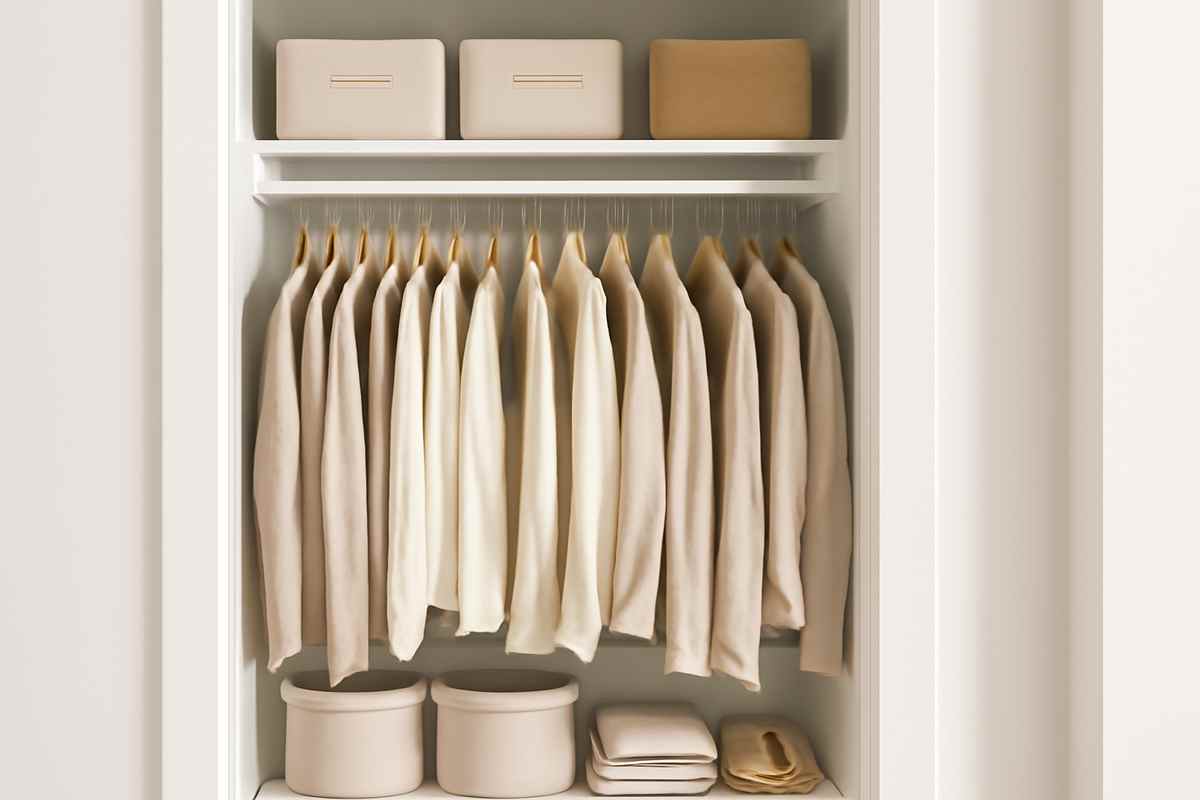
Quick Verdict
Closet organizer reviews: what matters most in 2026
The best closet organizer reviews are not really about finding the biggest kit. They are about matching the organizer to the pressure point inside the closet. For example, a renter dealing with crowded rods needs a different solution than someone whose shelves keep collapsing into piles.
That is why this article stays practical. Instead of pushing one oversized setup, it highlights the organizer types and upgrade paths that solve the most common small-space problems first.
For most homes, the best small closet organizers are the ones that solve one storage problem at a time. Slim hangers, shelf dividers, and stackable bins usually outperform oversized all-in-one systems. Meanwhile, a compact backup rack helps if hanging space is the real bottleneck.
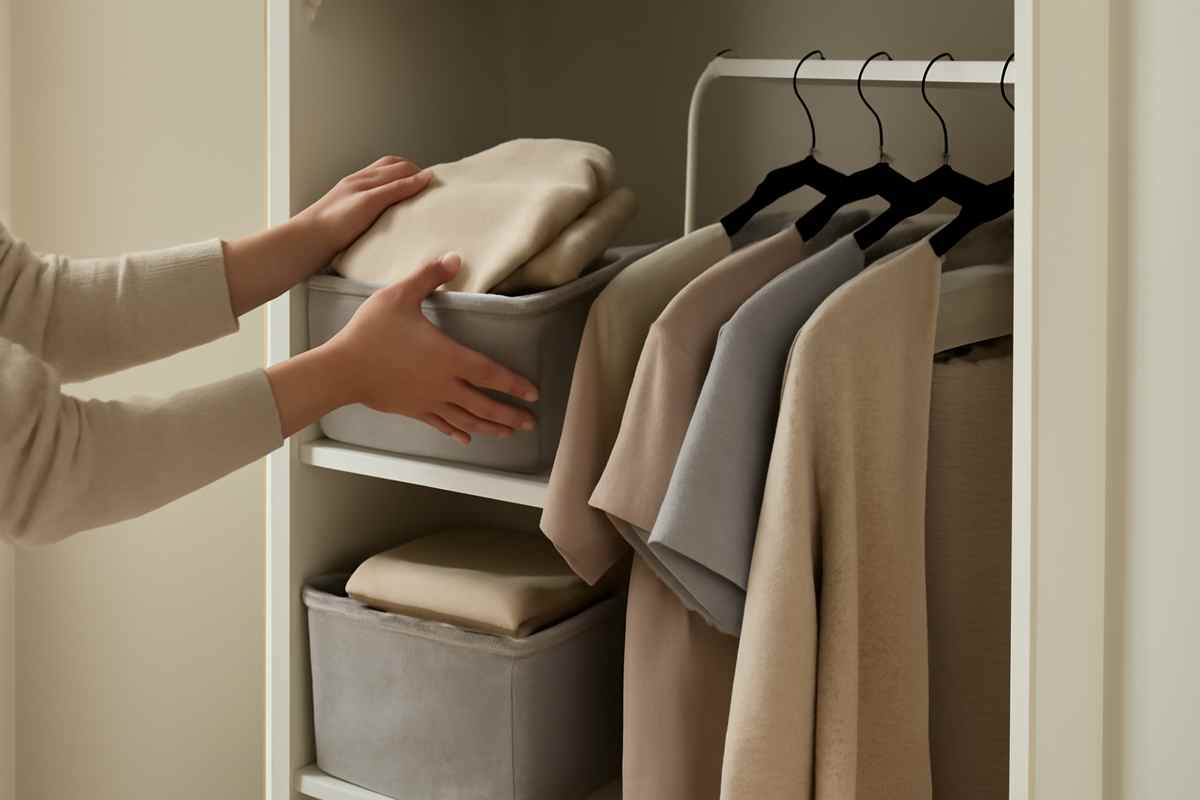
Best For
Best Overall
A modular setup built around slim hangers, one or two bins, and a few shelf organizers is still the strongest overall approach. It solves the most common closet problems without locking you into a bulky system.
Best for Renters
Renters usually benefit most from organizers that move easily and do not require permanent installation. Lightweight bins, shelf dividers, and compact racks are usually safer than fixed systems if your layout may change.
Best for Extra Hanging Space
If your main problem is not shelves but overcrowded hanging space, a dedicated rack or better hanger strategy matters more than extra bins. In that case, go deeper with our guide to the best clothing rack for small spaces.
Best Budget Upgrade
The cheapest improvement is often replacing bulky mixed hangers with slimmer matching ones. That one change can free up space immediately, which is why our guide to the best velvet hangers for closet organization is one of the most useful next reads after this roundup.
What to look for in closet storage for small spaces
First, identify the actual constraint. Some closets need better hanging efficiency, while others need shelf control. Therefore, choose organizers that remove wasted space instead of adding more pieces at random.
Next, think about flexibility. Renters often benefit from lighter tools they can move later. By contrast, permanent hardware makes more sense only when the layout is stable and the closet dimensions are worth committing to.
What type of small closet setup works best?
The best setup depends on what is failing now. If your rod feels crowded, start with better hangers and a cleaner grouping system. If shelves keep collapsing into piles, bins and dividers usually help more than another hanging accessory. If the closet simply lacks enough rod space, a compact secondary rack may do more than any shelf organizer.
That is why a small closet works best when it stays modular. Start with the simplest upgrade that removes friction, then add only the next layer you actually need. If you want a quick recommendation before buying products, use the Closet Organizer Planner.
Closet organizer reviews vs closet organization ideas
Shoppers often need both. Closet organization ideas help you identify the real layout problem first, while closet organizer reviews help you choose the product that fixes it. If you still are not sure whether you need bins, hangers, a rack, or a bench, read the closet organization ideas guide before you buy. If entryway overflow is part of the problem too, our roundup of the best shoe storage benches for small entryways is the next useful read.
Comparison Table
[pw_comparison_table headers=”Organizer type|Best for|Why it helps”]
[pw_comparison_row cells=”Slim velvet hangers|Improving hanging efficiency with minimal cost|Reduce wasted rod space and keep clothes more uniform”]
[pw_comparison_row cells=”Shelf dividers and bins|Messy shelves, folded stacks, and accessories|Add structure without forcing a full system replacement”]
[pw_comparison_row cells=”Compact clothing rack|Closets with too little rod space|Creates extra hanging room when the built-in closet is the real limit”]
[/pw_comparison_table]
Best setup for most people
A balanced setup is usually the smartest route. Start with matching slim hangers, add a few bins for loose items, and then use shelf dividers where stacks keep falling apart. If hanger choice is your first issue, begin with our guide to the best velvet hangers for closet organization.
Common mistakes to avoid
- Buying a full organizer system before measuring shelf depth and rod width.
- Using mixed hangers that waste horizontal room.
- Adding too many bins without a grouping system.
- Ignoring vertical door, wall, and upper-shelf space.
FAQ
What are the best closet organizers for very small closets?
In very small closets, the best organizers are usually slim hangers, shelf dividers, and one or two stackable bins. Those tools improve access without eating up too much room.
Do closet organizers actually save space?
Yes, but only when they remove wasted space and improve layout. Organizers help most when they reduce friction and make clothing easier to see and reach.
What should I look for in closet organizer reviews in 2026?
Focus on the real bottleneck first. The most useful closet organizer reviews explain whether the product improves hanging efficiency, shelf control, renter flexibility, or shoe and accessory overflow.
Should I buy a clothing rack or upgrade my closet first?
If your main issue is limited rod space, a rack may help faster. If the closet already has enough hanging space but poor structure, better hangers and shelf organizers usually give a cleaner return first. For a closer look, compare our guide to the best clothing rack for small spaces and our article on how to organize a small closet without a closet system.
Final Verdict
The best closet organizers for small spaces are practical, modular, and easy to maintain. If you need the simplest all-around upgrade, start with slim hangers and shelf control. If you rent, keep the setup flexible. If extra hanging space is the real problem, add a compact rack instead of overloading the closet. For more related upgrades, browse our Home Products category.
Related closet organization articles
- Best Clothing Rack for Small Spaces in 2026
- Best Velvet Hangers for Closet Organization in 2026
- How to Organize a Small Closet Without a Closet System
Try the Closet Organizer Planner
If you want a faster recommendation before comparing products, use the Closet Organizer Planner to narrow down the best setup for your space.