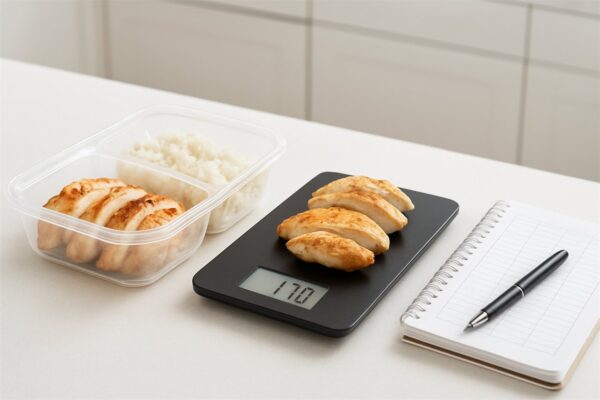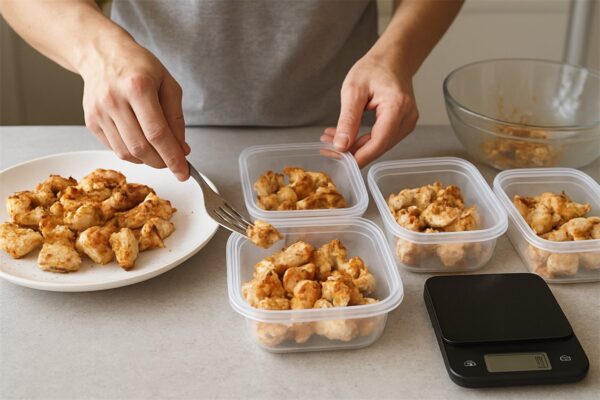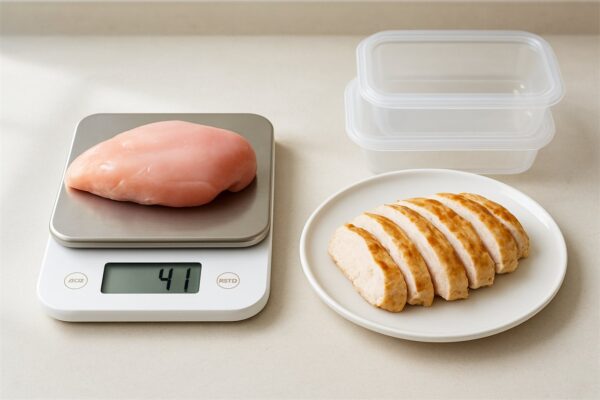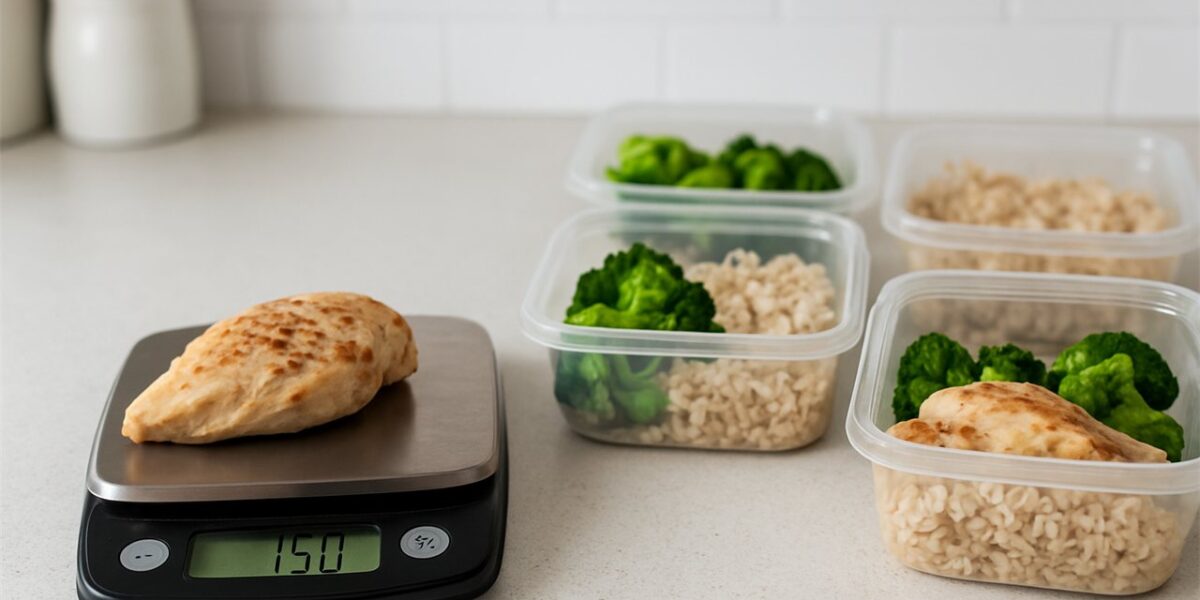
How to weigh chicken for meal prep and macros is mostly about building a repeatable routine, not chasing perfect numbers. If you weigh one batch one way and the next batch another way, your meal prep becomes harder to compare week to week. The easiest workflow is to use a food scale consistently and pair it with the Protein Portion Converter when you want to estimate servings before cooking.
Quick Verdict
The best way to weigh chicken for meal prep and macros is to weigh the cooked batch if your goal is consistent portioning across ready-to-eat meals. If you need to plan how much raw chicken to buy, weigh it raw first, estimate the cooked yield, then confirm the cooked total before portioning. Most readers benefit from using both stages for different jobs.
How to Use a Food Scale for Chicken Meal Prep
- Weigh the raw chicken if you want to estimate total yield before cooking.
- Cook the full batch.
- Place a bowl or tray on the scale and tare it.
- Weigh the cooked batch.
- Divide that cooked total by the number of meals you want.
- Fill each container using the same target weight.
Technical Table: Raw vs Cooked Weighing Workflow
| Stage | What You Weigh | Why It Helps | Best Tool or Page |
|---|---|---|---|
| Before cooking | Raw chicken | Estimate how many meals the batch can make | Protein Portion Converter |
| After cooking | Total cooked batch | Set clean, repeatable portion targets | Cooked portioning guide |
| During packing | Each container | Keeps meals consistent for the week | Digital food scale |
Comparison Table: Weighing Methods for Meal Prep
| Method | Accuracy | Convenience | Best For |
|---|---|---|---|
| Raw-only weighing | Moderate | Good for planning, weaker for final portions | Shopping and batch estimation |
| Cooked-only weighing | High for portioning | Very practical once meals are ready | Weekly meal prep containers |
| Raw plus cooked check | Best overall | Most complete workflow | People who want both planning and consistency |
Best Practical Workflow for Macros
If macros matter to you, the most useful habit is consistency. Use the same approach every week. For many readers, that means weighing cooked chicken before it goes into each container because that is the exact food that ends up in the meal. If you prep the same recipe often, this gets easier with repetition.
If you are still deciding your portion target, our article on how much chicken per meal for meal prep gives a more practical range, while raw vs cooked chicken for calorie tracking explains why the numbers shift.
What to Know Before You Start
You do not need a complicated macro system to benefit from this. A simple digital scale, a cooked batch weigh-in, and a consistent portion target are enough for most home meal prep. The mistake is usually not that people use the wrong scale. It is that they switch between methods too often or skip the weighing step when they are in a hurry.
If you still need a scale that fits this workflow, compare the current picks in our guide to the best kitchen scales in 2026 or go straight to the best food scale for counting calories.
Pros and Cons of Weighing Chicken for Macros
Pros
- Meal-prep containers feel more consistent
- Tracking gets easier over time
- Grocery planning improves when you learn your usual yields
Cons
- Requires a few extra minutes during prep
- Feels tedious until it becomes routine
- Exact values can still vary by cut and cooking method
FAQ
Should I weigh chicken before or after cooking for macros?
After cooking is usually better for actual meal-prep containers. Before cooking is still useful for planning total yield.
Can I portion chicken without a scale?
Yes, but the portions will be less consistent. A scale is the easier way to repeat the same routine every week.
Do I need an expensive scale for meal prep?
No. A simple digital food scale with tare and readable numbers is enough for most readers.
Final Verdict
The best way to weigh chicken for meal prep and macros is the method you can repeat every week without friction. For most people, that means estimating raw yield when planning, then weighing the cooked batch before portioning. It is simple, practical, and much easier to sustain than guessing.
If you want a low-cost tool that supports this workflow, a digital food scale on Amazon is still the most useful starting point.
Sources and Related Reading
For cooking safety guidance, see FoodSafety.gov and the USDA FSIS chicken guide.