For most home bakers, a kitchen scale does not need laboratory precision. It needs dependable gram readings, a trustworthy tare function, and enough consistency that the same recipe behaves similarly every time you make it. In practice, repeatability matters more than chasing extreme technical precision you will never notice in everyday baking.
Quick FAQ
What matters most when choosing a kitchen scale?
Read stability, tare speed, clear display, and practical day-to-day workflow matter most.
Is digital always better than mechanical?
For most people, digital is faster and easier to use consistently.
Do I need expensive features?
Usually no. Consistency and usability beat feature overload for most home kitchens.
Best For / Not Ideal For
Best for:
- People who want practical buying guidance without fluff.
- Users choosing a scale for daily baking, meal prep, or tracking.
- Shoppers comparing trade-offs before purchasing.
Not ideal for:
- Users needing commercial-grade specialty equipment.
That is why the best baking scale is usually not the one with the most impressive-looking specifications. It is the one that measures reliably, responds quickly, and stays easy to use when you are adding ingredients one after another in the same bowl.
Quick Answer
A kitchen scale that reads accurately to the gram is usually enough for home baking. Stable gram readings, fast response, and dependable tare are what matter most for bread, cookies, cakes, and doughs.
| Accuracy detail | Why it matters |
|---|---|
| Stable gram readings | Helps you repeat recipes with less variation. |
| Reliable tare | Lets you add ingredients one after another in the same bowl. |
| Fast response | Makes baking sessions less frustrating. |
What Accuracy Really Means in a Home Kitchen
Most baking problems attributed to “accuracy” are actually about inconsistency. If a scale drifts, lags badly, or gives unstable readings, small ingredient differences add up. A stable scale that reads in grams is far more useful than one that looks technical but feels annoying in real use.
Why Grams Matter
Baking works better by weight than by volume because flour, sugar, cocoa, and other ingredients are easy to mis-measure in cups. A gram-based scale removes a lot of that variability and helps make recipes more repeatable.
What Matters More Than Ultra-Precision
- Tare function: critical for adding multiple ingredients into one bowl.
- Fast readout: slow scales interrupt rhythm and increase mistakes.
- Stable display: flickering numbers create uncertainty.
- Practical size: the scale should fit typical bowls and store easily.
When Precision Matters More
Very small quantities such as yeast, baking powder, or specialist baking projects can make precision feel more important, but for most home bakers the everyday difference comes from consistent gram readings, not from exotic spec sheets.
Final Verdict
A kitchen scale for baking should be accurate enough to give reliable gram readings every time you repeat a recipe. For most home use, that means consistent-to-the-gram performance, fast response, and easy tare rather than extreme technical precision. If the scale helps you measure by weight smoothly and repeatably, it is accurate enough for real baking.
Helpful Kitchen Calculators
Use these free tools to apply what you just read and plan portions faster.
Digital and mechanical kitchen scales both solve the same basic problem, but they do it with very different levels of convenience and precision. For most modern kitchens, digital scales are simply more practical. They are easier to read, easier to tare, and easier to use for tasks where repeatability matters.
Quick FAQ
What matters most when choosing a kitchen scale?
Read stability, tare speed, clear display, and practical day-to-day workflow matter most.
Is digital always better than mechanical?
For most people, digital is faster and easier to use consistently.
Do I need expensive features?
Usually no. Consistency and usability beat feature overload for most home kitchens.
Best For / Not Ideal For
Best for:
- People who want practical buying guidance without fluff.
- Users choosing a scale for daily baking, meal prep, or tracking.
- Shoppers comparing trade-offs before purchasing.
Not ideal for:
- Users needing commercial-grade specialty equipment.
Mechanical scales can still appeal to shoppers who like analog simplicity or do not want batteries, but in everyday cooking and baking they usually give up too much convenience for most people.
Quick Answer
For most home cooks, a digital kitchen scale is the better choice. It is usually more accurate, more compact, and more useful for baking, meal prep, and calorie tracking. Mechanical scales still work for simpler casual use, but they are rarely the strongest all-around option.
| Type | Best reason to choose it |
|---|---|
| Digital scale | Best for baking, meal prep, calorie tracking, and precise gram readings. |
| Mechanical scale | Best for shoppers who prefer an analog design and simple no-battery use. |
Why Digital Scales Usually Win
- More precise readings: especially helpful for baking and portioning.
- Tare function: makes multi-ingredient weighing much easier.
- Clear gram display: better for repeatability and food tracking.
- Smaller footprint: many digital models are easier to store.
- Faster use: helpful in everyday cooking and meal prep.
Why Some People Still Like Mechanical Scales
Mechanical scales can feel straightforward and durable, and some shoppers like that they do not rely on batteries. They may be perfectly fine for loose everyday measuring when precision is not a major concern. Their appeal is simplicity, not maximum usability.
Where Mechanical Scales Fall Short
The biggest drawback is that they are usually less precise and less convenient for tasks where small differences matter. Without an easy tare function and clear digital readout, they can feel slower and less practical for baking or meal prep.
Best Choice by Use Case
For baking: digital is usually the better choice.
For calorie tracking or meal prep: digital wins clearly.
For casual occasional weighing: mechanical can still be acceptable if you truly prefer analog simplicity.
Final Verdict
Digital kitchen scales are better for most people because they make precise weighing easier and faster in real use. Mechanical scales still have a place for shoppers who value analog simplicity, but for baking, portioning, and repeatable everyday cooking, digital is usually the smarter buy.
Helpful Kitchen Calculators
Use these free tools to apply what you just read and plan portions faster.
The best kitchen scale for meal prep is the one that makes portioning feel fast, repeatable, and easy enough to use every day. Most meal-prep shoppers do not need a specialist scale with unusual features. They need a compact digital model that reads quickly, tares cleanly, and stores without becoming another countertop problem.
Quick FAQ
What matters most for meal-prep scales?
Fast read speed, stable numbers, and reliable tare are the biggest time savers for daily portioning.
Is a compact scale enough for meal prep?
Usually yes, as long as the platform fits your bowls and the max capacity covers your batch sizes.
Should I measure food raw or cooked?
Use one method consistently. If you switch methods, apply a conversion workflow so tracking stays accurate.
Best For / Not Ideal For
Best for:
- People doing weekly meal prep and portioning containers.
- Users who need fast tare-reset workflows.
- Small-space kitchens where compact storage matters.
Not ideal for:
- People focused mostly on precision baking workflows.
- Users who need advanced nutrition databases built into the scale.
That is especially true if you regularly portion protein, rice, vegetables, snacks, or calorie-tracked meals. In that context, convenience matters just as much as basic accuracy.
Quick Verdict
For most home users, the best kitchen scale for meal prep is a slim digital scale with fast readings, clear gram display, and a reliable tare button. Models like Etekcity remain strong all-around options because they balance practicality, size, and everyday ease of use.
| Need | Why it matters for meal prep |
|---|---|
| Fast readings | Helps when portioning several ingredients in one session. |
| Compact body | Easier to store between prep sessions. |
| Reliable tare | Lets you measure ingredients in the same container. |
Meal Prep Workflow This Scale Should Support
A meal-prep scale should make the repetitive part feel easy: weigh the empty container, tare, add protein or carbs, tare again, and keep moving without waiting for the display to catch up. If that workflow feels clumsy, even an accurate scale becomes annoying. That is why speed, readability, and easy cleanup matter so much for weekly prep.
- Single-meal portioning: focus on fast stabilization and a platform that works well with containers.
- Batch prep: prioritize quick tare and easy wipe-clean surfaces.
- Small-space kitchens: prioritize a slim body that stores easily between sessions.
What Matters Most for Meal Prep
Meal prep is repetitive by nature, so the best scale is the one that reduces friction. A clear display, easy wipe-clean surface, and reliable response speed often matter more than extras you may rarely use. If the scale feels annoying, slow, or awkward to store, it becomes less useful over time.
Best Features to Prioritize
- Fast response: especially helpful when weighing several containers in a row.
- Gram measurement: best for calorie tracking and portion consistency.
- Easy tare: essential for bowls, containers, and multi-step prep.
- Slim shape: easier to store in small kitchens.
- Easy-clean platform: important when food prep happens frequently.
Who Needs This Most
For calorie tracking: a digital scale becomes one of the most useful prep tools you own.
For batch cooking: it helps divide meals more evenly.
For portion consistency: it removes the guesswork that often builds up across the week.
Common Mistakes
- Buying a bulky scale that becomes annoying to store
- Ignoring tare convenience when weighing multiple ingredients
- Choosing novelty features over read speed and clarity
- Trying to eyeball portions even after buying the scale
Where to go after this meal-prep guide
- How to Use a Food Scale for Calories and Portion Control if you want the step-by-step routine after buying.
- How Much Chicken Per Meal for Meal Prep? if your next problem is protein portioning.
- Full Tools Hub if you want the calculators in one place.
Quick Pick by Prep Style
- Protein-heavy meal prep: choose the model that makes repeated tare resets and gram readings feel effortless.
- General weekly lunches: a compact digital all-around scale is usually enough.
- Calorie-tracked containers: keep the workflow gram-first and pair the scale with the Meal Prep Portion Calculator.
Final Verdict
The best kitchen scale for meal prep is not the fanciest model. It is the one that feels quick, dependable, and simple enough to use repeatedly without thinking about it. For most buyers, a compact digital scale with fast readings and a reliable tare function is the smartest choice because it supports consistency without creating extra friction.
Helpful Kitchen Calculators
Use these free tools to apply what you just read and plan portions faster. If you want the broader kitchen workflow, open the Start Here guide.
The best kitchen scale for baking should make measuring flour, sugar, butter, and dough ingredients feel simple and repeatable. In most home kitchens, that means a compact digital scale with gram readings, a dependable tare function, and enough stability that you trust it from recipe to recipe.
Quick FAQ
How accurate should a baking scale be?
For home baking, stable 1-gram resolution is usually enough when tare and repeatability are solid.
Do I need a scale with ml mode for baking?
Not necessarily. Gram-first workflows are usually more consistent and easier to repeat.
Can I use a food scale instead of measuring cups?
Yes. Using grams usually improves consistency and reduces recipe errors from cup packing differences.
Best For / Not Ideal For
Best for:
- Home bakers who measure flour, sugar, and butter in grams.
- People who want consistent recipe results week after week.
- Users who value read stability over flashy features.
Not ideal for:
- People mainly tracking macros and meal-prep portions.
- Users who need very high max capacity for large bulk prep.
For baking, repeatability matters more than gimmicks. A scale that feels consistent and quick is far more useful than one with a long feature list you barely use.
Quick Verdict
If you want the best kitchen scale for baking in 2026, a slim digital model remains the safest choice for most people. Etekcity still stands out as a strong everyday option because it balances accuracy, storage convenience, and value.
| Feature | Why bakers care |
|---|---|
| Gram accuracy | Baking works better when ingredients are measured by weight instead of volume. |
| Tare button | Lets you reset the scale after each ingredient in the same bowl. |
| Easy cleanup | Useful when flour, dough, and sticky ingredients are involved. |
Best Baking Workflow for Home Cooks
The right baking scale should support a simple repeatable routine: place the mixing bowl, tare to zero, add one ingredient at a time, then tare again without hesitation. That workflow matters more than niche modes because most home bakers just want cleaner doughs, more reliable cake texture, and fewer recipe misses caused by cup-based measuring.
- For cookies and cakes: prioritize easy gram readings and a display that stays readable with a medium bowl on top.
- For bread and pizza dough: tare speed matters because you often measure several ingredients back to back.
- For small kitchens: storage convenience matters almost as much as accuracy, because friction kills daily use.
What Bakers Should Prioritize
- Reliable gram readings: the core requirement for better recipe consistency.
- Fast tare: critical when adding several ingredients in sequence.
- Stable platform: bowls should sit comfortably without awkward balancing.
- Practical storage: slim designs work better in most kitchens.
- Readable display: easier to trust when you are measuring quickly.
Why Digital Is Usually Best
Digital scales make it much easier to follow weight-based recipes accurately. They also reduce the variability that comes from cup-based measuring, especially with flour and other ingredients that pack unevenly. For most bakers, that alone justifies choosing digital over other formats.
Who Needs This Most
Home bakers: because repeatability matters for doughs, cakes, cookies, and bread.
People moving from cups to grams: because the scale becomes one of the simplest upgrades in the whole baking process.
Small kitchens: because compact digital scales are easy to store.
Common Mistakes
- Choosing a scale with awkward storage in a small kitchen
- Ignoring tare convenience when baking in one bowl
- Overvaluing unusual features while neglecting read stability
- Sticking to volume measures for recipes that benefit from weight
Where to go after this baking guide
- Best Kitchen Scales Comparison 2026 if you want to compare all-around options before buying.
- How to Choose a Kitchen Scale if you still need help on capacity, tare, or cleaning trade-offs.
- Full Tools Hub if you want faster kitchen conversions once you pick a scale.
Quick Pick by Baking Style
- Mostly breads and doughs: choose the scale that feels fastest to tare and easiest to read with a larger bowl.
- Mostly cookies, cakes, and everyday baking: a slim digital scale like Etekcity is usually the safest all-around choice.
- Mostly occasional recipes: keep it simple and choose the model you will actually leave accessible and use.
Final Verdict
The best kitchen scale for baking is the one that gives stable gram readings, tares cleanly, and stays easy to use every time you bake. For most people, that means a compact digital model rather than a bulky specialty scale. If it helps you measure by weight consistently and keeps recipe prep straightforward, it is doing exactly what a good baking scale should do.
Helpful Kitchen Calculators
Use these free tools to apply what you just read and plan portions faster. If you want the broader kitchen workflow, open the Start Here guide.
If you bake regularly, meal prep often, or simply want more accurate portions, choosing the right scale saves time and reduces guesswork. The best kitchen scale is not always the most expensive one. It is the one that fits your counter, measures quickly, and stays easy to use every day.
Quick FAQ
What matters most when choosing a kitchen scale?
Read stability, tare speed, clear display, and practical day-to-day workflow matter most.
Is digital always better than mechanical?
For most people, digital is faster and easier to use consistently.
Do I need expensive features?
Usually no. Consistency and usability beat feature overload for most home kitchens.
Best For / Not Ideal For
Best for:
- People who want practical buying guidance without fluff.
- Users choosing a scale for daily baking, meal prep, or tracking.
- Shoppers comparing trade-offs before purchasing.
Not ideal for:
- Users needing commercial-grade specialty equipment.
For shoppers comparing real product options, our Etekcity Food Kitchen Scale review and our kitchen scales comparison are the best next reads after this guide.
Fast Buying Checklist
- Buy for baking: prioritize stable gram readings, tare speed, and a platform that works with your mixing bowls.
- Buy for meal prep: prioritize quick stabilization, compact storage, and easy wipe-down after frequent use.
- Buy for calorie tracking: prioritize a scale you will keep within reach and use in grams every day.
- Skip unnecessary extras: most home cooks do not need advanced features if the scale already handles core kitchen workflows well.
How to choose the best kitchen scale for your needs
The easiest way to choose the best kitchen scale is to start with your actual use case. A baker usually needs accuracy in grams, a reliable tare function, and a flat surface that is easy to wipe down. Someone using a scale for coffee, meal prep, or calorie tracking may care more about fast readings and compact storage.
[pw_technique_table headers=”Factor|What to look for”]
[pw_technique_row label=”Accuracy” value=”Look for reliable gram readings and consistent repeat measurements.”]
[pw_technique_row label=”Capacity” value=”Most home cooks do well with an 11 lb capacity, but larger bowls need more headroom.”]
[pw_technique_row label=”Units” value=”Choose a scale that switches between grams, ounces, pounds, and milliliters.”]
[pw_technique_row label=”Ease of cleaning” value=”Flat buttons and a smooth platform are easier to wipe after flour, oil, or spills.”]
[pw_technique_row label=”Display” value=”A clear display matters if you use wide bowls or prep multiple ingredients quickly.”]
[/pw_technique_table]
Why a digital kitchen scale matters
Weight-based measuring is usually more consistent than measuring by volume, especially for baking ingredients like flour. King Arthur Baking explains that weighing ingredients helps reduce variation and improves repeatable results in the kitchen. If you want a practical reference, their guide to using a digital kitchen scale and ingredient weight chart are both useful.
Kitchen scale features that actually matter
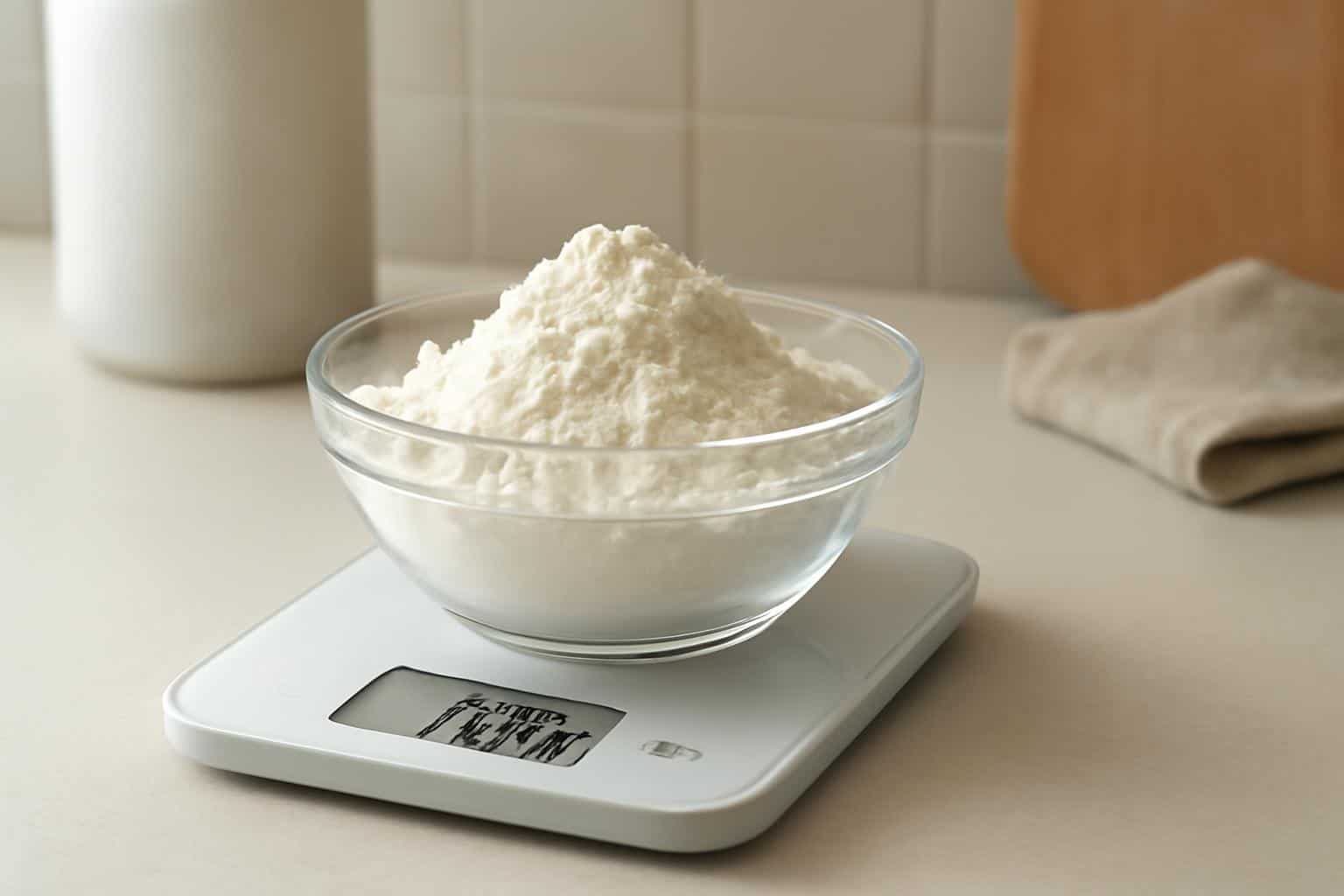
A tare button is non-negotiable. It lets you zero out bowls and containers so you can add ingredients one after another without mental math. Fast response time also matters more than many shoppers expect. A laggy scale gets annoying quickly when you cook often.
Display placement is another detail people miss. Some compact kitchen scales work well until a large mixing bowl blocks the numbers. If you use wide bowls, look for a model with a display that stays visible from above.
Common mistakes buyers make
The most common mistake is buying on rating alone without thinking about how the scale will actually be used. A highly rated scale can still be a poor choice if it is too small, hard to read, or awkward to store. Another mistake is ignoring cleanup. If flour gets trapped around raised buttons or seams, the scale becomes annoying to maintain.
[pw_comparison_table headers=”Buyer need|Good fit|Poor fit”]
[pw_comparison_row cells=”Baking and bread work|Precise gram readings, tare function, flat platform|Inconsistent readings or awkward buttons”]
[pw_comparison_row cells=”Meal prep and portions|Fast readings, compact body, easy storage|Bulky scale that stays on the counter”]
[pw_comparison_row cells=”Multi-use kitchen setup|Multiple units and easy cleanup|Single-unit scale with hard-to-read display”]
[/pw_comparison_table]
Choose by Your Main Use Case
- Mainly baking: go next to the best kitchen scale for baking.
- Mainly meal prep: go next to the best kitchen scale for meal prep.
- Mainly calorie tracking: go next to the best food scale for counting calories.
- You just want one safe all-around pick: open the best kitchen scales comparison.
Our practical recommendation
For most home shoppers, a slim digital kitchen scale with gram accuracy, multiple unit options, and a simple wipe-clean surface is the right place to start. If you want a concrete product example, read our full Etekcity review. If you are comparing a few options side by side, go to our best kitchen scales comparison.
If you need quick measurement help while comparing scales, try our Kitchen Scale Converter for grams, ounces, cups, and ingredient weights.
FAQ
What is the best kitchen scale for home use?
The best option for most people is a digital kitchen scale with gram accuracy, tare, multiple unit settings, and a flat design that is easy to clean.
Do I really need a kitchen scale for baking?
If you want more consistent results, yes. Baking by weight reduces ingredient variation and usually gives more repeatable outcomes than cup measurements.
How much capacity should a kitchen scale have?
For general home use, around 11 pounds is usually enough. Larger bowls and batch prep may justify more capacity.
Browse more ideas in our Kitchen category and related buying guides in Guides. If you want the shortest path from guide to action, open the Start Here guide or the full tools hub.
Pick the right next page
- Best Kitchen Scales Comparison 2026 if you are ready to compare actual models.
- Best Kitchen Scale for Baking if precision for baking is your main use case.
- Best Food Scale for Counting Calories if tracking and portions matter most.
Use the Meal Prep Portion Calculator
If you are buying a scale for meal prep, the Meal Prep Portion Calculator is a useful follow-up tool for real portion planning.
Helpful Kitchen Calculators
Use these free tools to apply what you just read and plan portions faster.
If you want the best kitchen scale in 2026, start by matching the scale to your real use case: baking, meal prep, or calorie tracking. Most people do not need extra complexity. They need a kitchen scale that stays accurate, reads clearly, stores easily, and feels worth the price.
- Best overall kitchen scales (quick comparison)
- Best kitchen scale for baking
- Best kitchen scale for meal prep
- Best food scale for counting calories
Why You Can Trust This Comparison
This page is designed for readers who want a fast, practical shortlist rather than a feature dump. Pick Wisely compares these kitchen scales using everyday buying criteria: read stability, tare convenience, display visibility, storage footprint, cleanup, and overall fit for baking, meal prep, and calorie tracking.
Not every page on the site is based on the same kind of evaluation. This comparison combines editorial research, public product information, and practical kitchen workflow analysis to explain tradeoffs clearly instead of pretending every low-cost scale is meaningfully different.
How We Chose These Picks
- Accuracy for normal kitchen use: stable gram readings matter more than long feature lists.
- Tare speed and usability: the scale needs to work smoothly when you add ingredients one by one.
- Display visibility: a reading is only useful if you can see it with a bowl on top.
- Cleanup and storage: daily kitchen tools should be easy to wipe down and easy to store.
- Fit by routine: the best scale depends on whether you bake, portion meal prep, or track calories most often.
Best For / Not Ideal For
Best for:
- People who want one quick side-by-side comparison before buying.
- Shoppers choosing between baking, meal prep, and calorie tracking use cases.
- Buyers who want a practical pick without reading 10 separate reviews.
Not ideal for:
- People who only need a deep single-product review.
- Users shopping for professional lab-grade scales.
This comparison looks at three popular options shoppers often consider together: the Etekcity Food Kitchen Scale, the Amazon Basics Digital Kitchen Scale, and the Ultrean Digital Food Scale. Use it if you want the best kitchen scale for baking, the best one for meal prep, or the safest low-cost pick without overthinking the category.
- Best overall: Etekcity for the strongest all-around balance
- Best for baking: Etekcity for clearer everyday precision
- Best budget backup: Ultrean when price matters most
Quick Verdict
If you want the lowest-risk all-around pick, start with Etekcity. If your budget is tighter, the other two options can still work, but they make more sense when you already know which tradeoff you are accepting.
For most shoppers, the Etekcity Food Kitchen Scale is still the safest overall buy. It balances readability, compact size, and everyday usability better than the typical low-cost alternatives. If your main priority is keeping cost low, however, Amazon Basics or Ultrean can still make sense.
Best For
Best Overall
The Etekcity Food Kitchen Scale is the strongest all-around pick for most people because it feels balanced across accuracy, storage, cleanup, and day-to-day use. If you want one scale that works for baking, portioning, and general kitchen use, this is the easiest recommendation.
Best for Baking
If you care most about consistent ingredient weighing, an easy-to-read display and reliable gram measurements matter more than extras. That is exactly why the Etekcity model still stands out for home baking. For a more baking-specific breakdown, see our guide to the best kitchen scale for baking in 2026.
Best for Meal Prep
If your routine is mostly portioning proteins, carbs, and containers for the week, a simple digital scale with quick unit switching is usually enough. You can compare that use case more directly in our guide to the best kitchen scale for meal prep in 2026.
Best Budget
Ultrean makes the most sense as a lower-cost backup or starter option when you want basic food weighing without spending much. Amazon Basics also fits this price-first category, but Etekcity remains the safer all-around recommendation for most shoppers.
Quick Kitchen Scale Comparison Table
| Scale | Best Overall Etekcity Food Kitchen Scale | Amazon Basics Digital Kitchen Scale | Best Budget Backup Ultrean Digital Kitchen Scale |
|---|---|---|---|
| Best for | Most shoppers who want the safest all-around pick | Shoppers who want a recognizable low-cost option | Budget shoppers who want a simple backup or starter scale |
| Strength | Great balance of accuracy, size, and cleanup | Simple value-first option | Affordable, compact, and easy to store |
| Platform feel | Compact stainless steel top | Compact stainless steel design | Compact design suited to everyday light use |
| Ease of use | Very straightforward | Straightforward | Straightforward |
| Best use case | Baking, meal prep, and macro tracking | Budget everyday kitchen weighing | Entry-level food weighing and backup use |
| Main caution | Small bowls can cover the display | Less standout than Etekcity overall | May feel more basic than top picks |
| Check Price | Check Price | Check Price |
How We Judged These Kitchen Scales
For this comparison, the main question is not which scale has the longest feature list. It is which model feels easiest to trust in a normal kitchen. We prioritized four things that matter most in real use: stable gram readings, a responsive tare button, easy cleanup, and whether the scale stays convenient enough to use daily.
- Read stability: numbers should settle quickly enough that weighing ingredients does not feel slow.
- Kitchen fit: the platform should work with common bowls, plates, and meal-prep containers.
- Storage friction: a scale that stores easily is more likely to stay in rotation.
- Value at normal use: we favored models that make sense for home cooks instead of niche edge cases.
Best Overall: Etekcity Food Kitchen Scale
The Etekcity scale wins this comparison because it offers the strongest balance of practicality and value. It is easy to clean, easy to store, and easy to recommend to both bakers and meal-prep shoppers. If you only want to buy one kitchen scale and stop researching, this is the safest pick.
It also feels like the most proven mainstream option in this group. That matters because a kitchen scale is not a product most people want to overanalyze. They want something that works, stays readable, and gets out of the way. For the product-specific breakdown, go deeper with our Etekcity Food Kitchen Scale review.
Best for Price-First Shoppers: Amazon Basics Digital Kitchen Scale
The Amazon Basics Digital Kitchen Scale appeals to shoppers who want a familiar budget option and prefer buying straightforward Amazon Basics products when the function is simple. If your goal is basic kitchen weighing at a low price and you are not chasing premium design, it is a reasonable shortlist option.
Its main challenge is not that it is bad. It is that the Etekcity scale often looks more convincingly polished for the same kind of shopper. That makes Amazon Basics more of a price-first decision than a best-overall decision.
Best Budget Backup: Ultrean Digital Kitchen Scale
Ultrean makes sense for shoppers who want a very simple digital kitchen scale without spending much. It is the kind of product that works best when expectations are practical: everyday weighing, small-space storage, and light home use rather than premium finishing details.
If you only need a backup scale, a starter scale, or something for occasional meal prep, Ultrean can still be a reasonable option. It just does not feel as universally safe a recommendation as Etekcity for most buyers.
When a kitchen scale is worth buying
A kitchen scale is worth buying as soon as you want more consistency in one of three areas: baking, meal prep, or calorie tracking. Measuring cups are still useful, but a scale usually gives cleaner repeatability when recipes need precision or when portions need to stay close from one meal to the next.
It is also one of the cheapest tools that can quietly improve daily cooking. If you are still deciding what matters most before buying, read How to Choose the Best Kitchen Scale in 2026 before committing to one model.
Which Kitchen Scale Should You Buy?
| Shopper need | Best pick |
|---|---|
| You want the safest all-around choice | Buy the Etekcity Food Kitchen Scale. |
| You want a recognizable Amazon budget option | Choose the Amazon Basics Digital Kitchen Scale. |
| You want a basic low-cost starter or backup | Consider the Ultrean Digital Kitchen Scale. |
What matters most in a kitchen scale
For most home cooks, the buying decision should come down to four questions. Is the display easy to read? Is the surface easy to clean? Does it store easily in your kitchen? And does the price make sense for how often you will use it? If a model gets those basics right, it is already doing most of the job.
That is why this category rewards simplicity. Fancy extras matter far less than consistent usability. In practical terms, the best kitchen scale is usually the one you do not have to think about every time you cook.
If you need quick measurement help while comparing scales, try our Kitchen Scale Converter for grams, ounces, cups, and ingredient weights. Once you have a scale, the Meal Prep Portion Calculator also helps turn bulk prep into cleaner servings.
FAQ
Which kitchen scale is best for baking in 2026?
The Etekcity Food Kitchen Scale is the strongest overall choice for most home bakers because it balances value, usability, and day-to-day practicality well.
Is Amazon Basics or Etekcity better for a kitchen scale?
For most shoppers, Etekcity is the better all-around pick. Amazon Basics makes more sense if your priority is simply finding a familiar low-cost option.
Is a cheap kitchen scale good enough for meal prep?
Yes, if it is readable, consistent, and easy to use. Most meal-prep shoppers do not need premium features; they need reliable basic measurements.
Do I need a kitchen scale for calorie tracking?
Not everyone needs one, but it can make calorie tracking much more consistent because portion estimates become more repeatable. That matters most when you regularly meal prep or weigh ingredients like rice, oats, protein, or nut butter.
Fast Buyer Shortcut
- Buy Etekcity if you want one scale that covers baking, meal prep, and daily kitchen use without much trade-off.
- Choose Amazon Basics if you mainly want a familiar low-cost option and are comfortable with a simpler value-first pick.
- Choose Ultrean if you want a starter or backup scale at the lowest practical cost.
Final Verdict
If you want the safest recommendation, buy the Etekcity Food Kitchen Scale. If your decision is mostly about keeping cost low, Amazon Basics is a fair option. If you want an inexpensive backup or starter scale, Ultrean is still worth a look. The good news is that this category does not require a luxury budget. You just need the model that best matches how you cook. Check the current price for the Etekcity scale on Amazon, or compare the other options directly in the table above.
Related Kitchen Scale Articles
If you want to move from a broad comparison to a more specific decision, these related pages break the category down by use case. They also connect this comparison article back into the rest of the kitchen-scale cluster.
- Etekcity Food Kitchen Scale Review 2026
- How to Choose the Best Kitchen Scale in 2026
- Best Kitchen Scale for Baking in 2026
- Best Kitchen Scale for Meal Prep in 2026
- Digital vs Mechanical Kitchen Scale: Which Is Better?
- Best Food Scale for Counting Calories in 2026
Helpful Meal Prep Reading
If your kitchen scale decision is mainly about portioning protein and tracking meals more consistently, these guides make the use case more practical after you buy the scale.
- Protein Portion Converter
- Raw to Cooked Chicken Weight Conversion
- How Much Chicken Per Meal for Meal Prep?
Not sure where to go next?
If you want the full kitchen workflow, start with the Start Here guide. If you already picked a scale and only need faster kitchen math, open the full tools hub.
Need practical portion help?
After choosing a scale, try the Meal Prep Portion Calculator to split bulk meal prep into simple servings.
Helpful Kitchen Calculators
Use these free tools to apply what you just read and plan portions faster.
The Etekcity Food Kitchen Scale has become one of the easiest kitchen gadgets to recommend for shoppers who want a simple, affordable way to weigh ingredients for baking, calorie tracking, meal prep, and portion control. As of March 24, 2026, it remains one of Amazon US’s top-selling Kitchen & Dining products, with a strong 4.6 out of 5 rating from more than 144,000 reviews. That combination of popularity, price, and ease of use is the reason it shows up so often in home kitchens.
Quick FAQ
What makes a kitchen scale good for daily use?
Stable readings, quick tare, clear display, and easy cleanup matter most day to day.
Can one scale work for baking and meal prep?
Yes. A dependable digital model with gram precision usually covers both workflows well.
Is a higher price always better for scales?
Not always. Practical usability and consistent readings matter more than extra features.
Best For / Not Ideal For
Best for:
- People who want a reliable daily-use kitchen scale.
- Users balancing baking, meal prep, and calorie tracking.
- Shoppers who value simple controls and fast tare workflow.
Not ideal for:
- People needing specialized commercial/lab equipment.
- Users who want app-dependent smart-scale features first.
Quick Verdict
The Etekcity Food Kitchen Scale is best for home cooks who want a reliable digital scale without paying for unnecessary extras. It is compact, easy to wipe clean, and accurate enough for most baking and everyday nutrition tracking. Shoppers who need a very large platform or premium rechargeable features may want to compare a few alternatives first, but for most people this is still one of the safest low-cost buys in the category.
[pw_technique_table][pw_technique_row label=”Best for” value=”Baking, calorie tracking, meal prep, and everyday weighing”][pw_technique_row label=”Standout strength” value=”Affordable accuracy in a compact stainless steel design”][pw_technique_row label=”Capacity” value=”Up to 11 pounds”][pw_technique_row label=”Main drawback” value=”Small platform can feel tight for oversized bowls”][pw_technique_row label=”Value” value=”Excellent for shoppers who want a practical budget kitchen scale”][/pw_technique_table]
How We Evaluated the Etekcity Scale
This review is based on the questions most home cooks actually care about before buying a scale: how readable it feels with a bowl on top, how fast the tare workflow is, how easy the surface is to wipe clean, and whether the value still makes sense for baking, meal prep, and calorie tracking. The goal is not to treat this like lab equipment. The goal is to judge whether it fits normal daily kitchen use better than a generic budget alternative.
- Daily workflow: does the scale feel fast enough to use without frustration?
- Readability: can you still see the display clearly with common kitchen bowls and containers?
- Cleanup: does the surface stay practical after flour, oil, or raw ingredients?
- Value: does the price still make sense compared with other mainstream kitchen-scale options?
Why the Etekcity Scale Stands Out
The main reason this scale keeps selling is that it solves a very ordinary problem well. It gives you fast, readable measurements in grams and ounces, it does not take up much counter space, and it is simple enough that you do not have to relearn it every time you pull it out. For a kitchen tool that often gets used in rushed situations, that matters.
The stainless steel top is also a practical advantage. It is easier to wipe down after baking or weighing raw ingredients than textured plastic designs, and the flat profile makes storage easier in smaller kitchens. That is part of why the Etekcity scale works for both weight-loss tracking and home baking: it feels like a low-friction tool, not a specialty gadget.
Etekcity Food Kitchen Scale Comparison Table
[pw_comparison_table headers=”Factor|Etekcity Food Kitchen Scale|What it means for shoppers”][pw_comparison_row cells=”Display|Clear digital LCD|Easy to read for quick weighing tasks”][pw_comparison_row cells=”Measurement units|Grams and ounces|Useful for both recipes and nutrition tracking”][pw_comparison_row cells=”Cleaning|Flat stainless steel surface|Fast wipe-down after use”][pw_comparison_row cells=”Size|Compact footprint|Good for smaller kitchens, less ideal for very large bowls”][pw_comparison_row cells=”Price position|Budget-friendly|Strong value for first-time scale buyers”][/pw_comparison_table]
Pros and Cons
Pros
- Strong value for the price
- Compact and easy to store
- Simple interface with practical unit switching
- Stainless steel top is easy to clean
- Reliable choice for meal prep and baking basics
Cons
- Not the best fit for very large mixing bowls
- Battery-powered rather than rechargeable
- Display visibility can be partially blocked by oversized containers
Who Should Buy the Etekcity Kitchen Scale
This scale is a strong match for shoppers who want one affordable tool that covers several kitchen jobs at once. If you measure ingredients for baking, track portions for macros, or prep meals in batches, it is a very sensible purchase. It also makes sense for beginners because the learning curve is minimal.
If you are comparing multiple options before buying, read our best kitchen scales comparison for 2026. That article puts the Etekcity scale next to other popular Amazon picks so you can decide whether you want the best overall option, the cheapest option, or the most compact everyday scale.
How It Performs in a Real Kitchen
In day-to-day use, the Etekcity scale is more about convenience than novelty. It turns on quickly, handles common kitchen tasks without fuss, and does not demand much storage space. That makes it more useful than feature-heavy models that spend most of their life in a drawer.
For home bakers and meal preppers, the tare function is the real convenience feature. Being able to zero the scale between ingredients speeds up prep and reduces dishwashing, which is part of why this type of scale becomes a repeat-use tool rather than a once-a-month gadget.
If you need quick measurement help while comparing scales, try our Kitchen Scale Converter for grams, ounces, cups, and ingredient weights.
FAQ
Is the Etekcity Food Kitchen Scale accurate enough for baking?
Yes. For most home bakers and recipe-based cooking, it is accurate enough to be a practical everyday scale.
Is the Etekcity scale good for calorie counting and meal prep?
Yes. It is a very good fit for portioning ingredients in grams and ounces, which is why it is popular with meal-prep shoppers.
Is the Etekcity Food Kitchen Scale worth buying in 2026?
For shoppers who want a low-cost, dependable kitchen scale, yes. It remains one of the safer Amazon buys in the category.
Buy It If / Skip It If
- Buy it if: you want one compact scale that can cover baking, meal prep, and calorie tracking without much learning curve.
- Buy it if: you care more about low-friction daily use than premium extra features.
- Skip it if: you often use very large bowls that block the display or you want a larger platform by default.
- Skip it if: rechargeable power or app-connected features are more important to you than simple value.
Final Verdict
The Etekcity Food Kitchen Scale is not trying to be premium, and that is exactly why it works so well. It focuses on the basics that matter most: readable measurements, easy cleanup, compact storage, and a price that feels low risk. If you want a reliable kitchen scale without overthinking the purchase, this is still one of the best places to start. Check the current price for the Etekcity Food Kitchen Scale on Amazon.
Related Kitchen Scale Articles
If you are considering the Etekcity scale, these related articles make it easier to compare use cases before you buy. They cover baking, meal prep, calorie counting, and the wider kitchen-scale category.
- How to Choose the Best Kitchen Scale in 2026
- Best Kitchen Scales Comparison 2026
- Best Kitchen Scale for Baking in 2026
- Best Kitchen Scale for Meal Prep in 2026
- How Accurate Should a Kitchen Scale Be for Baking?
- Best Food Scale for Counting Calories in 2026
Helpful Kitchen Calculators
Use these free tools to apply what you just read and plan portions faster.
Cooked rice is easy to over-serve if you rely on scoops, bowls, or rough visual guesses. For meal prep, the cleanest method is simple: cook your batch, let the steam settle for a few minutes, place your container on a kitchen scale, tare it to zero, and portion the cooked rice by weight. That gives you more repeatable servings than using cups alone, especially when one batch cooks slightly wetter or drier than another.
If you already use a meal prep scale, cooked rice is one of the easiest foods to standardize. The exact weight you want will depend on your meal plan, but the process should stay the same every time: weigh the finished rice after cooking, portion each container directly, and keep your serving size consistent across the week.
Quick answer: weigh cooked rice after cooking, not before plating by eye
For most meal prep routines, cooked rice should be measured after it is fully cooked and ready to portion. That is the version you actually eat, store, and reheat. Weighing the cooked portion makes it easier to build repeatable lunches, compare containers evenly, and match the serving size to your own package label or nutrition log.
- Tare the empty meal prep container or bowl first.
- Add cooked rice until you reach your target weight.
- Repeat the same target weight for each container.
- Use the same scale, spoon, and workflow each week.
Why cups often drift during meal prep
Rice does not absorb water exactly the same way every time. A slightly wetter batch can look like the same volume in a cup while weighing more. A drier batch can weigh less. If your goal is consistent meal prep, cups are fine as a rough starting point, but weight is better when you want more control.
This matters even more when you batch-cook several meals at once. One container may end up noticeably heavier than another if you portion by sight. A scale removes most of that guesswork in seconds.
Step-by-step: how to measure cooked rice for meal prep
- Cook the rice as usual. Use your normal rice cooker or stovetop method.
- Let the batch rest briefly. Give it a few minutes so the steam settles and the texture evens out.
- Fluff the rice. This helps distribute moisture more evenly before portioning.
- Place your empty container on the scale. Then press tare so the display returns to zero.
- Add cooked rice until you hit your target weight. Work slowly as you get close.
- Repeat for the rest of the containers. Try to keep each one within a small range instead of eyeballing the last few servings.
If you prep rice with chicken, vegetables, or sauces, it also helps to portion the rice first. After that, add your protein and sides so you can keep the base layer consistent across every meal.
A practical serving framework for cooked rice
There is no single correct rice portion for every reader, so the right target depends on your goal, appetite, and the rest of the meal. The best approach is to pick one repeatable serving size for your own routine, then keep that serving stable for a full week before changing it.
| Use case | Practical approach | Why it helps |
|---|---|---|
| Lunch meal prep | Use one fixed cooked-rice weight for every container | Containers stay balanced and easier to compare |
| Higher-protein meals | Keep rice moderate and measure protein separately | Makes the plate easier to scale up or down |
| Family batch cooking | Weigh the total cooked batch, then divide by the number of meals | Faster than guessing each portion from scratch |
| Calorie tracking | Match your cooked portion to the nutrition method you already use | Keeps your logging method consistent week to week |
If you need a broader workflow for dividing complete meals, use the Meal Prep Portion Calculator after setting your rice base. If you portion protein separately, the Protein Portion Converter can help you keep the rest of the meal consistent too.
Should you weigh rice dry or cooked?
Both methods can work, but they solve different problems.
- Weigh dry rice if you want to plan the whole batch before cooking.
- Weigh cooked rice if you want equal, ready-to-eat portions inside your containers.
For most meal prep readers, cooked weight is more practical because the finished food is what actually goes into the fridge. It is also easier to adjust on the spot when your batch yields a little more or less than expected.
How to divide one big rice batch evenly
If you cook a large pot for the week, weigh the entire cooked batch first. Then divide that number by the number of containers you want to fill. That gives you a working target for each meal.
Example workflow:
- Cook one batch of rice.
- Put a large bowl on the scale and tare it.
- Add all cooked rice and note the total batch weight.
- Divide the total by four or five meals.
- Portion each container to that target.
This is usually faster and more accurate than trying to build equal portions by eye from the start.
Common mistakes that make rice portions inconsistent
- Skipping the tare step. That forces you to subtract container weight mentally and increases mistakes.
- Portioning before fluffing the rice. Moisture may be uneven across the batch.
- Switching between cups and grams randomly. Pick one system and stick to it.
- Measuring one meal carefully and the rest by sight. That usually leads to drift by the final containers.
- Adding sauces before measuring the base. The rice portion becomes harder to standardize.
Best workflow if you also track chicken or protein portions
Rice works best as the first component in the container. After that, add the protein portion, then vegetables or sauces. If your routine includes chicken, you can pair this workflow with Raw to Cooked Chicken Weight Conversion and How Much Chicken Per Meal for Meal Prep? so the full meal stays consistent.
If you are building a basic weekly system from scratch, start with the hub at Start Here: Kitchen Scales, Meal Prep & Portion Tools. It pulls together the scale guides, tools, and portion content that support this same workflow.
What kind of scale works best for cooked rice?
You do not need a complex scale to portion cooked rice well. What matters is a stable platform, a clear display, and a tare button that reacts quickly. For meal prep, a digital kitchen scale is usually the easiest option because it lets you zero a container and portion directly into it without extra math.
If you have not picked one yet, see Best Kitchen Scales (2026) or the more specific guide to the Best Food Scale for Counting Calories.
Final takeaway
The cleanest way to measure cooked rice for meal prep is to weigh the finished rice directly into each container after taring it on a kitchen scale. That method is faster to repeat, easier to adjust, and more reliable than eyeballing cups across a full batch. Once you pick a serving target that works for your routine, keep that process stable for a few prep cycles before making changes.