Raw to cooked chicken weight conversion is one of the easiest meal-prep problems to get wrong. You buy chicken by raw weight, but you portion meals by what is left after cooking. That gap matters if you want more consistent containers, more predictable protein servings, and less guesswork during the week. If you want a faster estimate while planning, the Protein Portion Converter is the simplest starting point.
Quick Verdict
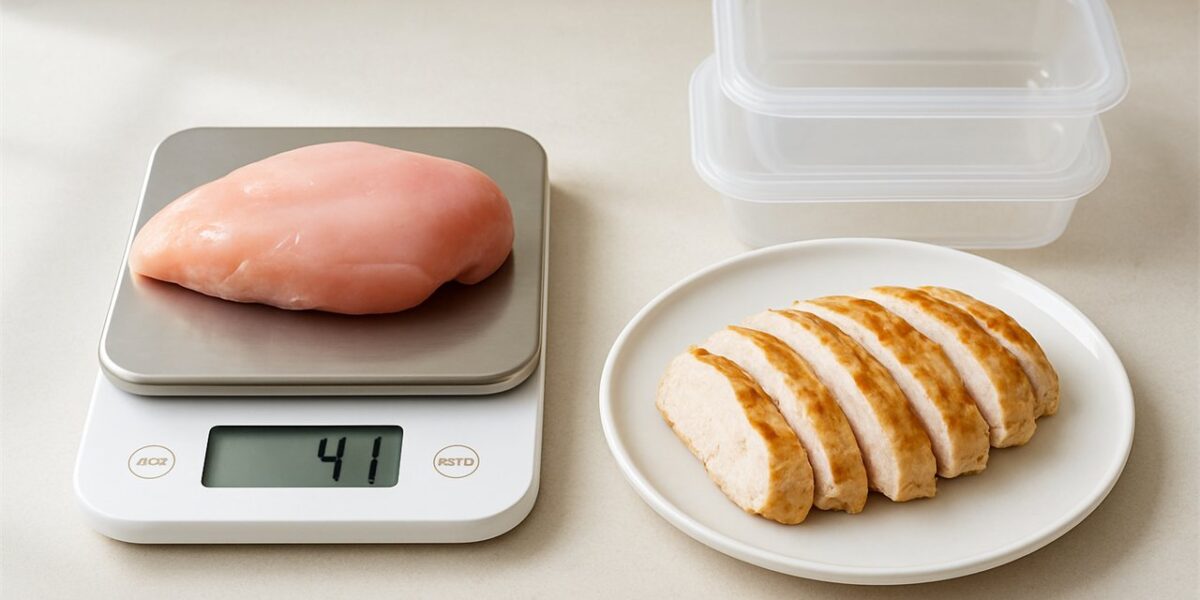
Most chicken loses a meaningful amount of weight during cooking because moisture cooks off. For practical meal prep, chicken breast often ends up around 75% of its raw weight, while chicken thigh may stay slightly higher or lower depending on trimming and cooking method. If you need accuracy, weigh the cooked batch. If you need speed, use a realistic cooked-yield estimate first and refine from there.
What to Know Before You Portion Chicken
Raw and cooked chicken weights are not interchangeable. A package labeled 1 kilogram tells you how much uncooked meat you bought, not how much cooked chicken will end up in your containers. That matters most when you are preparing several meals at once and want each one to feel similar.
Cooking method changes the final number. Grilling, roasting, air frying, and pan cooking all reduce moisture differently. So, the best way to think about raw to cooked chicken weight is as a planning range rather than an exact formula.
- Chicken breast: Usually loses enough moisture that the cooked batch ends well below the raw weight.
- Chicken thigh: Often retains moisture differently, but still weighs less after cooking.
- Longer cook times: Usually mean more moisture loss.
- Higher heat: Often increases shrinkage, especially with lean cuts.
Technical Table: Practical Raw to Cooked Chicken Estimates
| Raw Weight | Estimated Cooked Weight | If Split Into 4 Meals | If Split Into 5 Meals | If Split Into 6 Meals |
|---|---|---|---|---|
| 500g | 375g | 94g per meal | 75g per meal | 63g per meal |
| 750g | 560g | 140g per meal | 112g per meal | 93g per meal |
| 1kg | 750g | 188g per meal | 150g per meal | 125g per meal |
| 1.25kg | 938g | 234g per meal | 188g per meal | 156g per meal |
| 1.5kg | 1,125g | 281g per meal | 225g per meal | 188g per meal |
Comparison Table: Chicken Cuts and Portioning Practicality
| Option | Typical Yield Pattern | Best For | Watch Out For |
|---|---|---|---|
| Chicken breast | Lean, usually larger moisture loss | High-protein meal prep, precise portioning | Can dry out and shrink more if overcooked |
| Chicken thigh | Still shrinks, but may feel more forgiving | Juicier meal prep bowls and reheating | Fat content changes the final texture and calories |
| Shredded chicken | Easy to split by cooked batch weight | Tacos, rice bowls, wraps, salads | Uneven seasoning can make batches feel inconsistent |
How to Estimate Raw to Cooked Chicken Weight More Accurately
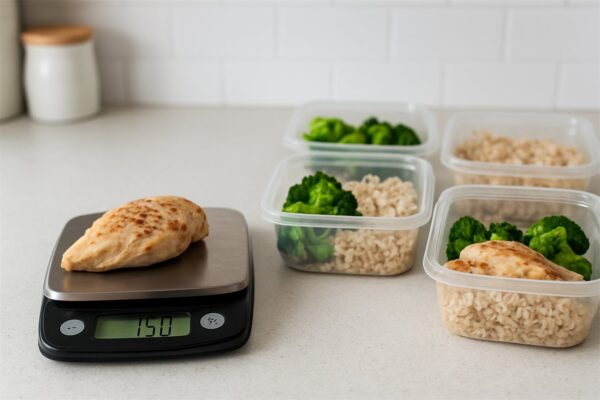
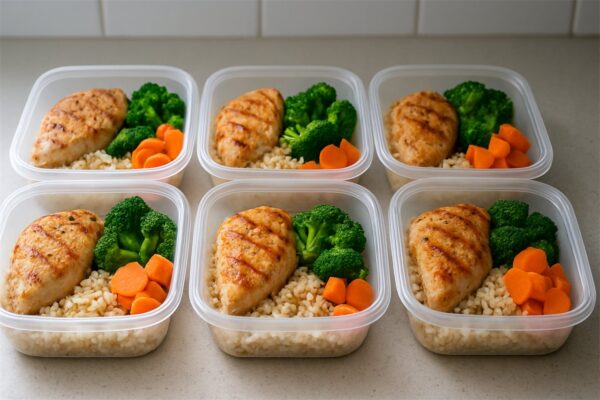
The most practical workflow is simple. Start from the raw weight you bought, apply a realistic cooked estimate, then decide how many meals you want. For example, if you buy 1 kilogram of chicken breast and expect a cooked result near 750 grams, you can plan 5 meals at about 150 grams cooked each.
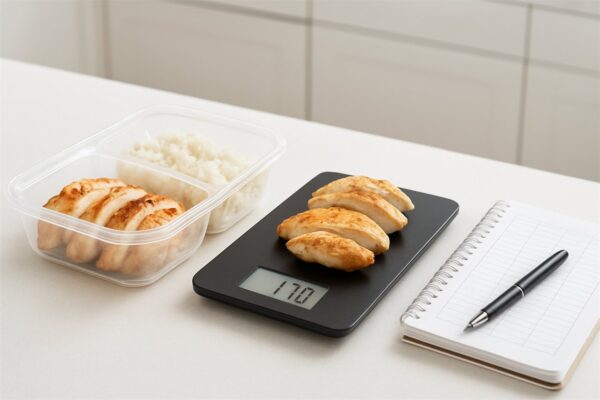
That is the kind of quick estimate that helps you plan containers, sides, and total meal count before you even start cooking. Then, if you want more precision, weigh the finished cooked batch with a scale and adjust the portions on the spot.
If you want the math done automatically, use the Protein Portion Converter or the Meal Prep Portion Calculator depending on whether you are planning protein only or full meals.
Why the Number Changes So Much
The biggest reason is water loss. Chicken contains water, and cooking drives part of that moisture out. However, a few other factors matter too. Trimmed breast, skin-on thigh, frozen-thawed meat, and longer roasting times can all shift the final result. That is why two people can start with the same raw weight and still finish with different cooked totals.
Because of that, practical meal prep is often better than perfect meal prep. You do not need a lab-style number. You need a portion estimate that helps you build repeatable meals and shop with less friction.
Who Should Use a Raw to Cooked Estimate?
This is most useful if you batch-cook protein every week, portion by containers, or track meals loosely enough that consistency matters more than exact nutrition labels. It is also useful if you are comparing whether a larger pack of raw chicken will actually cover the number of meals you want to prepare.
- Meal-prep beginners: Helps avoid under-buying or over-buying chicken.
- People counting portions: Makes it easier to divide one batch into equal meals.
- Food scale users: Gives you a strong estimate before you confirm the cooked batch.
FAQ
Does chicken thigh lose the same amount of weight as chicken breast?
No. Chicken thigh can behave differently because of its fat content and structure. It still weighs less after cooking, but the final yield can differ from chicken breast.
Should I portion chicken raw or cooked?
Cooked is usually better for real meal prep because it reflects the food you actually put into containers. Raw estimates are still useful for shopping and planning.
What is the most reliable way to portion chicken?
Weigh the total cooked batch, divide by the number of meals you want, and then portion each meal from that number. That gives you the cleanest result.
Final Verdict
Raw to cooked chicken weight conversion does not need to be complicated to be useful. A practical yield estimate gets you close enough to plan meals, and one cooked-batch weigh-in gets you the rest of the way. For most readers, that is the best balance between speed and consistency.
If you want a simple kitchen tool for this kind of weekly prep, a digital food scale on Amazon is the most practical upgrade. It is a discreet purchase, but it solves the portioning problem better than guesswork.
Sources and Related Reading
For safe chicken handling and cooking guidance, see the USDA FSIS chicken guidance and FoodSafety.gov minimum temperature chart.