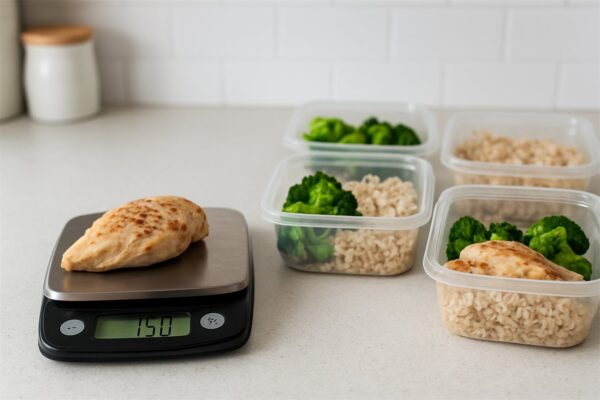
Raw vs cooked chicken for calorie tracking is one of the most common points of confusion in meal prep. The problem is simple: chicken changes weight during cooking, but most people are logging food after it is cooked and portioned. If you do not keep that difference in mind, your tracking gets messy fast. The easiest starting point is to use the Protein Portion Converter before meal prep, then weigh the cooked batch once it is ready.
Quick Verdict
For calorie tracking, cooked chicken is usually the most practical measurement because it reflects what you actually eat. Raw weight is still useful for shopping and planning, but cooked weight is easier to portion consistently and log in a repeatable way. If you move between both, the key is to stay consistent and avoid mixing raw and cooked numbers without adjusting for yield.
Why Raw and Cooked Chicken Tracking Gets Confusing
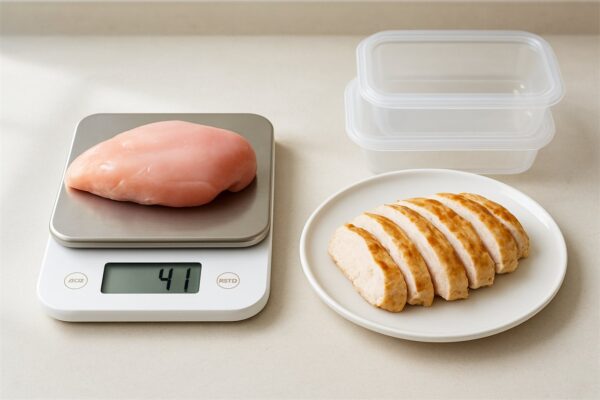
Chicken loses water when cooked, so the final weight drops. That means 1 kilogram of raw chicken does not remain 1 kilogram cooked. However, the protein itself does not disappear just because moisture leaves the food. The mistake happens when someone weighs cooked chicken but uses a raw entry, or vice versa.
That is why the raw vs cooked question is not really about which number is better in theory. It is about which number you can use more consistently in real life. For most meal-prep readers, that answer is cooked weight.
Technical Table: Raw vs Cooked Tracking Differences
| Tracking Method | Best Stage | Main Advantage | Main Risk |
|---|---|---|---|
| Raw chicken weight | Before cooking | Helpful for shopping and planning | Less practical once meals are cooked and divided |
| Cooked chicken weight | After cooking | Matches what goes into each container | Can be inconsistent if you guess instead of weighing |
| Mixed raw and cooked logging | Any stage | None in practice | Creates avoidable tracking errors |
Comparison Table: Which Method Works Better for Different Goals?
| Goal | Better Method | Why It Usually Wins |
|---|---|---|
| Weekly meal prep | Cooked weight | You portion the food after cooking, so cooked weight reflects the real serving |
| Grocery planning | Raw weight | Raw weight tells you how much chicken to buy before the week starts |
| Consistent calorie logging | Cooked weight | It is easier to repeat once meals are already prepared |
| Estimating future portions | Raw + conversion estimate | You can plan meal count before the chicken is cooked |
Best Practical Method for Most Readers
If your meals are built after cooking, weigh the cooked batch and track the cooked portions. That keeps your workflow simple. You can still use raw weight earlier in the process to estimate how many meals your batch will make. For example, if 1 kilogram of raw chicken breast is likely to finish near 750 grams cooked, you already know a five-meal batch will land near 150 grams cooked per meal.
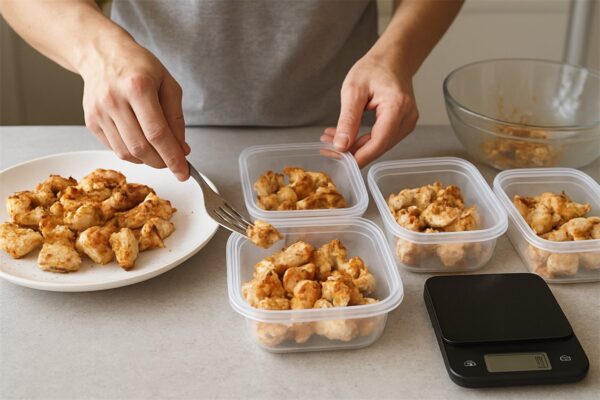
That is where the cluster works together. Use Raw to Cooked Chicken Weight Conversion when you want the estimate first, then use How to Portion Cooked Chicken for 5 Meals if you want a simple container workflow.
What to Know If You Count Calories or Macros Daily
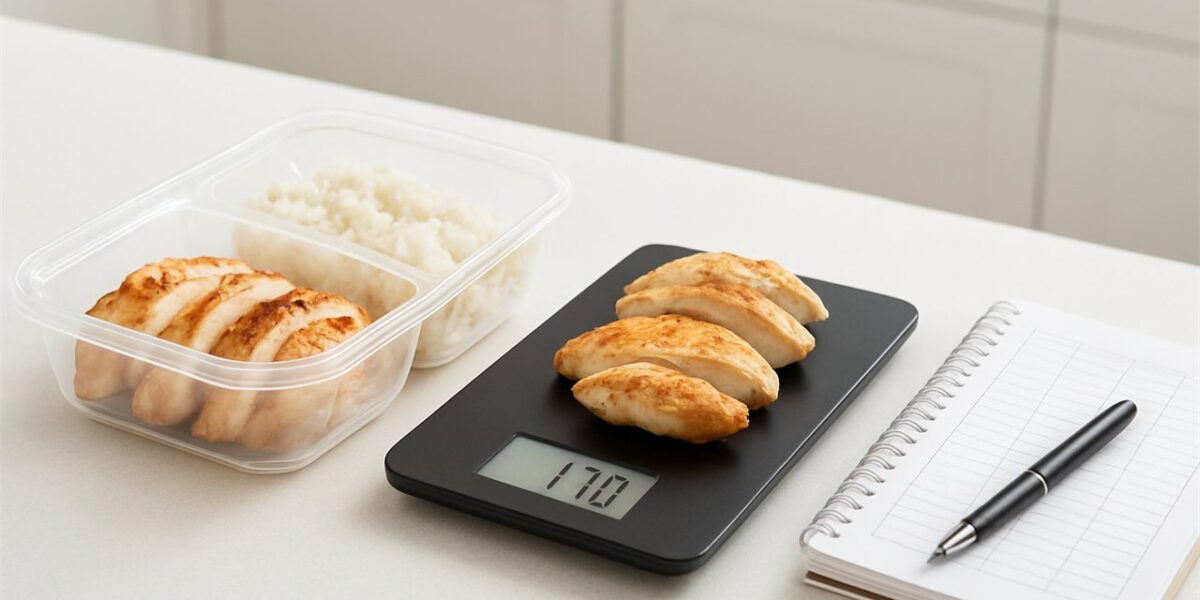
Daily trackers usually do better with cooked weight because it removes one extra mental step. If the meal is already cooked and portioned, you are not translating raw chicken into what ended up in the container. You are simply weighing what is there. That is easier to repeat over time and easier to compare across different meal-prep days.
A digital scale matters here because eyeballing cooked chicken quickly drifts. If you want a practical scale for this routine, see our guide to the best food scale for counting calories.
Pros and Cons
Cooked Weight Pros
- Easier to log once meals are assembled
- Matches what you actually eat
- Makes portioning simpler after meal prep
Cooked Weight Cons
- Needs one cooked-batch weigh-in or per-container weighing
- Can be inconsistent if you do not weigh at all
Raw Weight Pros
- Useful when planning purchases
- Helps estimate yield before cooking
Raw Weight Cons
- Less practical after the food is already cooked
- Creates mistakes when mixed with cooked entries
FAQ
Is it better to track chicken raw or cooked?
Cooked is usually better for day-to-day meal prep because it matches the actual portion you eat. Raw is more useful for shopping and planning.
Why does cooked chicken weigh less?
Because moisture cooks off. The protein stays, but the water content changes.
Can I switch between raw and cooked entries?
Yes, but only if you adjust for the difference. Using them interchangeably without conversion is where mistakes happen.
Final Verdict
For most readers, cooked chicken is the better number to track because it fits the reality of meal prep and container portioning. Raw weight still matters earlier in the process, but cooked weight is the more useful final reference. The real goal is consistency, not perfection.
If you want a practical tool to make that routine easier, a digital food scale on Amazon remains the simplest low-friction upgrade.
Sources and Related Reading
For food safety guidance and safe cooking temperatures, see FoodSafety.gov and the USDA FSIS chicken guide.