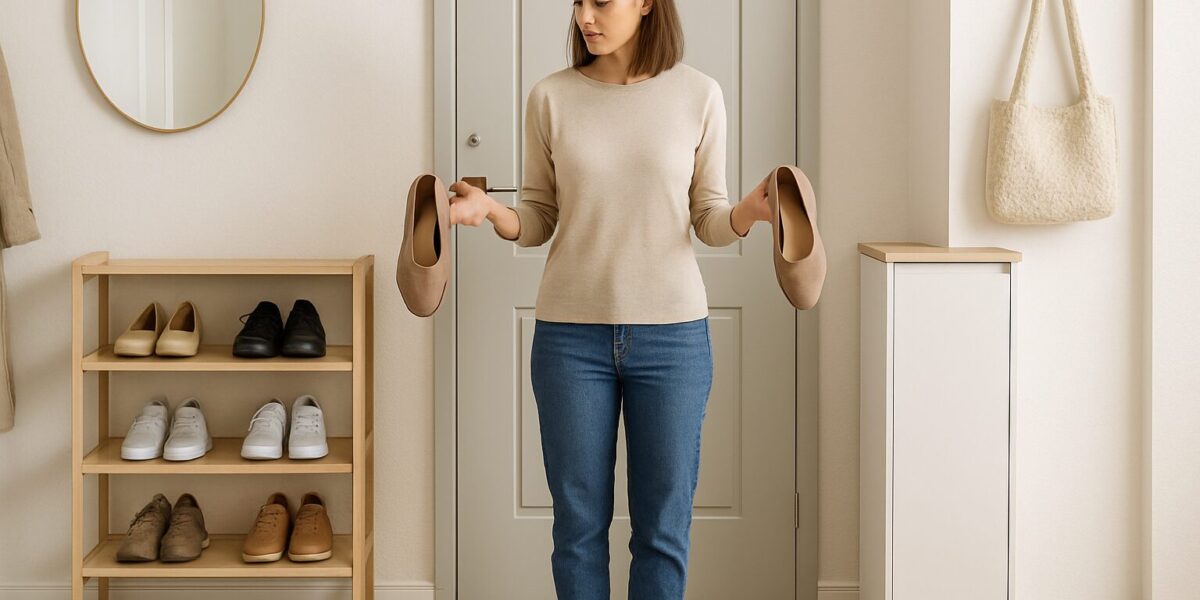
If you are trying to clean up a small entryway or closet, the real buying question is often not whether you need shoe storage. It is which kind. A shoe rack gives faster access and usually costs less. A shoe cabinet hides clutter and often looks cleaner in the room. The right choice depends on how visible the storage is, how many pairs you need to hold, and how much floor depth you can spare.
This comparison breaks down the practical differences between a shoe rack and a shoe cabinet for small spaces. The goal is not to make the decision feel bigger than it is. It is to help you choose the format that fits your layout and daily routine with the least friction.
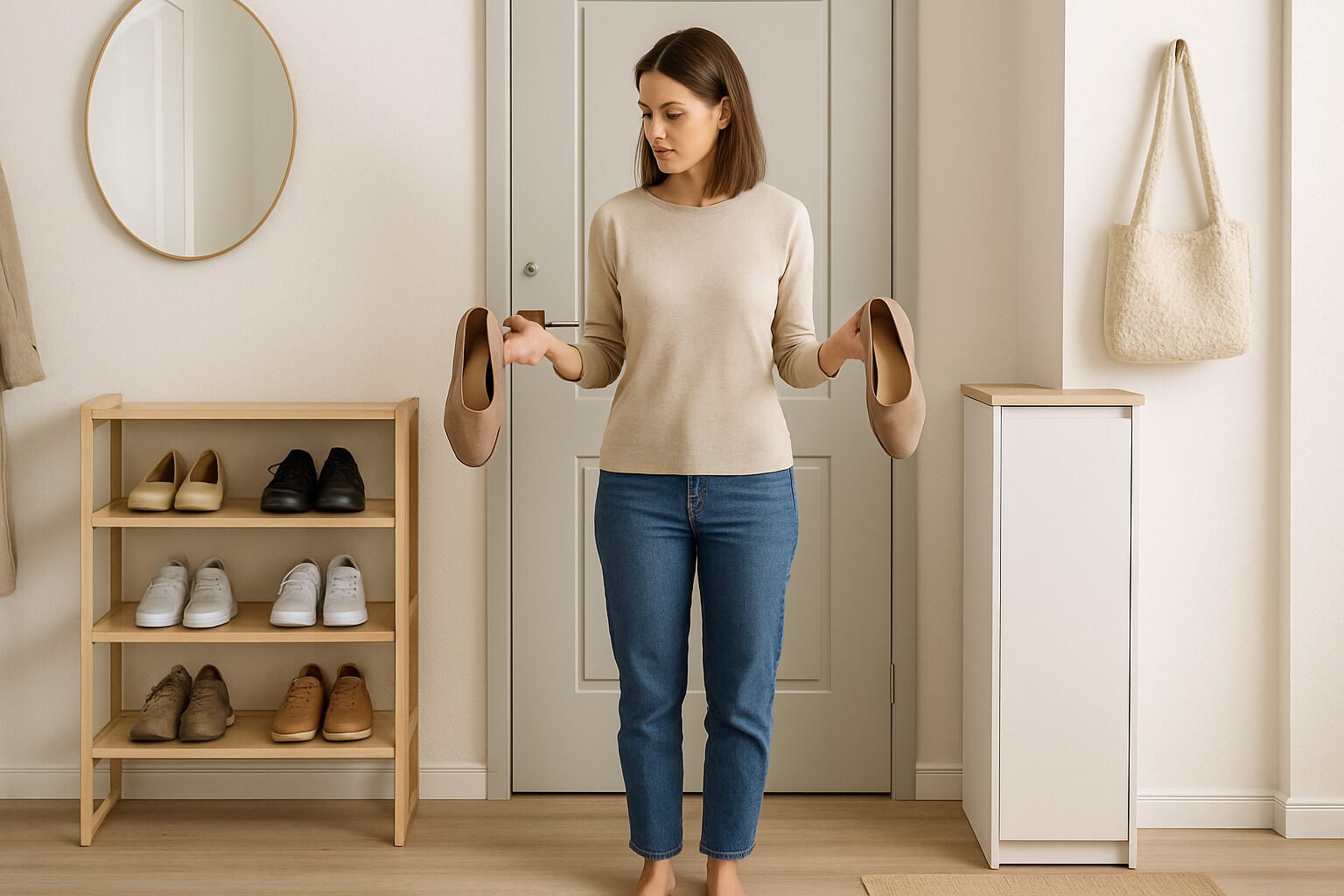
Quick Verdict
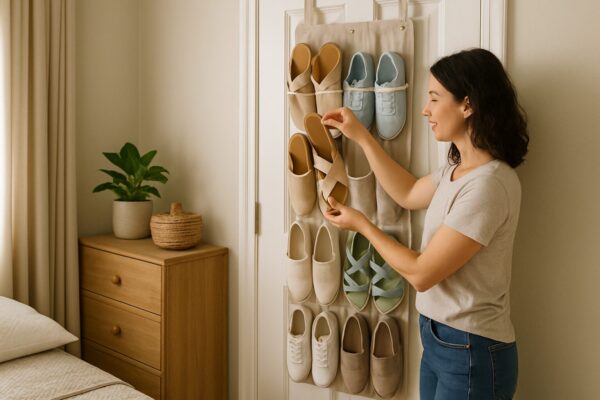
For most small homes, a shoe rack is the better default when budget, easy access, and flexibility matter most. A shoe cabinet is the better choice when the entryway is visible and you care more about hiding clutter than seeing every pair at a glance. If your floor space is extremely limited, an over-the-door organizer may beat both.
Comparison Table
| Storage type | Best for | Main caution |
|---|---|---|
| Shoe rack | Shoppers who want lower cost and faster access | Shoes stay visible, so clutter shows more |
| Shoe cabinet | Homes that need a cleaner, more furniture-like look | Often costs more and may hold bulky shoes less well |
| Over-the-door organizer | Closets and rooms with almost no spare floor space | Depends heavily on door clearance and shoe type |
Technical Table
| Priority | Best pick |
|---|---|
| You want the simplest budget-friendly solution | Choose a shoe rack. |
| You want to hide visual clutter in the entryway | Choose a shoe cabinet. |
| You have almost no floor space left | Consider an over-the-door organizer first. |
When a shoe rack is the better choice
A shoe rack is usually the smarter option when you want visibility, lower cost, and easier cleaning. It works especially well if you rotate the same shoes often and do not mind seeing them. In apartments, utility closets, and family entryways, that practical advantage often matters more than appearance.
It is also the better choice when flexibility matters. Most racks are easier to move, easier to fit into awkward corners, and less risky to buy if you are still figuring out your layout. If that sounds like your situation, start with our guide to the best shoe rack for small spaces.
When a shoe cabinet is the better choice
A shoe cabinet makes more sense when the storage will sit in a visible part of the home and you want a calmer look. It is especially useful in narrow entries where visual clutter makes the area feel smaller than it is.
That said, not every cabinet works well for bulky sneakers, boots, or family overflow. The cleaner look comes with tradeoffs, so it is worth being realistic about the kinds of shoes you need to store every day.
What to know before deciding
First, measure depth carefully. Cabinets often stay visually cleaner, but some require more functional depth than shoppers expect once the shoes are actually inside. Racks can sometimes feel larger visually, yet still be easier to fit into a real apartment routine.
Second, decide whether access speed matters. If you take shoes on and off near the door every day, an open rack often feels easier. If the shoes will be stored more decoratively in a visible hallway, a cabinet may be worth the extra cost.
Apartment Therapy has covered how slim shoe storage works especially well in tight entries, while organizers interviewed about shoe storage without a mudroom often recommend hidden or vertical solutions when appearance matters most.
Pros and Cons
Shoe Rack Pros
- Usually cheaper than a cabinet.
- Faster access to everyday shoes.
- Easier to move and rearrange.
- Works well in closets and utility corners.
Shoe Rack Cons
- Does not hide clutter.
- Can look messy if overloaded.
- May not feel polished in visible entryways.
Shoe Cabinet Pros
- Looks cleaner in exposed rooms.
- Helps reduce visual noise in the entry.
- Can feel more furniture-like and intentional.
Shoe Cabinet Cons
- Usually costs more.
- Some models fit fewer bulky shoes than expected.
- Cleaning and access can feel less immediate than with a rack.
Who Should Buy Which
Buy a shoe rack if you want the easiest low-friction solution and care more about function than concealment. Buy a shoe cabinet if the entryway is part of your main living space and you want to hide the shoe pile more effectively.
If neither sounds quite right because floor space is almost gone, compare both with our guide to the best over-the-door shoe organizer.
FAQ
Is a shoe rack or shoe cabinet better for a small entryway?
A shoe rack is better for quick access and lower cost. A shoe cabinet is better if you want the entryway to look calmer and less cluttered.
Do shoe cabinets save more space than shoe racks?
Not always. They can look slimmer, but the usable depth and shoe capacity vary a lot by model. In some homes, a simple rack is easier to live with.
What is the best choice for renters?
Renters usually benefit more from shoe racks because they are easier to move and reuse if the next layout changes.
What should you buy if floor space is almost gone?
An over-the-door organizer is often the better answer if the real problem is lack of floor space rather than visible clutter.
Final Verdict
If you want the most practical all-around solution, start with a shoe rack. If you want the cleanest look in a visible entryway, consider a shoe cabinet. The right answer depends less on storage theory and more on whether your home needs access, concealment, or a better use of vertical space. For related upgrades, keep browsing our Home Products category and our closet organization guides.
Browse matching shoe cabinets on Amazon

2 Comments on “Shoe Rack vs Shoe Cabinet for Small Spaces in 2026”