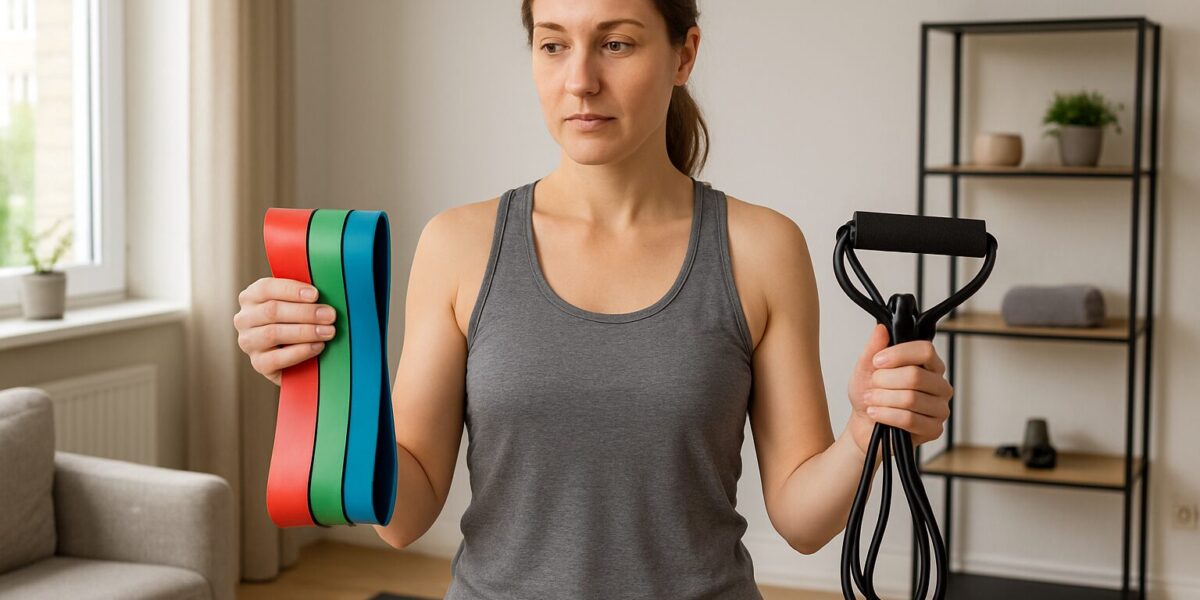
The different types of resistance bands all solve slightly different problems. Some are better for lower-body work and warm-ups. Others are better for rows, presses, and more complete strength sessions. That is why choosing the right type matters as much as choosing the right resistance level.
This guide compares the most useful resistance band types for home workouts so you can stop guessing which one fits your space and training style. If you want to compare different types of resistance bands for home workouts before you buy, this is the page to start with. If you want a straight buying shortlist after this, move next to our reviews of the best resistance bands for home workouts in 2026.
Quick Verdict
For most home workouts, tube bands and mixed sets give the best all-around flexibility. Loop bands are excellent for glute work, activation, travel, and compact routines. The best choice depends on the exercises you repeat most often.
How to compare different types of resistance bands for home workouts
The easiest way to compare different types of resistance bands for home workouts is to start with the movements you care about most. If you want a compact lower-body setup, loops or fabric bands may be enough. If you want fuller presses, rows, curls, and mixed strength work, tube bands usually make more sense. If you are building a whole beginner corner, pair this page with our guide to the best home gym setup for beginners.
Comparison Table
| Band type | Best for | Main limitation |
|---|---|---|
| Loop bands | Glute work, lower-body sessions, mobility, and travel | Less versatile for handle-based upper-body exercises |
| Tube bands with handles | Rows, presses, curls, and fuller strength sessions | Slightly bulkier than simple loops |
| Mini bands | Warm-ups, activation, and short lower-body circuits | Not enough alone for most full-body training |
| Fabric loop bands | Lower-body comfort and less rolling during glute work | Less versatile across a full exercise menu |
| Assisted pull-up bands | Pull-up assistance, stretching, and heavier-resistance work | Can feel excessive for total beginners who want a simple starter set |
What each resistance band type does best
Loop bands
Loop bands are often the easiest entry point because they are small, light, and easy to store. They work well for glute bridges, lateral walks, activation drills, and compact lower-body sessions.
Tube bands with handles
Tube bands are usually the most versatile choice for general home workouts. They make presses, rows, curls, triceps work, and full-body circuits feel more natural for many beginners. If you mainly want one setup for overall training, tube bands usually win.
Mini bands and fabric bands
Mini bands and fabric bands are best when your routine focuses on activation, glute work, or short accessory circuits. They are useful, but they are not always enough as your only training tool.
Assisted pull-up bands
These are thicker and often stronger. They make sense if you want help with pull-ups, stretching, or heavier bodyweight assistance. They are less beginner-friendly if you simply want a compact everyday set.
Technical Table
| Workout goal | Best band type |
|---|---|
| General full-body home training | Tube bands or a mixed set because they cover the widest range of movements. |
| Compact lower-body sessions | Loop bands or fabric bands because they are easy to store and quick to use. |
| Warm-ups and activation | Mini bands because they are light and easy to add before bigger movements. |
| Pull-up assistance or stronger support | Assisted pull-up bands because they provide higher resistance. |
Who should buy what
If you are a beginner building a small-space routine, start with the type that matches the exercises you will actually do. If that still feels unclear, use the Resistance Band Selector. If you want a beginner-specific shortlist, our guide to the best resistance bands for beginners in 2026 narrows the choice further.
For most people, the safest route is still a versatile set, not a single specialty band. That gives you more room to learn and progress without buying twice.
Pros and Cons of a mixed band setup
Pros
- Gives you more exercise variety without needing bulky equipment.
- Makes progression easier because you can move up gradually.
- Works well for apartments and travel-friendly home setups.
Cons
- Costs a bit more than buying one simple band first.
- Too many band options can confuse absolute beginners if the set is poorly labeled.
- You still need a clear plan for what exercises you actually want to do.
FAQ
What type of resistance band is best for home workouts?
For most people, tube bands or a mixed set are the best overall choice because they cover the widest range of exercises.
Are loop bands enough on their own?
They can be enough for compact lower-body work, mobility, and activation, but they are less versatile for full-body upper-body sessions.
What is best for beginners?
A lighter mixed set or a simple tube band set is usually the easiest place to start.
How do I compare different types of resistance bands for home workouts?
Compare them by exercise variety, storage friction, and how natural the movements feel. Loop bands usually win for compact lower-body work, while tube bands usually win for fuller home workout routines.
What should I read after this guide?
Move next to our reviews of the best resistance bands for home workouts or our guide to the best resistance band exercises for beginners.
Final Verdict
The different types of resistance bands are not interchangeable. The right choice depends on the movements you repeat most often and the space you have available. For many shoppers, a versatile tube set or mixed set is still the strongest overall answer.