Building a home gym in a small apartment, spare room, or shared living area does not require a huge budget or a dedicated workout room. What it does require is choosing equipment that earns its footprint and setting up the space around the type of training you will actually do.
Beginners often make the same mistake: they buy too much gear too early, fill the room with bulky items, and end up avoiding the setup because it feels cramped. A better small-space gym is usually simpler, more flexible, and easier to reset after each workout.
Quick Start Strategy
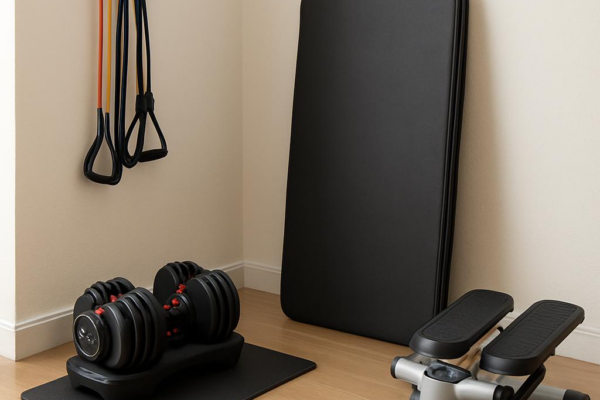
If you are just beginning, start with a mat, resistance bands, one adjustable weight solution, and enough floor space to hinge, squat, press, and stretch. That setup covers far more useful training than most beginners expect, while staying easy to store in a corner, closet, or under-bed container.
Step 1: Decide What the Space Must Support
Before buying equipment, define the primary use of the gym. Do you want strength training, beginner fat-loss workouts, mobility work, short apartment-friendly sessions, or a mix of everything? Your answer determines what deserves space.
A small-space gym built for general fitness should prioritize versatile tools. A setup built for serious barbell training is a different project entirely and usually needs more room, more budget, and more floor protection than most beginners need.
Step 2: Measure the Space Honestly
You do not need a perfect square room. You need enough safe movement area to stand, lie down, hinge at the hips, extend your arms overhead if appropriate, and move through exercises without hitting furniture or walls.
- Measure the clear floor area, not the room size on paper.
- Notice ceiling height if you plan to press weights overhead.
- Check what needs to stay moveable, like dining chairs or side tables.
- Think about noise if you live above or beside other people.
Step 3: Choose Equipment That Does More Than One Job
For most beginners, the best small-space equipment is the equipment that can replace multiple single-purpose tools.
High-value starter options
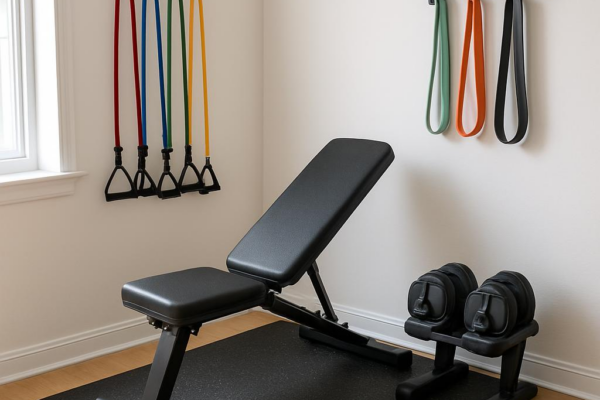
- Resistance bands: inexpensive, compact, and useful for rows, presses, assisted pull movements, warm-ups, and mobility work.
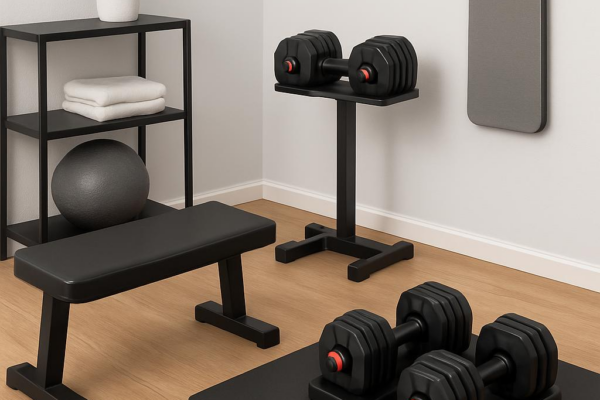
- Adjustable dumbbells or a limited dumbbell pair: excellent for foundational strength work without needing a full rack.
- Exercise mat: makes floor work, stretching, and core sessions more comfortable.
- Bench or step platform: helpful if you truly need it, but optional at the start if space is tight.
- Door anchor or wall hooks: can expand the usefulness of resistance bands without adding clutter.
Step 4: Skip Bulky Gear at the Beginning
Treadmills, large benches, oversized all-in-one stations, and impulse cardio machines often dominate a room before a habit is established. Unless you already know you will use them consistently, they are usually poor first purchases for a beginner in a small home.
Start lean. Earn bigger equipment later only if your routine proves you need it.
Step 5: Build Around Storage, Not Just Training
The difference between a usable home gym and a frustrating one is often storage. If it takes too long to set up or put away, workouts become easier to skip.
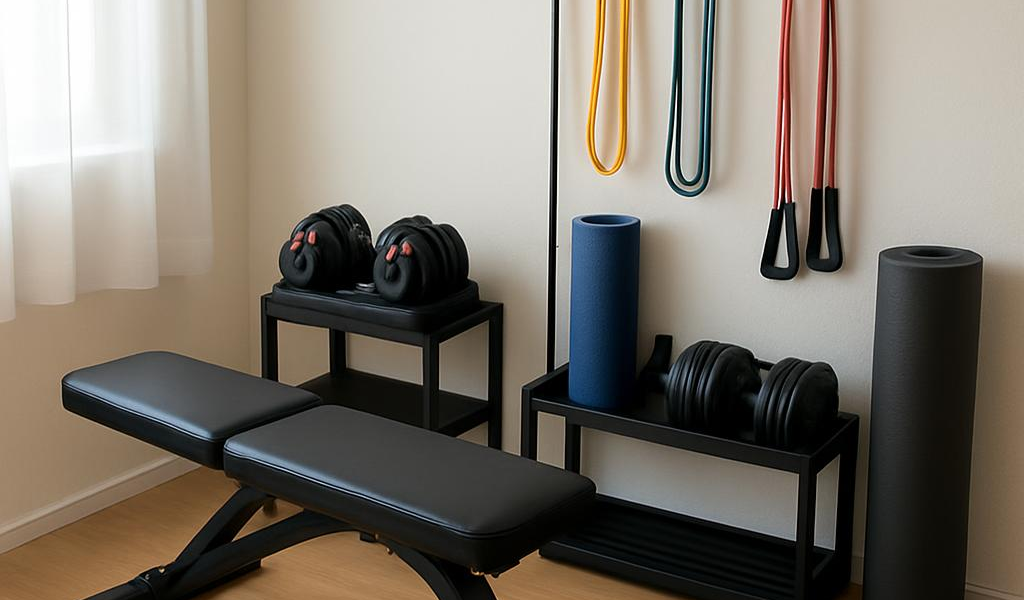
- Use a basket, bin, or shelf for small equipment.
- Store mats vertically if possible.
- Keep your most-used gear visible and your rarely used gear out of the way.
- Choose foldable or stackable gear when there is a clear storage benefit.
Step 6: Make the Space Easy to Repeat
A beginner home gym should reduce friction. Leave enough room to start quickly, keep the setup visually calm, and avoid making every session feel like moving furniture before exercise can begin.
If your workout area shares space with a bedroom or living room, create a simple reset routine. For example: mat down, weights out, workout finished, gear back in basket, room returns to normal. That rhythm matters more than aesthetic perfection.
Sample Beginner Setup by Budget
Very lean setup
Mat, resistance bands, and bodyweight training. Good for mobility, core work, squats, glute work, presses, and rows with minimal space.
Balanced starter setup
Mat, resistance bands, adjustable dumbbells, and one compact storage solution. This is the strongest all-around option for most beginners.
Expanded small-space setup
Balanced starter setup plus a foldable bench or step, floor protection, and a more deliberate corner storage system. This makes sense after consistency is established.
Common Mistakes
- Buying equipment before defining the workout style.
- Choosing the cheapest bulky item instead of the most versatile compact one.
- Ignoring noise, floor protection, and storage.
- Trying to recreate a full commercial gym at home.
- Assuming more equipment automatically leads to more progress.
What Most Beginners Actually Need
Most people need less equipment than they think. If your setup supports squats, hinges, presses, pulls, loaded carries, core work, and basic mobility, you already have enough to build a useful routine. The quality of your consistency matters more than the quantity of your gear.
Final Verdict
The best beginner home gym for a small space is not the one with the most equipment. It is the one you can actually use comfortably, store easily, and return to several times each week. Start with versatile essentials, protect your floor and movement space, and add more only after your habits justify it. In a small home, simplicity is not a compromise. It is often the smartest design choice.