How to portion cooked chicken for 5 meals is a practical question with a practical answer: work from the total cooked batch, not from guesswork. If you know the final cooked weight, dividing it across five containers becomes easy. If you are still at the planning stage, the Protein Portion Converter helps estimate what your cooked total may look like before the food is ready.
Quick FAQ
Should I track protein in grams or portions?
Use grams when possible for consistency, then map those grams to practical meal portions.
Raw or cooked weight: which one should I log?
Either works if you stay consistent and use the matching database entries each time.
How do I keep portions consistent week to week?
Use the same scale workflow, same logging method, and pre-portion meals right after cooking.
Best For / Not Ideal For
Best for:
- People tracking macros or protein intake consistently.
- Meal-prep users who want repeatable serving sizes.
- Beginners who need simple portion rules they can keep.
Not ideal for:
- People who prefer untracked intuitive eating all the time.
- Users expecting exact nutrition from eyeballing portions.
Quick Verdict
The easiest way to portion cooked chicken for 5 meals is to weigh the full cooked batch, divide by five, and fill each container from that number. If your cooked batch weighs 750 grams, each meal gets around 150 grams. That is cleaner, faster, and more consistent than trying to eyeball the portions.
How to Use This Method
Start by cooking the whole batch. Then place a bowl or tray on a digital food scale, tare it, and add all the cooked chicken. Once you have the total weight, divide it by 5. That gives you the target weight per container.
- Cook the chicken fully.
- Weigh the full cooked batch.
- Divide the cooked total by 5.
- Portion that amount into each container.
- Adjust slightly only if one piece is too large or too small.
Technical Table: Cooked Chicken Batch Sizes for 5 Meals
| Total Cooked Chicken | Per Meal for 5 Meals | Typical Use Case | How It Feels |
|---|---|---|---|
| 600g | 120g per meal | Lighter lunches | Best when carbs and vegetables do more of the work |
| 700g | 140g per meal | Balanced weekly prep | Comfortable middle ground |
| 750g | 150g per meal | Very common 5-meal target | Simple and repeatable |
| 900g | 180g per meal | Higher-protein dinners | More substantial portion |
Comparison Table: Portioning Methods Compared
| Method | Accuracy | Speed | Best For | Main Tradeoff |
|---|---|---|---|---|
| Digital food scale | High | Fast once set up | Consistent meal prep | Requires one more kitchen tool |
| Eyeballing | Low | Fast at first | Casual portioning | Meals end up uneven |
| Measuring cups | Moderate | Moderate | Rough volume-based prep | Less precise for chopped or shredded chicken |
Why Portioning After Cooking Works Better
Chicken changes weight during cooking, so portioning before cooking can create mismatched meals later. One raw piece may lose more moisture than another. On the other hand, once the chicken is cooked, you are working with the exact amount you actually have. That makes five equal meals much easier to build.
It also reduces frustration. If you prep rice, vegetables, and sauce separately, you can keep the chicken consistent first and then build the rest of the meal around it. That is usually the smoothest weekly workflow.
What to Know If You Start From Raw Weight
Sometimes you have not cooked yet and still want to know whether your pack of chicken is enough for five meals. In that case, estimate the cooked yield first. A common meal-prep example is 1 kilogram of raw chicken breast ending near 750 grams cooked, which would give you about 150 grams per meal across five containers.
That is exactly where the Protein Portion Converter helps. It bridges the gap between what you bought raw and what you will portion cooked.
Pros and Cons
Pros
- Creates even meals quickly
- Makes weekly prep more repeatable
- Helps grocery planning over time
- Works with different chicken cuts and cooking methods
Cons
- Requires weighing the cooked batch
- Feels slower than eyeballing if you are not used to it
- Very small variations between containers can still happen
Who Should Buy It
If you prep chicken more than once a week, a food scale is the most practical tool to support this workflow. It does not need to be expensive. It just needs to give you a quick cooked batch weight so your five portions stay even.
FAQ
What if my cooked batch is not perfectly divisible by 5?
That is normal. Get the portions as close as practical and let one container be slightly heavier or lighter. The goal is consistency, not perfection.
Should I portion chicken before adding rice and vegetables?
Usually yes. Portion the chicken first, then add the rest of the meal. That keeps the protein consistent and makes the whole process easier to manage.
Can I use shredded chicken for this method?
Yes. Shredded chicken often works very well because it is easy to distribute evenly across five containers.
Final Verdict
If you want five meal-prep containers that feel consistent from Monday to Friday, weigh the cooked chicken batch and split from that total. It is the simplest method that actually holds up in real kitchens. The process takes an extra minute, but it prevents a full week of uneven portions.
For most readers, the best practical tool here is still a digital food scale on Amazon. It is a quiet upgrade, but it makes meal-prep math much easier.
Sources and Related Reading
For safe chicken temperatures and handling, see FoodSafety.gov and the USDA FSIS chicken guide.
- Protein Portion Converter
- How Much Chicken Per Meal for Meal Prep?
- Raw to Cooked Chicken Weight Conversion
- How to Use Food Scales for Counting Calories and Portion Control
- Browse Kitchen guides
Helpful Kitchen Calculators
Use these free tools to apply what you just read and plan portions faster.
How much chicken per meal for meal prep is a more practical question than it first looks. Most people do not need a perfect number. They need a portion that feels repeatable, fits the rest of the meal, and helps them build enough containers for the week. If you want a fast estimate before you portion the cooked batch, the Protein Portion Converter is the best first step.
Quick FAQ
Should I track protein in grams or portions?
Use grams when possible for consistency, then map those grams to practical meal portions.
Raw or cooked weight: which one should I log?
Either works if you stay consistent and use the matching database entries each time.
How do I keep portions consistent week to week?
Use the same scale workflow, same logging method, and pre-portion meals right after cooking.
Best For / Not Ideal For
Best for:
- People tracking macros or protein intake consistently.
- Meal-prep users who want repeatable serving sizes.
- Beginners who need simple portion rules they can keep.
Not ideal for:
- People who prefer untracked intuitive eating all the time.
- Users expecting exact nutrition from eyeballing portions.
Quick Verdict
A practical meal-prep portion for cooked chicken often lands around 120 to 180 grams per meal, depending on how protein-heavy the meal is and what else is in the container. The smartest way to decide is not to start with a random serving size. Start with the total cooked batch, divide by the number of meals you want, and adjust from there.
What to Know Before Choosing a Portion Size
The right chicken portion changes with context. A lunch bowl with rice, vegetables, and sauce may feel complete with a moderate portion of cooked chicken. A lower-carb meal or high-protein meal may need more. That is why fixed advice like ???always eat X grams??? is often less useful than looking at the batch you actually cooked.
Meal prep also rewards consistency. If every container looks different, the week becomes less predictable. So, even if your target is not exact, even portions still make the process easier.
Technical Table: Practical Cooked Chicken Portions Per Meal
| Cooked Chicken Per Meal | Best Use Case | How It Usually Feels | 5-Meal Batch Needed |
|---|---|---|---|
| 120g | Lighter lunch or mixed meal | Balanced when paired with carbs and vegetables | 600g cooked chicken |
| 140g | Standard meal prep portion | Comfortable middle ground for many readers | 700g cooked chicken |
| 150g | Very practical weekly default | Easy to plan and split from common batch sizes | 750g cooked chicken |
| 180g | Higher-protein meal prep | Heavier chicken-forward portion | 900g cooked chicken |
Comparison Table: Portion Size by Meal Style
| Meal Style | Typical Chicken Portion | Why It Works | When to Use More |
|---|---|---|---|
| Rice bowl or balanced lunch | 120g to 150g cooked | Leaves room for carbs, vegetables, and sauce | If the meal is your main high-protein anchor |
| Salad or lower-carb meal | 140g to 180g cooked | Protein carries more of the meal | If the rest of the meal is very light |
| Large dinner prep | 150g to 180g cooked | Feels more substantial and reheats well | If you want fewer snacks later |
How to Pick a Portion That Actually Works
The easiest method is to portion backward from your batch. If your cooked chicken weighs 750 grams and you want 5 meals, 150 grams per meal is the obvious place to start. That is more practical than deciding on a serving size in the abstract and then discovering you do not have enough food.
This is also where internal tools become useful. Use the Protein Portion Converter if you are starting from raw chicken. Then, once the batch is cooked, use the Meal Prep Portion Calculator if you want to split the whole meal more evenly across containers.
Who Should Buy It? In This Case, Who Should Portion More or Less?
There is no single universal meal-prep portion, but there are practical patterns:
- Choose the lower end: If the meal includes rice, potatoes, beans, or another protein source.
- Choose the middle: If you want an easy all-purpose lunch portion for most weekdays.
- Choose the higher end: If you want a more protein-heavy meal or you tend to build simple chicken-and-vegetable containers.
Pros and Cons of Using a Fixed Portion Target
Pros
- Faster weekly meal prep
- More consistent containers
- Easier grocery planning
- Less guesswork when reheating meals
Cons
- Can feel too rigid if your appetite changes day to day
- Does not account for very different meal types
- Can create awkward leftovers if the cooked batch is smaller than expected
FAQ
Is 150 grams of cooked chicken a good meal-prep portion?
Yes, for many readers it is a practical middle-ground portion. It is large enough to feel useful in a balanced meal and easy to divide from a typical cooked batch.
Should I portion chicken before or after cooking?
After cooking is more practical because that reflects the actual food weight going into each container. Raw estimates are better for planning than final portioning.
How many meals can 1 kilogram of raw chicken make?
That depends on the cooked yield and your target portion size. In many meal-prep setups, it can cover around 4 to 6 meals once cooked.
Final Verdict
The best answer to how much chicken per meal for meal prep is the one that fits your cooked batch and your meal style, not an arbitrary number copied from somewhere else. In practice, 140 to 150 grams cooked is often the most flexible place to start, then you can increase or reduce from there.
If you want a simple tool that makes weekly portioning easier, a digital food scale on Amazon is still the most useful low-friction upgrade.
Sources and Related Reading
For food safety and storage guidance, see the USDA chicken handling guide and FoodSafety.gov.
- Protein Portion Converter
- Raw to Cooked Chicken Weight Conversion
- Raw to Cooked Chicken Weight Conversion
- Best Food Scale for Counting Calories in 2026
- Browse Kitchen guides
Helpful Kitchen Calculators
Use these free tools to apply what you just read and plan portions faster.
Use the matching tool next
If you want to turn this portion range into exact container sizes, use the Meal Prep Portion Calculator or the Protein Portion Converter. For more kitchen math tools, open the full tools hub.
Raw to cooked chicken weight conversion is one of the easiest meal-prep problems to get wrong. You buy chicken by raw weight, but you portion meals by what is left after cooking. That gap matters if you want more consistent containers, more predictable protein servings, and less guesswork during the week. If you want a faster estimate while planning, the Protein Portion Converter is the simplest starting point.
Quick FAQ
Should I track protein in grams or portions?
Use grams when possible for consistency, then map those grams to practical meal portions.
Raw or cooked weight: which one should I log?
Either works if you stay consistent and use the matching database entries each time.
How do I keep portions consistent week to week?
Use the same scale workflow, same logging method, and pre-portion meals right after cooking.
Best For / Not Ideal For
Best for:
- People tracking macros or protein intake consistently.
- Meal-prep users who want repeatable serving sizes.
- Beginners who need simple portion rules they can keep.
Not ideal for:
- People who prefer untracked intuitive eating all the time.
- Users expecting exact nutrition from eyeballing portions.
Quick Verdict
Most chicken loses a meaningful amount of weight during cooking because moisture cooks off. For practical meal prep, chicken breast often ends up around 75% of its raw weight, while chicken thigh may stay slightly higher or lower depending on trimming and cooking method. If you need accuracy, weigh the cooked batch. If you need speed, use a realistic cooked-yield estimate first and refine from there.
What to Know Before You Portion Chicken
Raw and cooked chicken weights are not interchangeable. A package labeled 1 kilogram tells you how much uncooked meat you bought, not how much cooked chicken will end up in your containers. That matters most when you are preparing several meals at once and want each one to feel similar.
Cooking method changes the final number. Grilling, roasting, air frying, and pan cooking all reduce moisture differently. So, the best way to think about raw to cooked chicken weight is as a planning range rather than an exact formula.
- Chicken breast: Usually loses enough moisture that the cooked batch ends well below the raw weight.
- Chicken thigh: Often retains moisture differently, but still weighs less after cooking.
- Longer cook times: Usually mean more moisture loss.
- Higher heat: Often increases shrinkage, especially with lean cuts.
Technical Table: Practical Raw to Cooked Chicken Estimates
| Raw Weight | Estimated Cooked Weight | If Split Into 4 Meals | If Split Into 5 Meals | If Split Into 6 Meals |
|---|---|---|---|---|
| 500g | 375g | 94g per meal | 75g per meal | 63g per meal |
| 750g | 560g | 140g per meal | 112g per meal | 93g per meal |
| 1kg | 750g | 188g per meal | 150g per meal | 125g per meal |
| 1.25kg | 938g | 234g per meal | 188g per meal | 156g per meal |
| 1.5kg | 1,125g | 281g per meal | 225g per meal | 188g per meal |
Comparison Table: Chicken Cuts and Portioning Practicality
| Option | Typical Yield Pattern | Best For | Watch Out For |
|---|---|---|---|
| Chicken breast | Lean, usually larger moisture loss | High-protein meal prep, precise portioning | Can dry out and shrink more if overcooked |
| Chicken thigh | Still shrinks, but may feel more forgiving | Juicier meal prep bowls and reheating | Fat content changes the final texture and calories |
| Shredded chicken | Easy to split by cooked batch weight | Tacos, rice bowls, wraps, salads | Uneven seasoning can make batches feel inconsistent |
How to Estimate Raw to Cooked Chicken Weight More Accurately
The most practical workflow is simple. Start from the raw weight you bought, apply a realistic cooked estimate, then decide how many meals you want. For example, if you buy 1 kilogram of chicken breast and expect a cooked result near 750 grams, you can plan 5 meals at about 150 grams cooked each.
That is the kind of quick estimate that helps you plan containers, sides, and total meal count before you even start cooking. Then, if you want more precision, weigh the finished cooked batch with a scale and adjust the portions on the spot.
If you want the math done automatically, use the Protein Portion Converter or the Meal Prep Portion Calculator depending on whether you are planning protein only or full meals.
Why the Number Changes So Much
The biggest reason is water loss. Chicken contains water, and cooking drives part of that moisture out. However, a few other factors matter too. Trimmed breast, skin-on thigh, frozen-thawed meat, and longer roasting times can all shift the final result. That is why two people can start with the same raw weight and still finish with different cooked totals.
Because of that, practical meal prep is often better than perfect meal prep. You do not need a lab-style number. You need a portion estimate that helps you build repeatable meals and shop with less friction.
Who Should Use a Raw to Cooked Estimate?
This is most useful if you batch-cook protein every week, portion by containers, or track meals loosely enough that consistency matters more than exact nutrition labels. It is also useful if you are comparing whether a larger pack of raw chicken will actually cover the number of meals you want to prepare.
- Meal-prep beginners: Helps avoid under-buying or over-buying chicken.
- People counting portions: Makes it easier to divide one batch into equal meals.
- Food scale users: Gives you a strong estimate before you confirm the cooked batch.
FAQ
Does chicken thigh lose the same amount of weight as chicken breast?
No. Chicken thigh can behave differently because of its fat content and structure. It still weighs less after cooking, but the final yield can differ from chicken breast.
Should I portion chicken raw or cooked?
Cooked is usually better for real meal prep because it reflects the food you actually put into containers. Raw estimates are still useful for shopping and planning.
What is the most reliable way to portion chicken?
Weigh the total cooked batch, divide by the number of meals you want, and then portion each meal from that number. That gives you the cleanest result.
Final Verdict
Raw to cooked chicken weight conversion does not need to be complicated to be useful. A practical yield estimate gets you close enough to plan meals, and one cooked-batch weigh-in gets you the rest of the way. For most readers, that is the best balance between speed and consistency.
If you want a simple kitchen tool for this kind of weekly prep, a digital food scale on Amazon is the most practical upgrade. It is a discreet purchase, but it solves the portioning problem better than guesswork.
Sources and Related Reading
For safe chicken handling and cooking guidance, see the USDA FSIS chicken guidance and FoodSafety.gov minimum temperature chart.
- Protein Portion Converter
- How Much Chicken Per Meal for Meal Prep?
- How Much Chicken Per Meal for Meal Prep?
- How to Use Food Scales for Counting Calories and Portion Control
- Browse Kitchen guides
Helpful Kitchen Calculators
Use these free tools to apply what you just read and plan portions faster.
Use the matching tool next
Once you have a raw-to-cooked estimate, use the Protein Portion Converter to split protein into servings or open the full tools hub for faster kitchen-scale and portion math.
Compact kitchen prep tools matter most when counter space is limited, storage is tight, or meal prep needs to happen quickly without turning the kitchen into a mess. In smaller kitchens, the best tool is usually not the one with the most features. It is the one that earns its place by solving a real prep problem without creating a new storage problem.
This is why small-space kitchens benefit from multi-use tools, stackable tools, and easy-clean designs far more than from bulky gadgets that promise speed but add clutter. The goal is not to own every clever tool. The goal is to build a prep setup that feels fast, calm, and realistic to use every day.
Quick Take
If you want the most useful compact prep setup, start with a small digital scale, stackable measuring tools, one efficient cutting surface, and a few versatile containers or bowls that nest well. Those basics improve prep speed and organization more reliably than novelty gadgets.
What Makes a Prep Tool Worth the Space
- Multi-functionality: one tool should cover more than one repetitive task where possible.
- Low storage footprint: the tool should stack, fold, nest, or store vertically.
- Fast cleanup: prep tools that are annoying to wash often stop being useful quickly.
- Repeat use: the best compact tools are the ones you reach for several times each week.
Most Useful Compact Kitchen Prep Tools
Digital Kitchen Scale
A slim digital scale is one of the highest-value prep tools you can own. It supports baking, calorie tracking, portioning, and repeatable ingredient prep without taking much room. Compared with bulkier unitask gadgets, it solves many real kitchen problems in one small footprint.
Stackable Measuring Cups and Spoons
These are simple, inexpensive, and much easier to manage than loose mixed measuring tools. They save drawer space and reduce the friction of recipe prep.
Foldable or Thin Cutting Boards
Cutting boards that store vertically or flex for easy transfer can be especially helpful in tight kitchens. The best versions are sturdy enough to use comfortably but slim enough to disappear when prep is over.
Nesting Prep Bowls
Small bowls that stack neatly help keep chopped ingredients organized without crowding the counter. They are especially useful for batch prep, mise en place, or multi-step recipe assembly.
Compact Food Storage Containers
Containers matter not only after cooking, but during prep. Matching containers that stack well reduce clutter and make batch-prepped ingredients easier to portion and store.
Tools That Are Often Less Useful Than They Look
Some compact gadgets are marketed aggressively but add little value in daily cooking. Tiny choppers, niche slicers, or awkward collapsible tools sometimes save a little space while making cleanup worse. A good rule is simple: if the tool solves a task you already handle well with a knife, scale, or bowl, it may not deserve the drawer space.
Best Setup by Kitchen Type
For very small kitchens: prioritize thin, nesting, and stackable tools only.
For meal prep: scale, containers, prep bowls, and measuring tools are usually the best return on space.
For baking: scale, measuring tools, and one reliable board or prep surface matter more than most specialty gadgets.
How to Buy More Selectively
- Buy tools that support your most repeated prep tasks.
- Prefer one durable tool over several weak specialty gadgets.
- Think about storage before purchase, not after.
- Choose easy-clean materials if you prep often.
Final Verdict
The best compact kitchen prep tools are the ones that reduce friction without increasing clutter. For most people, that means a digital scale, stackable measuring tools, compact cutting surfaces, nesting bowls, and practical containers before anything flashy. A smaller kitchen works best when each tool solves a real problem, stores easily, and stays useful week after week.
A kitchen scale is still the most accurate portioning tool for most meal prep tasks, but it is not the only tool worth using. Depending on how you cook, store meals, or track food, other tools can make prep faster, easier, and more repeatable even if they are not as precise gram-for-gram.
Quick FAQ
What makes a kitchen scale good for daily use?
Stable readings, quick tare, clear display, and easy cleanup matter most day to day.
Can one scale work for baking and meal prep?
Yes. A dependable digital model with gram precision usually covers both workflows well.
Is a higher price always better for scales?
Not always. Practical usability and consistent readings matter more than extra features.
Best For / Not Ideal For
Best for:
- People who want a reliable daily-use kitchen scale.
- Users balancing baking, meal prep, and calorie tracking.
- Shoppers who value simple controls and fast tare workflow.
Not ideal for:
- People needing specialized commercial/lab equipment.
- Users who want app-dependent smart-scale features first.
The real question is not whether anything beats a kitchen scale on accuracy. It usually does not. The better question is which tools pair well with a scale or make portioning easier when speed, convenience, or routine matter more than exact numbers.
Quick Verdict
If precision matters most, use a digital kitchen scale. If convenience matters most, pair that scale with meal prep containers, measuring tools, or visual portion aids depending on the type of food you prep most often.
The Main Portioning Tools to Know
Digital Kitchen Scale
This is still the anchor tool for serious portion control, calorie tracking, baking, and repeatable meal prep. It is especially useful for proteins, grains, calorie-dense foods, and ingredients that are hard to estimate visually.
Portion Control Containers
Containers work well when you repeat similar meals throughout the week and want faster assembly. They are less exact than weighing food, but they help maintain consistency through habit and visual structure.
Measuring Cups and Spoons
These are practical for liquids, oats, rice, nut butter, sauces, and ingredients commonly used in recipes. They are convenient, but volume is not always the same as weight, so they are not ideal when you need tighter calorie accuracy.
Divided Plates or Trays
These are useful for people who want portion structure without tracking everything numerically. They are better for habit-building than for exact macro control.
Scoops and Ladles
Very helpful when batch-prepping foods like rice, chili, oats, yogurt bowls, or chopped vegetables. They speed up repeat portions but should be calibrated once with a scale if accuracy matters.
Best Tool by Goal
For calorie tracking: kitchen scale first, measuring tools second.
For weekly lunch prep: kitchen scale plus matching containers is usually the strongest combination.
For family-style meals: ladles, scoops, and divided containers may be more practical than weighing every plate.
For habit-based portion control: visual tools like divided plates or fixed-size containers can work surprisingly well.
When a Kitchen Scale Is Most Important
- Protein portions that affect daily intake targets
- Rice, pasta, oats, and other foods that vary a lot by packed volume
- Calorie-dense foods such as nut butter, oil, granola, or cheese
- Recipe prep where consistency matters week to week
When Convenience Tools Win
If you already know roughly how much food belongs in each meal and you are repeating the same structure often, convenience tools can save time. The trick is to calibrate them once. For example, weigh the amount of cooked rice that fits one container compartment or see how much chicken your usual serving spoon delivers. After that, prep gets faster without becoming random.
Best Combinations Instead of Single Tools
Scale + Containers
Best for weekly prep, macro tracking, and people who want consistency with minimal daily decision-making.
Scale + Cups/Spoons
Best for recipe-driven prep and anyone who measures both weight and volume regularly.
Containers + Visual Portion Tools
Best for people who want simpler meal structure without detailed tracking.
Common Mistakes
- Assuming all containers hold the same real food amount
- Using measuring cups for foods that vary significantly by density
- Trying to track precisely without ever calibrating your tools
- Buying lots of gadgets instead of building one repeatable routine
Final Verdict
The best meal prep portioning tool is still the digital kitchen scale, but the most useful setup often includes more than one tool. Scales deliver accuracy. Containers deliver speed. Measuring tools deliver convenience. Visual aids deliver simplicity. If you match the tool to the job instead of expecting one tool to do everything, meal prep becomes easier to repeat and easier to trust.
Helpful Kitchen Calculators
Use these free tools to apply what you just read and plan portions faster.
A food scale is one of the simplest ways to reduce guesswork in calorie tracking and portion control. Many people think they are eating a certain amount of rice, chicken, oats, peanut butter, or cooked pasta, but visual estimates can drift more than expected. A scale gives you a repeatable reference point.
Quick FAQ
How do I use tare correctly?
Place your container first, press tare to zero, then add food so only net food weight is measured.
Why do my calorie logs feel inaccurate?
Most errors come from visual estimates, inconsistent raw-vs-cooked logging, or forgetting to tare.
How often should I use a food scale?
Daily use is best at the start. After habits stabilize, many people use it on key meals and high-calorie foods.
Best For / Not Ideal For
Best for:
- Beginners learning food scale workflows for the first time.
- People fixing inconsistent calorie tracking.
- Meal-prep users who want faster portion routines.
Not ideal for:
- Advanced users already running a consistent gram-based system.
- Readers looking for product buying advice only.
That does not mean you need to weigh every bite forever. For many people, a food scale is most useful as a training tool first and a daily precision tool second. It teaches what portions really look like, where calorie estimates tend to go wrong, and how to prep meals more consistently.
Quick Answer
Place your plate or container on the scale, tare it to zero, add the food, and log the amount in grams when possible. Repeat for each ingredient if you need tighter accuracy. Weighing food in grams is usually more reliable than guessing by cups or visual portions alone.
Why Food Scales Help
- Better consistency: the same breakfast or lunch can be repeated with less guesswork.
- More accurate tracking: especially useful for calorie-dense foods and proteins.
- Stronger meal prep habits: portions become easier to plan and compare week to week.
- Less dependence on “eyeballing”: which is often less accurate than people think.
How to Use a Food Scale Step by Step
1. Put the empty container on the scale
This can be a plate, bowl, lunch container, or pan-safe bowl depending on what you are measuring.
2. Press tare or zero
This removes the container weight so the scale only measures the food you add.
3. Add the ingredient
For the best accuracy, add one ingredient at a time if you are logging calories or macros precisely.
4. Record the weight
Grams are usually the clearest unit for tracking because they reduce ambiguity compared with volume measurements.
5. Re-tare if adding another ingredient
This is especially helpful for meal prep bowls, yogurt mixes, salads, or recipe assembly.
Best Foods to Weigh
- Cooked or raw proteins such as chicken, beef, fish, or tofu
- Rice, oats, pasta, potatoes, and other starches
- Nut butters, oils, sauces, cheese, and other calorie-dense additions
- Snacks that are easy to overpour
Raw vs Cooked Weight Matters
One of the biggest beginner mistakes is mixing raw and cooked entries. If you weigh raw chicken, log a raw entry. If you weigh cooked rice, log a cooked entry. Water loss and water absorption change weight, so the database entry should match the form you measured.
When Precision Matters Most
You do not need to weigh everything with the same intensity. Precision matters most for foods that are easy to underestimate, foods you eat often, or foods that strongly affect your targets. Oils, nut butters, cereal, rice, pasta, and protein servings are common examples.
When You Can Relax a Bit
Low-calorie vegetables, herbs, and small add-ins do not always need obsessive measurement unless your plan requires tight detail. Many people get better results by being very accurate with the important foods and reasonably relaxed with the rest.
Common Mistakes
- Forgetting to tare the bowl or plate
- Logging cups when you actually measured grams
- Mixing raw and cooked entries
- Relying only on package serving sizes without checking the weight
- Trying to be perfect instead of consistent
How Food Scales Help with Portion Control
Even if you are not tracking calories, a food scale can teach portion awareness. After a few weeks of repeating breakfast, protein portions, and starch servings with a scale, many people become noticeably better at estimating reasonable portions in everyday life.
Choose the right follow-up page
- Raw to Cooked Chicken Weight Conversion if your logs break when cooked weight changes.
- How Much Protein Per Meal? if you need more realistic serving targets.
- Full Tools Hub if you want the calculators in one place.
Final Verdict
Food scales are one of the most practical tools for counting calories and improving portion control because they turn vague guesses into repeatable numbers. Use the tare function, measure in grams when possible, and make sure your food database entry matches the state of the food you weighed. The goal is not obsessive tracking. The goal is better consistency and fewer avoidable errors.
Helpful Kitchen Calculators
Use these free tools to apply what you just read and plan portions faster. If you need the broader workflow, open the Start Here guide.
If you are deciding between glass and plastic meal prep containers, the answer is not simply that one is always better. The better material depends on what you cook, how often you reheat food, how far you carry your meals, and how much weight you are willing to deal with during the week.
Quick FAQ
Is glass or plastic better for meal prep?
Glass is usually better for reheating and odor resistance, while plastic is lighter and often cheaper.
How many containers should I buy to start?
Most people can start with 5 to 8 containers and scale up based on weekly prep volume.
Do all containers leak-proof equally?
No. Lid design and seal quality vary a lot, so check real-use leak performance before buying.
Best For / Not Ideal For
Best for:
- People meal-prepping multiple days at once.
- Users who care about leak resistance and reheating convenience.
- Shoppers comparing long-term durability vs upfront price.
Not ideal for:
- People who rarely batch-cook and need only one container.
- Users prioritizing ultra-light carry over durability.
This is one of the clearest buyer-intent questions in the Kitchen space right now. Searchers are no longer just looking for “containers.” They want a decision shortcut. They want to know which material makes more sense for lunch prep, freezer use, leftovers, portion control, and everyday storage. That is exactly the question this guide answers.
If you want product picks first, read our best meal prep containers guide. If you already know glass is your likely direction, continue with our best glass meal prep containers guide.
Quick Verdict
Glass is better if you reheat food often, care about odor resistance, and want containers that stay looking cleaner over time. Plastic is better if you want lighter containers, lower upfront cost, and easier everyday portability. For many readers, the real answer is mixed use: glass at home, plastic when weight matters.
[pw_technique_table headers=”Decision factor|Why it matters”]
[pw_technique_row label=”Reheating” value=”If you microwave meals frequently, the material choice matters more over time.”]
[pw_technique_row label=”Weight” value=”Glass can feel excellent at home but annoying in a bag with several meals.”]
[pw_technique_row label=”Odor and staining” value=”Some foods make plastic look and smell old much faster than glass.”]
[pw_technique_row label=”Budget and replacement cost” value=”Plastic sets are often cheaper, while glass can cost more to build out in volume.”]
[/pw_technique_table]
Fast Decision Rule
If you want the shortest answer, use glass when reheating and long-term cleanliness matter more than weight. Use plastic when portability, lower cost, and easier carrying matter more than reheating comfort. Many people will get the best result by mixing both: glass for home-based batch meals and plastic for grab-and-go lunches.
Glass vs plastic meal prep containers comparison
[pw_comparison_table headers=”Factor|Glass|Plastic|Better choice”]
[pw_comparison_row cells=”Microwave reheating|Usually more comfortable for repeated reheating|Depends heavily on product guidance|Glass”]
[pw_comparison_row cells=”Weight for commuting|Heavier|Lighter and easier to carry|Plastic”]
[pw_comparison_row cells=”Stain and odor resistance|Usually stronger|More likely to stain or hold smells over time|Glass”]
[pw_comparison_row cells=”Break resistance|Can crack or shatter if dropped|Usually more forgiving on impact|Plastic”]
[pw_comparison_row cells=”Long-term appearance|Often stays cleaner-looking|Can cloud, stain, or look worn faster|Glass”]
[pw_comparison_row cells=”Upfront cost|Often higher|Usually lower|Plastic”]
[/pw_comparison_table]
When glass is the better choice
Glass is better when your routine is built around reheating leftovers, storing saucy meals, or keeping food in the same container from fridge to microwave to table. It is also better if you cook foods that tend to leave stains or strong smells behind. Tomato sauces, curries, garlic-heavy dishes, chili, and oily leftovers all make glass more appealing over time.
It also tends to feel better for home-centered meal prep. If you mostly prep, store, and reheat at home, the weight penalty matters much less.
For this use case, Rubbermaid Brilliance Glass is the best place to start. It has a better chance of feeling like a true upgrade rather than just a heavier storage set.
When plastic is the better choice
Plastic still makes sense if your weekly routine involves movement. If you carry breakfast, lunch, snacks, or post-gym meals with you, lighter containers are easier to live with. They also make more sense if you like buying larger sets without spending as much upfront.
Plastic can also be more forgiving when containers get dropped or tossed into a busy bag. For readers who care most about portability and price, plastic remains a rational choice rather than a compromise.
That is why Rubbermaid Brilliance plastic remains a very strong all-around recommendation even for people who know glass has some real advantages.
What about food safety?
Material matters, but safe use matters more. The FDA says some plastic containers should not be used in microwave ovens unless the product is designed for that purpose. So if you choose plastic, the safest approach is to follow the product guidance rather than assuming every container is equally microwave-friendly. See the FDA guidance here.
Storage habits matter too. The USDA recommends refrigerating leftovers promptly and sealing them in suitable containers. Good lids and proper cooling habits matter whether you choose glass or plastic. Review the USDA leftovers guidance here.
Pros and Cons
Glass pros
- Better for repeated reheating.
- Better against stains and lingering odors.
- Often feels cleaner and more durable over time.
Glass cons
- Heavier for commuting and stacked lunches.
- More expensive in many sets.
- Can break if dropped.
Plastic pros
- Lighter and easier to carry.
- Usually cheaper.
- Often easier to buy in larger sets for batch prep.
Plastic cons
- Can stain or retain food odors.
- Not every container is equally suited for repeated microwave use.
- Can look worn faster with heavy use.
Who should buy what?
- Choose glass if you prep at home, microwave in the same container, and want cleaner long-term use.
- Choose plastic if you need light lunches, larger sets, and a lower upfront spend.
- Use both if you want glass for batch-cooked dinners at home and plastic for grab-and-go lunches.
If portion control is part of the decision, pair your setup with our Meal Prep Portion Calculator and best food scale for counting calories guide. If you still want a broader shortlist, return to our best meal prep containers article.
What to know before you decide
Do not choose based on ideology. Choose based on friction. If carrying heavy containers would annoy you every day, plastic is probably the better buy. If microwaving in plastic makes you second-guess the setup every week, glass is probably worth the extra weight.
Also pay attention to shape. Material is only one part of the decision. Rectangular, stackable, medium-size containers tend to make weekly prep easier no matter what they are made from.
FAQ
Are glass meal prep containers better than plastic?
Glass is better for reheating, stain resistance, and odor resistance. Plastic is better for low weight and lower cost. The better choice depends on your routine.
Are plastic meal prep containers safe?
They can be, but you should only microwave plastic containers that are designed for microwave use and follow the product guidance carefully.
What lasts longer, glass or plastic meal prep containers?
Glass usually holds up better in terms of appearance and odor resistance, while plastic is usually more forgiving when dropped.
Should I use glass or plastic for lunch prep?
If you carry food every day, plastic is often more convenient. If you mostly prep and reheat at home, glass often feels better long term.
Quick Pick by Routine
- You reheat most meals at home: choose glass.
- You carry meals daily: choose plastic.
- You batch-cook dinners at home but carry weekday lunches: use both.
Final Verdict
Glass vs plastic meal prep containers is not a trend debate. It is a routine decision. Glass wins for reheating, odor control, and long-term cleanliness. Plastic wins for lighter carry and lower cost. If you want the simplest answer, buy according to where the container spends most of its life: at home or in transit.
[pw_button url=”https://www.amazon.com/Rubbermaid-Brilliance-Storage-Containers-Pieces/dp/B08BR9HBZ3?tag=smartfind0a73-20″ style=”primary”]Check a Glass Pick[/pw_button]
[pw_button url=”https://www.amazon.com/Rubbermaid-2108390-Brilliance-24-Piece-Container/dp/B07X5Y11CB?tag=smartfind0a73-20″ style=”outline”]Check a Plastic Pick[/pw_button]
Helpful Kitchen Calculators
Use these free tools to apply what you just read and plan portions faster.
The best glass meal prep containers are not automatically the heaviest or the most expensive ones. What matters more is whether they seal well, survive repeated reheating, fit your usual meal sizes, and stay convenient enough that you will keep using them all week.
Quick FAQ
Is glass or plastic better for meal prep?
Glass is usually better for reheating and odor resistance, while plastic is lighter and often cheaper.
How many containers should I buy to start?
Most people can start with 5 to 8 containers and scale up based on weekly prep volume.
Do all containers leak-proof equally?
No. Lid design and seal quality vary a lot, so check real-use leak performance before buying.
Best For / Not Ideal For
Best for:
- People meal-prepping multiple days at once.
- Users who care about leak resistance and reheating convenience.
- Shoppers comparing long-term durability vs upfront price.
Not ideal for:
- People who rarely batch-cook and need only one container.
- Users prioritizing ultra-light carry over durability.
That is why this category keeps showing up in buyer intent. Searchers want glass because they are tired of stained plastic, lingering odors, and microwave uncertainty. Recent editorial roundups from Food Network and Good Housekeeping continue to highlight the same things: freezer performance, leak control, and containers that are realistic for everyday lunches rather than just pretty in a product photo.
If you want the broader category first, start with our best meal prep containers guide. If you are already comparing material trade-offs, our glass vs plastic meal prep containers comparison will help.
Quick Verdict
For most readers who specifically want glass, Rubbermaid Brilliance Glass is the safest overall recommendation. It balances tighter lids, practical sizes, and everyday reheating convenience better than most alternatives. Ello Duraglass is strong if you want more grab-and-go comfort. Pyrex Simply Store remains a useful classic if your priority is simple glass storage with familiar shapes, but it is less specialized than the strongest meal-prep-focused picks.
[pw_technique_table headers=”Feature|Why it matters in glass containers”]
[pw_technique_row label=”Tempered or durable glass base” value=”It helps the container handle routine fridge, freezer, and microwave use more confidently.”]
[pw_technique_row label=”Secure lid design” value=”Glass bases are great, but a weak lid still makes lunch transport annoying.”]
[pw_technique_row label=”Practical rectangular sizes” value=”Rectangular shapes usually work better for proteins, grains, vegetables, and stacked fridge storage.”]
[pw_technique_row label=”Easy cleaning” value=”One of the main reasons people switch to glass is easier odor and stain management.”]
[/pw_technique_table]
Why so many people move to glass
Glass solves several common frustrations at once. It usually reheats more cleanly, holds fewer smells, and stays looking better over time. If you have ever kept curry, chili, tomato sauce, or heavily seasoned chicken in plastic containers for too long, you already understand the appeal.
It is also easier to feel confident about repeated microwave use with glass. The FDA notes that some plastic containers should not be microwaved unless they are designed for it, which is one reason more shoppers are choosing glass for reheating. You can review the FDA microwave guidance here.
That said, glass is not perfect. It is heavier, less forgiving if dropped, and sometimes more expensive. The goal is not to pretend it is flawless. The goal is to figure out whether its strengths match your actual routine.
When Glass Makes the Most Sense
Glass works best when your meal-prep routine stays mostly home-based: cook in batches, portion meals into the fridge, reheat in the same container, then reuse the set without worrying about lingering odors or tomato stains. That is where the extra weight stops mattering and the cleaner reheating experience starts to pay off.
- Best for microwave-heavy routines: glass is usually the safer long-term habit.
- Best for strong-smelling foods: glass stays fresher-looking and less odor-prone.
- Less ideal for heavy commuting: if you carry several containers every day, the weight is a real trade-off.
Best glass meal prep containers comparison
If you want the short version first, these are the three glass picks worth focusing on.
[pw_comparison_table headers=”Pick|Best for|Main strength|Main trade-off”]
[pw_comparison_row cells=”Rubbermaid Brilliance Glass|Most readers who reheat full meals|Leak-resistant system and practical everyday sizes|Heavier than plastic sets”]
[pw_comparison_row cells=”Ello Duraglass|Packed lunches and visible weekday portions|Protective sleeve and easy one-meal handling|Less versatile if you want a large mixed set”]
[pw_comparison_row cells=”Pyrex Simply Store|Simple reheating and basic glass storage|Familiar shape, easy oven-to-fridge style use|Not as purpose-built for leak-proof commuting”]
[/pw_comparison_table]
Check Rubbermaid Brilliance Glass Check Ello Duraglass Check Pyrex Simply Store
Top picks explained
Rubbermaid Brilliance Glass is the best all-around glass choice
This is the best fit if you want one set that can handle weekday lunches, reheating, leftovers, and organized fridge storage without a lot of compromise. The biggest reason is not just the glass. It is the combination of the glass base with a lid system that feels more secure than many cheaper alternatives.
If you prep rice bowls, pasta dishes, roasted vegetables, chili, soups, or marinated proteins, that stronger seal matters. It reduces the chance that a glass container feels great in the fridge but risky in a bag.
Ello Duraglass is a smarter lunch-prep pick than it first looks
Ello Duraglass works well for readers who want glass but still care about daily handling comfort. The silicone sleeve is not just cosmetic. It can make the container easier to grip and slightly less nerve-racking to carry when you move quickly between home, office, gym, or class.
It also suits single-portion prep well. If your routine is built around repeated weekday lunches rather than huge batch cooking, it is a credible option.
Pyrex Simply Store still makes sense if you want familiar, basic glass storage
Pyrex remains a classic because it is simple. It works well for readers who want straightforward glass containers for leftovers, reheating, and general meal prep without needing a more specialized lunch-first design. It is less about a premium sealing system and more about practical everyday glass use.
Pros and Cons of glass meal prep containers
Pros
- Better for reheating meals directly in the container.
- Less likely to stain or retain strong odors.
- Usually more durable over time in terms of appearance and cleanliness.
- Often better for batch cooking and leftover storage.
Cons
- Heavier to carry than plastic containers.
- More breakable if dropped on hard surfaces.
- Can feel bulky if you pack several meals at once.
- Good glass sets usually cost more upfront.
Who should buy glass meal prep containers?
- Buy glass if you reheat meals often and are tired of stained or tired-looking plastic.
- Buy glass if you store tomato sauce, curries, garlic-heavy meals, or oily leftovers regularly.
- Skip glass if your top priority is the lightest possible lunch bag or the cheapest bulk set.
If weight and portability matter more, you may prefer the broader options in our best meal prep containers comparison. If you are still deciding by material, continue to our glass vs plastic guide.
What to know about microwave and freezer use
Glass is usually the more comfortable choice for microwave reheating, but that does not mean every glass container should be treated carelessly. Always follow product instructions and avoid sudden temperature shock when possible.
The USDA guidance on freezing and food safety is still relevant. Leave space for expansion, cool foods properly, and label or rotate meals if you freeze in batches. That matters just as much as the container brand.
If your goal is portion control as much as storage, use our Meal Prep Portion Calculator and food scale guide for calorie counting alongside your container setup.
FAQ
What are the best glass meal prep containers?
For most readers, Rubbermaid Brilliance Glass is the best all-around choice, while Ello Duraglass and Pyrex Simply Store are strong alternatives depending on how you prep and carry food.
Are glass meal prep containers microwave-safe?
Many are, but you should still check the product guidance. In general, glass is the safer long-term choice for repeated reheating than standard plastic.
Are glass containers good for freezing?
Yes, many are suitable for freezer use, especially when they are designed for food storage and you leave enough room for food expansion.
Do glass containers leak less than plastic ones?
Not automatically. Leak control depends heavily on the lid system. Some glass sets still have mediocre lids, while some plastic sets seal extremely well.
Quick Pick by Glass Use Case
- Most people who want glass: start with Rubbermaid Brilliance Glass.
- Weekday single-portion lunches: consider Ello Duraglass.
- Simple home leftovers and reheating: Pyrex still works as the straightforward classic option.
Final Verdict
If you want glass specifically, start with practicality. The best glass meal prep containers are the ones that make reheating, storage, and cleanup easier without creating a heavy, awkward lunch routine. Rubbermaid Brilliance Glass is the strongest all-around answer. Ello Duraglass is a smart lunch-first alternative. Pyrex is still a dependable classic if you want simple glass storage with familiar shapes.
[pw_button url=”https://www.amazon.com/Rubbermaid-Brilliance-Storage-Containers-Pieces/dp/B08BR9HBZ3?tag=smartfind0a73-20″ style=”primary”]Check Rubbermaid Brilliance Glass[/pw_button]
[pw_button url=”https://www.amazon.com/Ello-Duraglass-10-Piece-Storage-Containers/dp/B07XDDBDFG?tag=smartfind0a73-20″ style=”outline”]Check Ello Duraglass[/pw_button]
Helpful Kitchen Calculators
Use these free tools to apply what you just read and plan portions faster.
The best food scale for counting calories should make portioning simple enough to repeat every day. If a scale is too awkward or too slow, most people stop using it. That is why a compact digital food scale is usually the best kitchen scale for calorie counting, meal prep, and macro tracking.
Quick FAQ
What is the best unit for calorie tracking?
Grams are usually the most consistent unit for calorie and macro tracking across foods.
Do I weigh food raw or cooked for calories?
Either can work if you stay consistent and log with matching database entries.
Can a food scale really improve portion control?
Yes. A simple daily weighing habit reduces estimate errors and makes calorie targets easier to hit.
Best For / Not Ideal For
Best for:
- People tracking calories and macros daily.
- Users who want repeatable portion control without guessing.
- Beginners who need a simple gram-first scale workflow.
Not ideal for:
- People who only cook occasionally and never track intake.
- Users wanting app-heavy smart scales as a primary requirement.
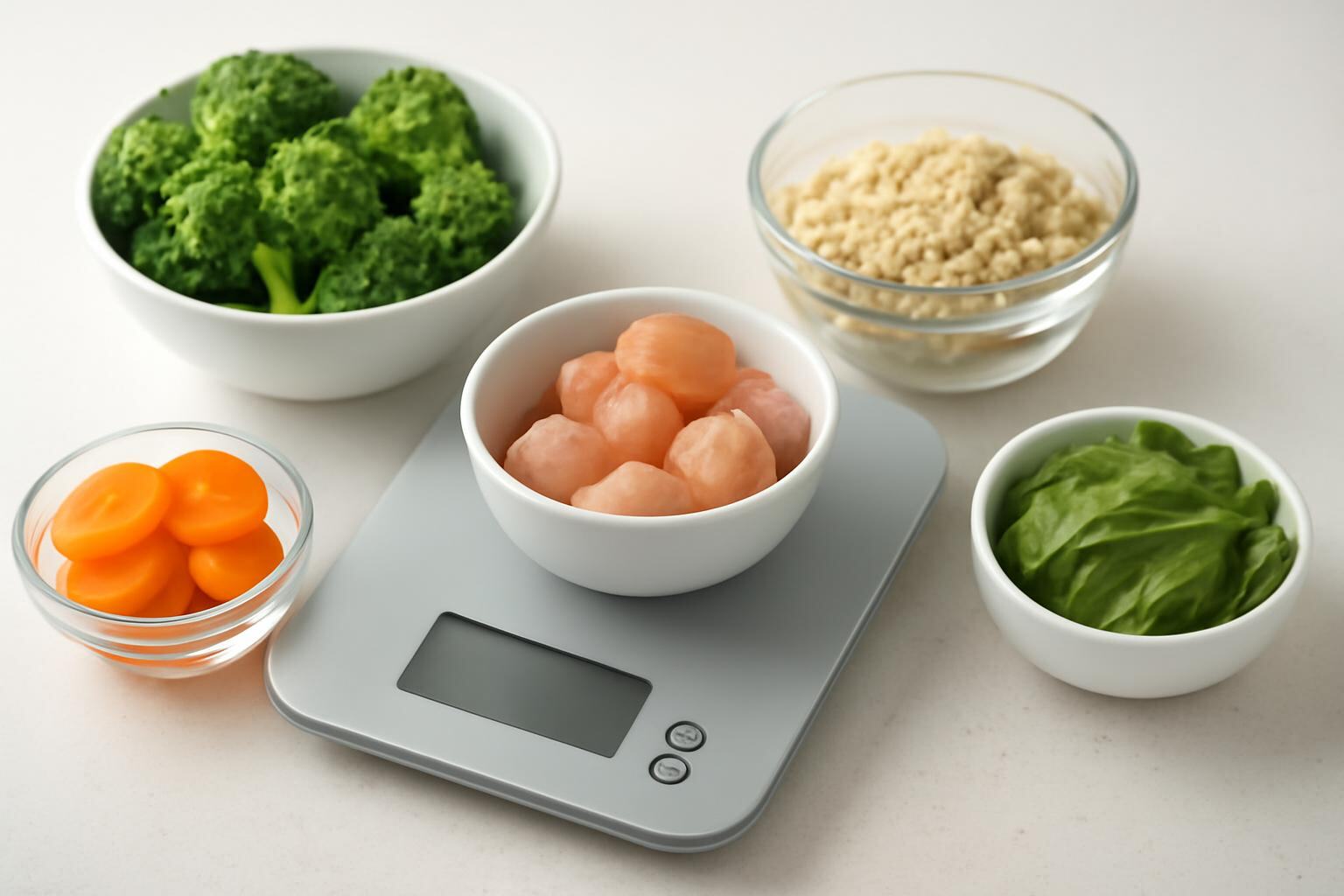
Quick Verdict
If you want the best food scale for counting calories in 2026, buy a digital model that is compact, fast, and easy to tare. Etekcity is still the easiest recommendation for most people because it balances everyday usability with a low price. In addition, it works well for meal prep, portion control, and general kitchen use.
[pw_technique_table headers=”Need|Why calorie tracking users care”]
[pw_technique_row label=”Fast tare” value=”Makes it easier to log ingredients in one bowl or container.”]
[pw_technique_row label=”Readable display” value=”Helps when adding several foods in a row.”]
[pw_technique_row label=”Compact design” value=”More likely to stay part of your daily routine.”]
[/pw_technique_table]
Best Scale Workflow for Calorie Tracking
The most useful calorie-tracking scale is not the most advanced one. It is the one that stays in your routine. A good workflow is simple: put the bowl or plate on the scale, tare to zero, add each ingredient in grams, and log it immediately before moving on. The easier the scale makes that loop, the more accurate your tracking tends to stay over time.
- For breakfast and snacks: prioritize a scale that turns on quickly and stores in reach.
- For meal prep: pair the scale with a raw-to-cooked conversion workflow when proteins change weight after cooking.
- For macro tracking: keep grams as the default unit unless the nutrition source clearly calls for another measurement.
What matters most for calorie counting
A food scale for calorie counting should remove friction, not add it. In practice, that means quick response time, clear numbers, and easy storage between meals. If you already prep meals weekly, also read our best kitchen scale for meal prep guide.
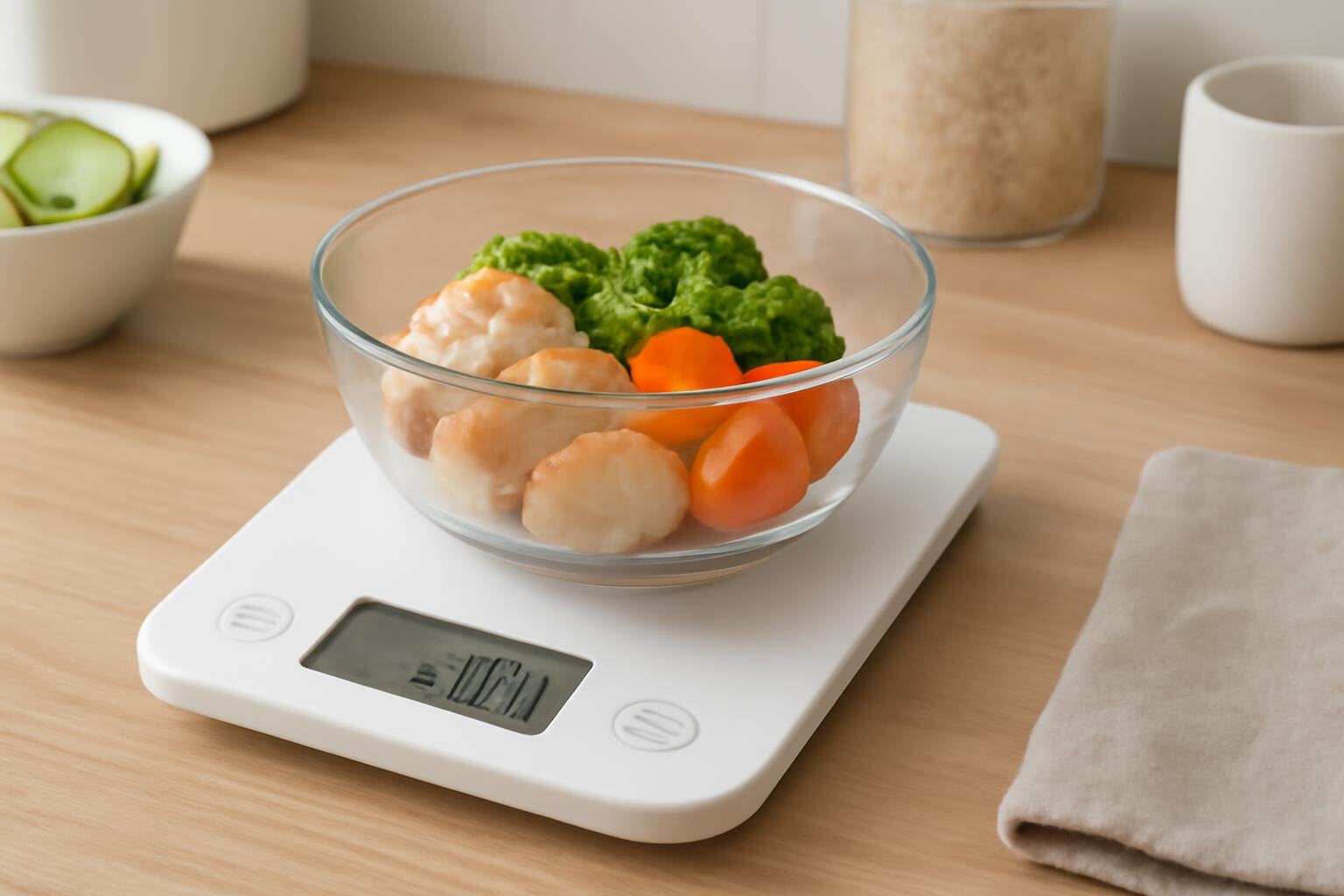
Best food scale for counting calories comparison
[pw_comparison_table headers=”Pick|Best for|Why it works|Link”]
[pw_comparison_row cells=”Etekcity|Most calorie tracking users|Best mix of convenience, value, and daily usability|Check Price“]
[pw_comparison_row cells=”Amazon Basics|Simple budget tracking|Affordable option for occasional portion weighing|Check Price“]
[pw_comparison_row cells=”Ultrean|Alternative value pick|Useful if you want another compact digital option|Check Price“]
[/pw_comparison_table]
Why a digital scale beats eyeballing portions
Many people underestimate portions when they guess by sight. However, a digital food scale makes calorie counting more repeatable. As a result, it becomes easier to log meals and notice real portion sizes over time. That is also why these scales fit naturally into the wider kitchen and meal-prep workflow on the site.
If you need quick measurement help while comparing scales, try our Kitchen Scale Converter for grams, ounces, cups, and ingredient weights.
If you already know the cooked batch weight, the Meal Prep Portion Calculator also works as a practical serving size calculator for portion calculation and calorie logging.
FAQ
What is the best food scale for counting calories?
For most people, it is a compact digital food scale with tare, fast readings, and easy daily storage.
Do I need a food scale to count calories?
You do not need one, but it is one of the easiest ways to make portion estimates more accurate.
Is Etekcity good for calorie counting?
Yes. It is a practical choice for portion control, meal prep, and daily kitchen use.
Final Verdict
The best food scale for counting calories is the one that fits into your routine with the least effort. For most people, that means a compact digital model like Etekcity. Check the current Etekcity price on Amazon.
Related Kitchen Scale Articles
Food scales sit at the center of portion control, meal prep, and everyday kitchen accuracy, so this page works best when it also points into the wider kitchen-scale cluster. These related pages cover buying guidance, meal prep, and practical weighing workflows.
- Best Kitchen Scale for Meal Prep in 2026
- Etekcity Food Kitchen Scale Review 2026
- Best Kitchen Scales Comparison 2026
- How to Choose the Best Kitchen Scale in 2026
Chicken Portion Tracking Guides
If you use a food scale mainly for chicken meal prep, these guides explain how to move from weighing ingredients to portioning real cooked meals more consistently.
- Protein Portion Converter
- Raw vs Cooked Chicken for Calorie Tracking
- How to Weigh Chicken for Meal Prep and Macros
Helpful Tool: Meal Prep Portion Calculator
The Meal Prep Portion Calculator is useful when you want to turn one total food weight into consistent portions quickly.
Helpful Kitchen Calculators
Use these free tools to apply what you just read and plan portions faster. If you want the broader kitchen workflow, open the Start Here guide.
Accuracy workflow for calorie tracking
Use grams as default, tare every ingredient, and log immediately. This simple workflow reduces tracking drift and keeps macro targets reliable over time.
Features that matter most for counting calories
- Fast stabilization and low reading drift.
- Clear display visible with bowls/plates on platform.
- Easy unit switching and responsive tare button.
- Stable footprint for repeatable readings.
Where to go after this calorie-tracking guide
- How to Use a Food Scale for Calories and Portion Control if you need the actual weighing routine.
- Raw to Cooked Chicken Weight Conversion if cooked logging keeps breaking your numbers.
- Full Tools Hub if you want the calculators in one place.
Cooked vs raw tracking rule
Track with the nutrition source that matches your measurement state (raw or cooked), and stay consistent. Switching states without adjustment is one of the most common calorie tracking errors.