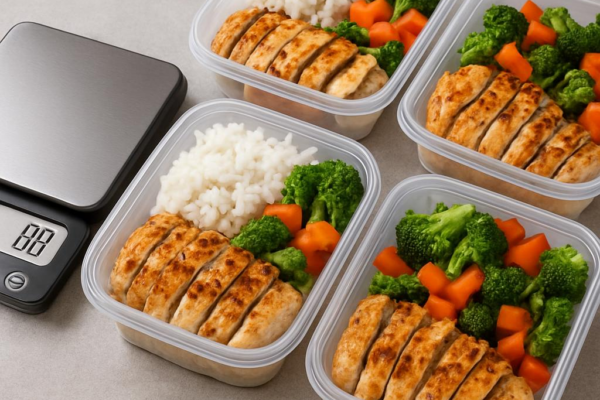
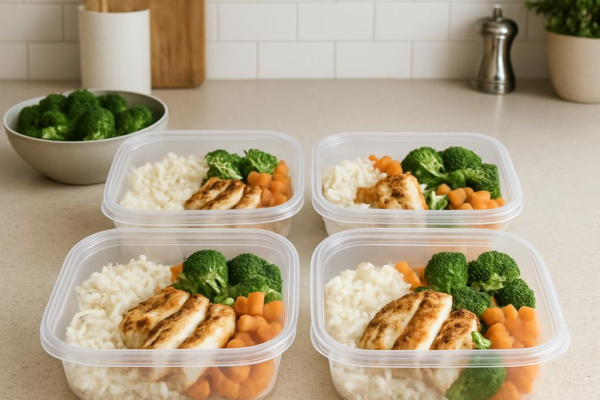
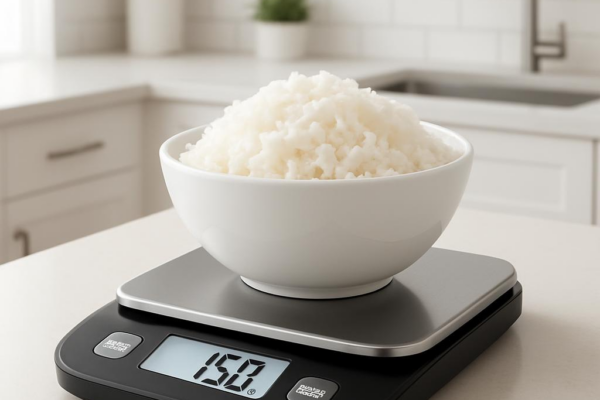
Cooked rice is easy to over-serve if you rely on scoops, bowls, or rough visual guesses. For meal prep, the cleanest method is simple: cook your batch, let the steam settle for a few minutes, place your container on a kitchen scale, tare it to zero, and portion the cooked rice by weight. That gives you more repeatable servings than using cups alone, especially when one batch cooks slightly wetter or drier than another.
If you already use a meal prep scale, cooked rice is one of the easiest foods to standardize. The exact weight you want will depend on your meal plan, but the process should stay the same every time: weigh the finished rice after cooking, portion each container directly, and keep your serving size consistent across the week.
Quick answer: weigh cooked rice after cooking, not before plating by eye
For most meal prep routines, cooked rice should be measured after it is fully cooked and ready to portion. That is the version you actually eat, store, and reheat. Weighing the cooked portion makes it easier to build repeatable lunches, compare containers evenly, and match the serving size to your own package label or nutrition log.
- Tare the empty meal prep container or bowl first.
- Add cooked rice until you reach your target weight.
- Repeat the same target weight for each container.
- Use the same scale, spoon, and workflow each week.
Why cups often drift during meal prep
Rice does not absorb water exactly the same way every time. A slightly wetter batch can look like the same volume in a cup while weighing more. A drier batch can weigh less. If your goal is consistent meal prep, cups are fine as a rough starting point, but weight is better when you want more control.
This matters even more when you batch-cook several meals at once. One container may end up noticeably heavier than another if you portion by sight. A scale removes most of that guesswork in seconds.
Step-by-step: how to measure cooked rice for meal prep
- Cook the rice as usual. Use your normal rice cooker or stovetop method.
- Let the batch rest briefly. Give it a few minutes so the steam settles and the texture evens out.
- Fluff the rice. This helps distribute moisture more evenly before portioning.
- Place your empty container on the scale. Then press tare so the display returns to zero.
- Add cooked rice until you hit your target weight. Work slowly as you get close.
- Repeat for the rest of the containers. Try to keep each one within a small range instead of eyeballing the last few servings.
If you prep rice with chicken, vegetables, or sauces, it also helps to portion the rice first. After that, add your protein and sides so you can keep the base layer consistent across every meal.
A practical serving framework for cooked rice
There is no single correct rice portion for every reader, so the right target depends on your goal, appetite, and the rest of the meal. The best approach is to pick one repeatable serving size for your own routine, then keep that serving stable for a full week before changing it.
| Use case | Practical approach | Why it helps |
|---|---|---|
| Lunch meal prep | Use one fixed cooked-rice weight for every container | Containers stay balanced and easier to compare |
| Higher-protein meals | Keep rice moderate and measure protein separately | Makes the plate easier to scale up or down |
| Family batch cooking | Weigh the total cooked batch, then divide by the number of meals | Faster than guessing each portion from scratch |
| Calorie tracking | Match your cooked portion to the nutrition method you already use | Keeps your logging method consistent week to week |
If you need a broader workflow for dividing complete meals, use the Meal Prep Portion Calculator after setting your rice base. If you portion protein separately, the Protein Portion Converter can help you keep the rest of the meal consistent too.
Should you weigh rice dry or cooked?
Both methods can work, but they solve different problems.
- Weigh dry rice if you want to plan the whole batch before cooking.
- Weigh cooked rice if you want equal, ready-to-eat portions inside your containers.
For most meal prep readers, cooked weight is more practical because the finished food is what actually goes into the fridge. It is also easier to adjust on the spot when your batch yields a little more or less than expected.
How to divide one big rice batch evenly
If you cook a large pot for the week, weigh the entire cooked batch first. Then divide that number by the number of containers you want to fill. That gives you a working target for each meal.
Example workflow:
- Cook one batch of rice.
- Put a large bowl on the scale and tare it.
- Add all cooked rice and note the total batch weight.
- Divide the total by four or five meals.
- Portion each container to that target.
This is usually faster and more accurate than trying to build equal portions by eye from the start.
Common mistakes that make rice portions inconsistent
- Skipping the tare step. That forces you to subtract container weight mentally and increases mistakes.
- Portioning before fluffing the rice. Moisture may be uneven across the batch.
- Switching between cups and grams randomly. Pick one system and stick to it.
- Measuring one meal carefully and the rest by sight. That usually leads to drift by the final containers.
- Adding sauces before measuring the base. The rice portion becomes harder to standardize.
Best workflow if you also track chicken or protein portions
Rice works best as the first component in the container. After that, add the protein portion, then vegetables or sauces. If your routine includes chicken, you can pair this workflow with Raw to Cooked Chicken Weight Conversion and How Much Chicken Per Meal for Meal Prep? so the full meal stays consistent.
If you are building a basic weekly system from scratch, start with the hub at Start Here: Kitchen Scales, Meal Prep & Portion Tools. It pulls together the scale guides, tools, and portion content that support this same workflow.
What kind of scale works best for cooked rice?
You do not need a complex scale to portion cooked rice well. What matters is a stable platform, a clear display, and a tare button that reacts quickly. For meal prep, a digital kitchen scale is usually the easiest option because it lets you zero a container and portion directly into it without extra math.
If you have not picked one yet, see Best Kitchen Scales (2026) or the more specific guide to the Best Food Scale for Counting Calories.
Final takeaway
The cleanest way to measure cooked rice for meal prep is to weigh the finished rice directly into each container after taring it on a kitchen scale. That method is faster to repeat, easier to adjust, and more reliable than eyeballing cups across a full batch. Once you pick a serving target that works for your routine, keep that process stable for a few prep cycles before making changes.