Choosing the right resistance bands gets much easier when you stop thinking about bands as a generic product and start thinking about them as tools for specific jobs. The right band depends on how you want to train, which movements you care about, how much resistance you can control, and how much flexibility you want from the set.
Many buyers get stuck comparing colors, marketing labels, and huge multi-piece bundles. Those details matter less than matching the band style to the workout style. A simple, well-matched set is usually more useful than a large set full of options you never touch.
Quick Answer
If you want a flexible starting point for home training, a multi-resistance set is usually the safest choice. Loop bands work well for lower-body work, activation, and compact sessions. Tube bands with handles work well for simple full-body workouts. Long flat bands can be useful for assistance work, pulling patterns, and more varied setups if you know how you plan to use them.
Main Types of Resistance Bands
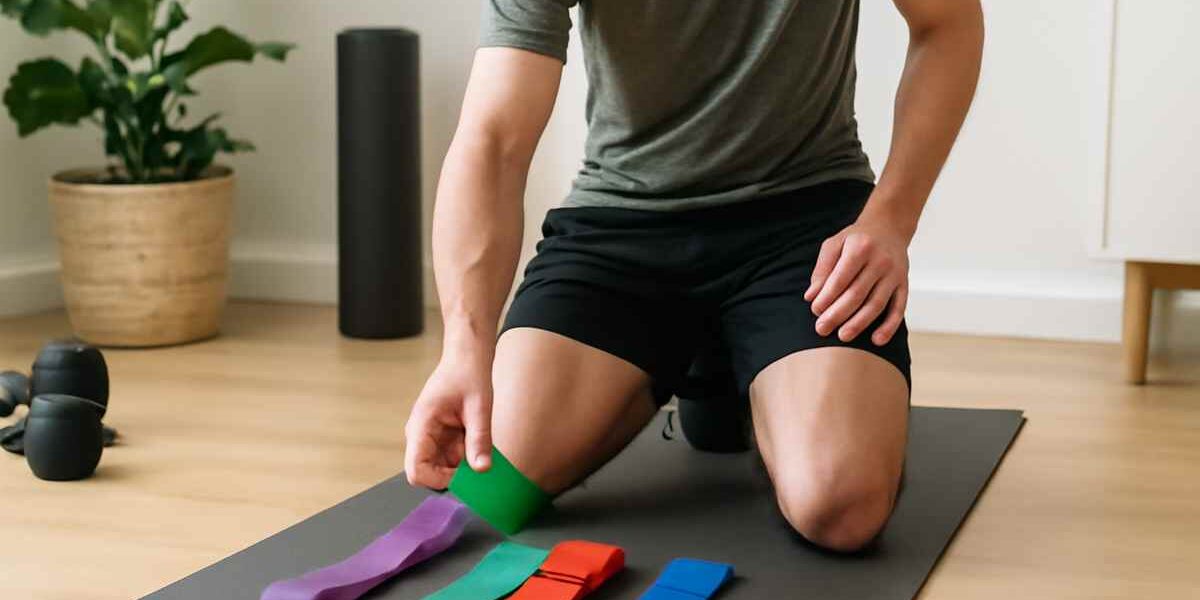
Mini Loop Bands
These are common for glute work, warm-ups, lateral movement, and lower-body activation. They are compact and easy to use, but not the most complete choice for full-body training on their own.
Tube Bands with Handles
These feel intuitive for many beginners because they resemble simple gym cable movements. They are useful for rows, chest presses, overhead presses, curls, and other beginner-friendly exercises.
Long Loop or Flat Bands
These are more flexible and often stronger, making them useful for assistance work, pulling patterns, mobility, and a wider range of setups. They can be slightly less beginner-friendly at first because they require more experimentation.
How to Choose by Goal
For general home fitness: choose a versatile set that includes multiple resistance levels.
For glute-focused and lower-body sessions: mini loops are often the easiest starting point.
For handle-based beginner workouts: tube bands are often the most intuitive choice.
For broader training variety: long bands often offer the most expansion potential.
How Much Resistance Do You Need?
Most beginners benefit more from having several resistance options than from buying the strongest band possible. Different exercises need different tension. A band that works for rows may be too strong for presses or too weak for squats. Variety matters more than ego.
A good starter setup usually includes lighter options for warm-ups, shoulders, and controlled technique work, plus moderate options for larger movements.
What Makes a Good Set
- Multiple resistance levels so you can progress and adjust by exercise
- Comfortable handles or finish if you choose tube bands
- Reliable attachments if the set includes anchors or accessories
- Clear use case that matches how you actually plan to train
Common Buying Mistakes
- Buying only one tension level
- Choosing the strongest band too early
- Buying a huge accessory-heavy kit without a training plan
- Choosing based on trend content rather than movement needs
- Ignoring whether you prefer simple setup or maximum variety
Best Starter Scenarios
Simple beginner setup
Tube bands with handles or a small multi-level loop set. Best for people who want low friction and obvious exercises.
Lower-body and mobility focus
Mini loops plus one slightly stronger option. Best for compact sessions and activation work.
Broader home gym setup
Long bands plus a few supporting resistance levels. Best for people who want more training options in limited space.
Final Verdict
The right resistance band is the one that matches your workouts, not the one with the biggest bundle or the loudest marketing. For most home users, a multi-level set is the safest and most practical place to start because it gives you enough range to learn exercises, adjust resistance, and grow into the setup. Choose for usability first, and your home workouts will be easier to repeat and easier to progress.