Resistance bands remain one of the most practical home workout purchases because they are affordable, compact, and flexible enough to support many training styles. But buying the right set is easier when you focus on use case first instead of buying the biggest bundle you can find.
A good resistance band purchase depends on the exercises you want to do, the amount of resistance you can control, the type of setup you prefer, and how much variety you want from a single set. For home training, usability matters more than novelty.
Quick Verdict
For most home users, the best buy is a multi-level resistance band setup that matches the workout style you actually plan to repeat. A versatile set with sensible resistance progression is usually a better choice than a giant bundle of accessories you may never use.
Main Band Types
Mini Loop Bands
Best for activation work, glute training, lower-body sessions, and compact travel-friendly use.
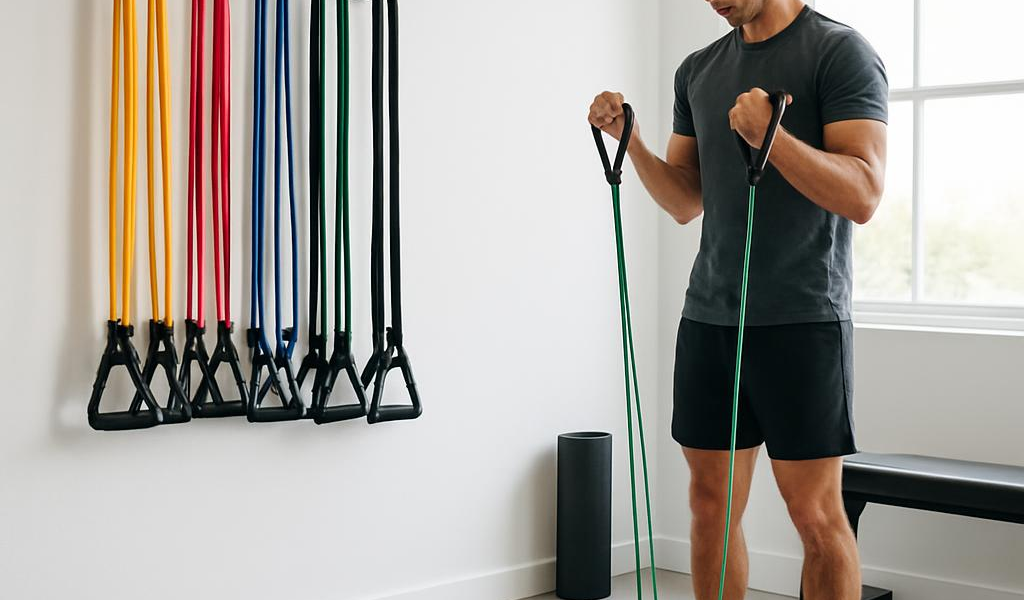
Tube Bands with Handles
Best for beginner-friendly full-body workouts that include presses, rows, curls, and similar movements.
Long Loop or Flat Bands
Best for broader training variety, assistance work, mobility, and more flexible setup options.
What to Compare Before Buying
Resistance range
A single resistance level is rarely enough. Different movements need different tension, and progression matters over time.
Training goal
If your goal is general home fitness, choose a versatile set. If your goal is glute work or mobility, mini loops may be enough. If your goal is broader full-body training, tube or long bands are often the stronger option.
Ease of setup
Some buyers want the simplest possible routine. Others want maximum exercise variety. Choose accordingly.
Storage and portability
One reason bands are popular is that they store easily. Keep that advantage by avoiding overly bulky kits unless you truly need them.
Best Choices by Buyer Type
For beginners: a multi-level set that is easy to understand and easy to repeat.
For small-space homes: loop bands or long bands with minimal accessories.
For fuller home routines: tube bands or long bands that support more pushing and pulling patterns.
What Makes a Set Worth Buying
- Several usable resistance levels
- Comfortable, reliable build quality
- A format that matches your workouts
- No unnecessary complexity
Common Buying Mistakes
- Buying only the strongest band
- Choosing a giant bundle without a workout plan
- Buying based on marketing rather than movement needs
- Ignoring whether the set feels convenient enough to use often
Final Verdict
The best resistance bands for home workouts are the ones that make regular training easier, not more complicated. For most buyers, that means a practical multi-level set with a clear purpose, enough progression, and a format that suits the exercises they actually want to do. Buy for repeatability first, and the setup will stay useful much longer.